Full spoilers for the original X-Men movies and publicly released Avengers: Doomsday footage follow.
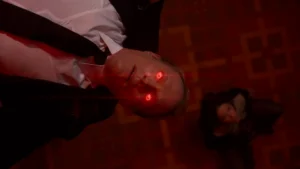
Cyclops gets one of the biggest images in the Avengers: Doomsday X-Men teaser, and I don’t think that’s an accident. James Marsden’s Scott Summers appears visibly devastated before unleashing an enormous optic blast, while the same teaser returns us to Xavier’s damaged school and reunites Charles Xavier and Magneto. After more than two decades of live-action X-Men movies repeatedly pushing Cyclops toward the side of somebody else’s story, Marvel is suddenly putting him near the center of the image.
And here’s the thing: I don’t think the interesting part is simply that Marvel has finally made Cyclops look powerful. Scott’s real dramatic value has never been the size of his optic blast. It is the fact that he possesses enormous destructive force and has built his entire identity around controlling where that force goes.
That’s the tool I want to use here: controlled force. Cyclops works when his power, his personality and his role on the X-Men are all expressing the same idea. Scott is disciplined because he has to be. He leads because somebody has to turn extraordinary power into coordinated action. The visor is not just costume design; it is the physical manifestation of a character who survives by deciding exactly when to unleash what he is capable of doing.
My argument is that the old X-Men movies understood that idea in pieces but repeatedly denied Scott the story that should have grown out of it. Avengers: Doomsday has an opportunity to finally complete the thought: put Cyclops in a crisis large enough that control itself becomes the thing the story tests.
Following the larger story? Start with our Avengers: Doomsday guide, read our deeper look at why the X-Men matter in Doomsday, or zoom out to the full Road to Avengers: Doomsday.
Why Is Cyclops In Avengers: Doomsday?
Short answer: Cyclops gives Avengers: Doomsday something more useful than another extremely powerful mutant. Scott Summers is the X-Man whose dramatic function is turning Xavier’s ideals into decisions on the battlefield. Professor X can articulate what the X-Men should believe. Magneto can challenge that belief. Cyclops is traditionally the person who has to decide what the team actually does when the philosophy becomes an emergency.
That distinction becomes especially important in a movie Marvel describes as putting heroes from three distinct universes on a deadly collision course. A crisis that large cannot remain an abstract debate about coexistence, survival or incursions forever. Eventually somebody has to tell the team where to stand, whom to protect, when to fight and when not to fire.
That is where Scott should become indispensable.
And remarkably, the original X-Men movies gave us almost all the pieces necessary to make that version of Cyclops work. They just rarely allowed him to remain at the center long enough to finish the argument.
X-Men Shows Us The Cyclops The Movies Should Have Built Around
The first X-Men actually gives Scott a small but extremely useful proof beat at Liberty Island. Magneto has strapped Rogue into the mutation machine and transferred enough of his power to her that she can activate it, even though the process is killing her. Wolverine reaches the top of the Statue of Liberty and tries to stop the machine, but Magneto pins him in place and prevents him from reaching Rogue.
Cyclops does not solve that problem by firing wildly into the room. Jean helps create the opportunity, Scott gets the shot he needs, and his optic blast hits Magneto hard enough to break Magneto’s control over Wolverine. That creates the opening Logan needs to destroy the machine and save Rogue. :contentReference[oaicite:2]{index=2}
That is a very good Cyclops beat because the value of Scott’s power is not merely that it is strong. It is precise. The room contains Rogue, Wolverine, Magneto and machinery capable of changing or killing world leaders. Scott’s job is to put exactly enough force in exactly the right place at exactly the right moment.
Do you see what that establishes? The visor and the leadership role are doing the same character work.
Scott Summers is dangerous enough that direction matters.
That is controlled force.
X2 Takes Control Away From Cyclops
X2 then attacks the exact trait that makes Scott useful. William Stryker captures Cyclops when Scott accompanies Xavier to visit Magneto, drugs and brainwashes him, and eventually turns him against Jean Grey inside the Alkali Lake facility. The team’s disciplined field leader becomes a weapon pointed by somebody else.
The resulting fight is not incidental. Scott’s optic blast and Jean’s attempt to stop him contribute to the damage inside the dam, and Jean eventually breaks Stryker’s control over him. Scott regains himself, but the larger crisis has already moved beyond anything he can personally contain. :contentReference[oaicite:3]{index=3}
Then the movie attacks him from the other direction.
As the dam collapses, the X-Jet loses power and Jean leaves the aircraft. She holds back the flood, lifts the jet and sacrifices herself so everyone else can escape. Scott is inside the ship watching the person he loves make a choice that he cannot command, prevent or take on himself.
The aftermath makes the wound explicit. Back at Xavier’s school, Scott is grieving Jean, and Logan tells him that Jean made her choice and chose Scott. :contentReference[oaicite:4]{index=4}
That is an interesting dramatic wound for this particular character. Scott’s entire identity is organized around the belief that discipline, preparation and control allow him to keep other people safe. X2 makes him lose control of his own body and then makes him completely powerless to stop the person he loves from dying.
That should be the beginning of a Cyclops story.
Instead, the movies mostly turn it into the end of one.
The Last Stand Turns Cyclops’ Grief Into His Exit
X-Men: The Last Stand opens Scott in exactly the place X2 left him: unable to process Jean’s death. He returns to Alkali Lake, the site where she sacrificed herself, hears her voice and removes the ruby-quartz glasses that normally keep his optic blast contained. His power tears into the lake, Jean appears, and their reunion ends with the Phoenix killing him. :contentReference[oaicite:5]{index=5}
I actually find the visual idea interesting even though I hate what the movie does with the character. The man defined by control has reached the place where control failed him. He is grieving, he removes the device that regulates his power, and something impossible comes back out of the place where he lost Jean.
But then the story kills him.
That is the larger problem with the Fox movies’ use of Cyclops. They repeatedly create circumstances that are perfectly designed to challenge Scott’s defining trait, then deny him the dramatic choice that should follow.
X2 takes away control of his body. Jean’s sacrifice takes away his ability to protect the person he loves. The Last Stand turns that grief into emotional disintegration.
What we never get is the next movement: what kind of leader does Scott become after learning that control cannot guarantee safety?
Days Of Future Past Brings Cyclops Back — But Only As A Reward
X-Men: Days of Future Past eventually repairs Scott’s death through its rewritten timeline. When Logan wakes in the restored future at Xavier’s school, Jean is alive, Scott is alive, and Wolverine suddenly finds himself standing inside a version of the world where the losses of the original trilogy have been undone.
It is emotionally satisfying because Scott’s presence is part of the proof that history has changed. But that is also the limit of it. Cyclops functions as a reward at the end of somebody else’s story rather than as an active participant in the choice that saves the future.
So if we take James Marsden’s live-action Scott Summers strictly as a dramatic arc, there is a strange unfinished sentence running through the franchise.
The first movie establishes what Scott is good at.
The second movie attacks the thing he is good at.
The third movie destroys him before he can respond.
The fourth gives him his life back without giving him the response.
That is why the Doomsday footage gets my attention.
The Avengers: Doomsday Cyclops Teaser Changes The Visual Hierarchy
Look at how Marvel chooses to reintroduce these characters. The X-Men teaser begins inside an abandoned or damaged Xavier School. We see Charles Xavier’s wheelchair and a floating chess piece before Xavier and Magneto are reunited, deliberately reconnecting the new movie to the oldest philosophical relationship in the franchise.
Then the teaser gives its largest display of raw mutant power to Scott Summers.
Cyclops is visibly distraught and unleashes an enormous optic blast. Variety specifically highlighted the scale of the blast as significantly larger than what Marsden’s Cyclops was usually allowed to display in the original movies, while Marsden himself has since described the return as turning “Cyclops up to 11.”
That matters to me because Marvel could have sold the X-Men’s return through almost anybody.
Wolverine is the obvious commercial choice, and Hugh Jackman’s version is already back in circulation after Deadpool & Wolverine. Xavier and Magneto carry 25 years of prestige and nostalgia. Gambit just had an enormously popular MCU introduction.
Yet when Marvel wants one violent image to sell us the state of this X-Men world, it gives the moment to Cyclops.
That is a change in hierarchy.
Marvel Isn’t Just Making Cyclops More Powerful
This distinction is important because there is a very easy version of this article that simply says, “Cyclops is secretly insanely powerful, and Doomsday will finally show it.” That is not enough for me.
Making Scott’s optic blast larger does not fix Cyclops.
Giving Scott consequential decisions fixes Cyclops.
The power is useful because it creates pressure around those decisions. If Scott possesses enough force to alter the outcome of a battle, then where he aims matters. If he is responsible for an X-Men team whose universe may be under existential threat, then when he chooses to fight matters. If Xavier and Magneto disagree over what survival allows, then whose philosophy Scott turns into action matters.
That is why the visor is such an elegant character object. Scott does not merely possess power. He has to regulate it every waking moment. He cannot casually look at the person standing in front of him without a barrier between his eyes and the world.
Leadership should work the same way.
A good Cyclops story is not about whether Scott can unleash more power. It is about whether he knows when he should.
Cyclops Has A Different Job Than Xavier And Magneto
This is also where Scott becomes structurally important to Doomsday rather than simply another returning X-Man.
Xavier and Magneto are ideological characters. Their old movies repeatedly put them on opposite sides of the same survival problem. Xavier believes coexistence remains morally necessary even when fear makes coexistence difficult; Magneto repeatedly concludes that waiting for enemies to become reasonable is a luxury mutants may not survive.
But an ideological argument cannot remain a chess match forever.
Somebody eventually has to issue the order.
That is Scott’s job.
If an incursion or another multiversal crisis puts the X-Men’s reality in direct danger, Charles can argue for preserving innocent life in every universe. Erik can argue that refusing to choose may get mutants exterminated again. Scott is potentially the person standing between those positions with an actual team waiting for him to decide what happens next.
That gives the three characters different dramatic functions instead of making them redundant.
Xavier defines the ideal.
Magneto attacks the ideal.
Cyclops has to act while the argument is still unresolved.
That is leadership.
X2 Already Gave Us A Perfect Negative Version Of That Idea
This is why I keep coming back to Stryker brainwashing Scott in X2. It is not merely a cool excuse for Cyclops and Jean Grey to fight.
The team’s field leader becomes dangerous specifically because somebody else has removed his ability to choose where his power goes. Stryker transforms controlled force into directed force: Scott still has all the capability, but the decision belongs to somebody else.
Jean has to fight the person she loves because Scott’s power has been disconnected from Scott’s judgment.
That is an excellent negative image of leadership.
A leader is not useful because he can hit the hardest. A leader is useful because he can decide when force serves the goal and when force destroys it.
Doomsday now has the opportunity to put that choice back in Scott’s hands on the largest possible scale.
Why The Doomsday Crisis Is Perfect For Cyclops
Disney’s official premise says Avengers: Doomsday puts heroes from three distinct universes on a deadly collision course. The footage released since then increasingly brings the legacy X-Men, the Fantastic Four and the MCU into the same larger crisis, while Doctor Doom is shown exerting enough power and control to challenge characters across those worlds.
That is exactly the kind of situation that can test Cyclops rather than merely showcase him.
Imagine the pressure without pretending we know the plot. Scott has a team. He has a home. The teaser suggests that home has suffered some kind of major devastation. Xavier and Magneto are together again. Sentinels are part of the imagery surrounding this X-Men return, and later Doomsday footage shows Victor von Doom awakening an army of them.
We do not know who destroyed the school. We do not know what Scott is firing at. We do not know whether the X-Men initially fight the Avengers, whether Doom manipulates them or what the exact relationship between the Sentinels and the multiverse crisis will be.
But we do know the kind of pressure Marvel is visually putting around Scott Summers.
Loss.
Leadership.
An apparently endangered mutant world.
And enough force behind his eyes to do something catastrophic about it.
That is not a power-level problem.
That is a character problem.
The Comic-Accurate Cyclops Suit Matters For The Same Reason
James Marsden has talked openly about how meaningful it was to finally return in a more comic-accurate Cyclops costume. He told People that part of him had always hoped to play Scott again and described this version as essentially turning the character up to eleven.
I don’t think the costume alone means Marvel has suddenly solved Cyclops. Fans have been asking to see Scott in something closer to his classic blue-and-yellow visual language for decades, and satisfying that desire is obviously part of the appeal.
But visual language tells the audience how a movie wants us to read somebody.
The old black leather uniform made Scott one member of an ensemble whose most marketable figure was Wolverine. The new imagery isolates Cyclops, gives him the recognizable silhouette, centers his optic blast and allows Scott Summers to look like Cyclops rather than the guy standing between Logan and Jean.
That is a meaningful recalibration before Scott says a word.
Why James Marsden’s Cyclops Matters Even Though Marvel Has A New One Coming
There is another wrinkle that makes this more interesting. Marvel has now announced Kit Connor as Scott Summers in its new X-Men movie scheduled for 2028. James Marsden therefore does not appear to be returning because Marvel needs him to establish the permanent MCU version of Cyclops for the next decade.
That frees Doomsday to use Marsden’s Scott for something else.
Closure.
Correction.
Or consequence.
The legacy X-Men are bringing completed histories into this movie, and Scott’s history is unusually unfinished. The Fox films gave him Jean, took Jean away, took his agency away, killed him almost immediately when his grief finally became the story and then quietly restored him through somebody else’s victory.
If this really is one of the last major appearances for Marsden’s version of Cyclops before Marvel moves to its new generation, then Doomsday has an opportunity that is much more valuable than giving him a bigger beam.
Let Scott Summers make the choice.
What Avengers: Doomsday Needs To Do With Cyclops
I don’t need Scott to defeat Doctor Doom by himself. I don’t need him to vaporize Thor, outsmart Reed Richards or suddenly become the most powerful mutant who ever lived. In fact, making this primarily a power-scaling exercise would miss the character.
I want Doomsday to give Cyclops responsibility.
Put innocent lives on both sides of a decision. Put Xavier and Magneto in disagreement. Make the X-Men afraid that their reality could disappear. Give Scott enough information to understand why every available option carries a cost and not enough certainty to know which answer is correct.
Then make everyone look at him.
That is where the character becomes interesting because leadership is not certainty. Leadership is accepting responsibility for the decision after certainty runs out.
And that is the part of Cyclops the old movies never really allowed James Marsden to play.
Why The X-Men Matter In Avengers: Doomsday
Cyclops is only one piece of the larger mutant argument. Our X-Men breakdown tracks Xavier, Magneto, the Sentinels and why an incursion could turn their oldest disagreement about survival into one of Doomsday‘s central conflicts.
More Avengers: Doomsday Coverage
This is one piece of our larger Avengers: Doomsday coverage. The latest Doctor Doom, X-Men, multiverse and storycraft analysis assigned to the project will update below automatically.
Why Cyclops Really Matters In Avengers: Doomsday
The first X-Men gives us the starting proof: at Liberty Island, Scott’s value is not merely the strength of his optic blast but his ability to put extraordinary force exactly where the team needs it. X2 then takes that control away from him, Jean’s death proves that discipline cannot protect everyone, and The Last Stand removes Scott from the story before he ever gets to decide what kind of leader emerges from that loss.
Doomsday now appears to be returning to the same fundamental pressure with the scale turned all the way up. The X-Men’s world looks wounded, Scott looks emotionally overwhelmed and Marvel has finally given Marsden’s Cyclops the visual force that the old movies kept in reserve. That is the crisis-level test of controlled force: not whether Scott can fire the biggest blast, but whether he can remain the person who decides where that power should go when everything he wants to protect is under threat.
The craft lesson works far beyond superheroes. A character’s strength becomes dramatic when the story attacks the discipline required to use it well. Power tells us what someone can do; pressure reveals who decides to do it.
Marvel doesn’t need to make Cyclops stronger. It needs to finally let him lead.