Spoilers through Peaky Blinders Season 1 Episode 3.
There is a moment in Peaky Blinders Season 1 Episode 3 when Arthur Shelby asks Tommy how they can know whether The Garrison is for sale. Tommy’s answer comes without hesitation: “Everything is for sale to us, Arthur.” The line captures the logic behind almost everything Tommy does. He believes that money, fear, loyalty, and leverage can convert any obstacle into an opportunity.
At Cheltenham, Billy Kimber turns that belief into a test. Tommy wants access to Kimber’s racetrack business, and Kimber wants Grace. Tommy initially agrees to make her part of the arrangement, then returns to rescue her. Grace asks why he changed his mind, and Tommy says nothing. I think that silence is the episode’s most revealing moment, because Tommy acts on a feeling that his own philosophy cannot yet explain.
Steven Knight builds toward that choice through the episode’s other transactions: Polly tries to purchase Freddie’s departure, the police offer to spare Ada in exchange for Freddie, and Tommy buys Arthur his dream pub while simultaneously finding a legitimate business for Shelby money. The story keeps asking how much a person, a belief, or a relationship costs. Eventually, it asks the question of Tommy himself.
What You Need To Know About Peaky Blinders Episode 3
The IRA approaches Tommy about the stolen guns; Grace follows one of its men and kills him when the encounter turns violent. Freddie and Ada marry and refuse to leave Birmingham, frustrating Tommy and Polly while increasing police pressure on the family. Arthur struggles with the family’s secrecy and the psychological aftermath of France. Danny returns to warn Tommy that the IRA suspects the Peaky Blinders were involved in the killing, then shares a devastating conversation about the memories that keep them awake.
Tommy meanwhile prepares to demonstrate the Peaky Blinders’ value to Billy Kimber at Cheltenham. His men drive off the Lees, and Tommy turns the successful operation into a proposed protection arrangement. But the business victory becomes an emotional crisis when Kimber expects to spend time alone with Grace. Tommy’s last-minute intervention is the most significant choice he makes in the episode.
Birmingham Feels Alive Even When The Camera Is Off
I cannot get over the texture of the opening in Small Heath. The shirts-off laborers, the fires, the machinery, and the enormous variety of bodies and faces give Birmingham a life beyond the plot. These men have routines and jobs and worries that appear to exist whether Tommy Shelby happens to be in the frame or not. You can almost smell the dirt, sweat, and smoke. It is one of the most convincing story worlds on television.
The environment needs to express the values and pressures that shape its central character. Birmingham is a city that turns labor and raw materials into products. Tommy similarly turns threats and relationships into assets. The visual world quietly supports the economic philosophy that the episode will challenge.
The Price Of Everything
The Irish visitors want the stolen weapons; Polly offers Freddie money and passage to America; the police use Ada’s freedom to pressure Tommy into delivering her husband. Even Tommy’s tender gesture toward Arthur has a financial purpose. Purchasing The Garrison allows him to honor Arthur’s wartime dream of owning a pub, but it also gives the family somewhere to move money from the betting operation.
I love that this overlap does not make Tommy’s affection for Arthur insincere. Tommy remembers his brother’s dream and wants to give him something meaningful. He also knows the enterprise needs a legitimate front. Love and business fit inside the same calculation, and Tommy sees little reason to separate them. That becomes a serious problem when Kimber makes Grace the price of Tommy’s next expansion.
Freddie Thorne Is Driving Me Absolutely Nuts
Polly is practically handing Freddie an escape hatch: £200, tickets to New York, and a chance to live with Ada and their baby away from Campbell’s police operation. My instinct is to scream at the television for him to take the money and go. His refusal feels reckless given what he stands to lose, especially now that Ada is pregnant.
But Freddie’s inflexibility has a genuine dramatic function. Freddie’s political commitment matters more to him than Tommy’s calculations; he believes abandoning the workers would mean abandoning himself. Tommy believes survival depends on adapting and using whatever leverage is available. Both want to protect Ada, and each believes the other’s approach will destroy her future.
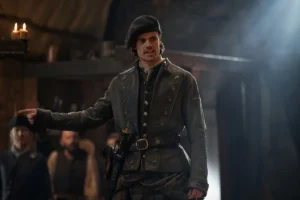
Their confrontation turns that ideological dispute into physical danger when Freddie points a gun at Tommy. And Tommy’s lack of reaction is just so frakking BALLS. Murphy plays him with astonishing composure, though the war material gives that calm a much darker meaning. A visible weapon in Birmingham may seem manageable to a man who spent nights trapped underground listening for an unseen enemy.
Campbell’s Wound: He Wasn’t In France
I am loving the running pressure point surrounding Campbell’s absence from combat in France. Sergeant Moss barely has to sharpen the insult; simply reminding Campbell that most of the officers actually served there exposes how defensive he becomes. Campbell replies that he serves his country every day, but the remark sounds like an attempt to claim a status he fears he has not earned.
This is a lovely piece of character opposition. Campbell possesses legal authority, while Tommy and the veterans possess a kind of experiential authority that Campbell cannot manufacture. A conversation about policing tactics becomes a fight over identity and legitimacy. The dialogue lets Moss inflict the wound without making him explain the insult, and Campbell’s response tells us exactly where it landed.
Grace’s First Killing And The Red Dress
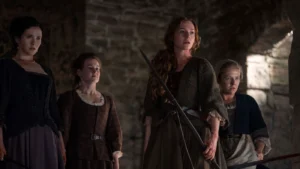
Grace is, frankly, not very good at following people. The IRA man recognizes her quickly, and her surveillance escalates into a confrontation she cannot control. What makes the sequence effective is what happens afterward: she vomits, trembles, and notices the blood on her hand. Annabelle Wallis communicates the emotional cost of taking a life with her body, allowing Grace’s professional ambition and personal vulnerability to occupy the same scene.
Then there is the red dress associated with Cheltenham. Tommy tells her to wear red to match Kimber’s handkerchief, so the dress begins as part of a business performance. But after the killing, Grace’s preparation for that performance seems charged with a different meaning. She is shifting between undercover operative, barmaid, and an invented aristocratic persona while carrying the consequences of real violence.
Grace’s Past Is Still A Productive Mystery
Campbell keeps referring to Grace’s personal history with the IRA, and she resists the paternal role he attempts to play. I still think Knight is wise to let that history remain partially concealed at this point. We know that something happened, that it helps explain Grace’s investment in the mission, and that Campbell knows more than he has said. Those clues create an intelligible question while keeping us invested in the answer.
Grace’s backstory is functioning as mystery because we understand which information is deliberately being withheld. Revealing everything now would rob her conversations with Campbell of their tension and reduce the space in which the audience can form its own suspicions.
Why Tommy Changes His Mind About Grace
By Cheltenham, Tommy has nearly achieved what he wants: he has demonstrated that the Peaky Blinders can protect Kimber’s bookies against the Lees, and he can turn that service into racetrack access. Kimber then demands Grace as part of the arrangement. Tommy briefly treats the demand as another unpleasant business condition and offers Grace money for her time.
His notorious argument that everyone sells different parts of themselves allows him to describe a personal betrayal as an ordinary transaction. Grace recognizes the insult immediately. She has been made into a clause in a contract, and the abstraction collapses as soon as Kimber begins treating her as something he owns.
Tommy’s return is the break in his pattern. Jealousy, attraction, protectiveness, and conscience may all be operating, and the episode does not neatly rank those motives for us. His decision nevertheless makes one thing clear: Grace has acquired a value that Tommy cannot explain through her usefulness to the organization. He risks damaging the business arrangement because he cannot bear to follow the agreement through.
The most important detail is that he lies to Kimber about Grace having syphilis. He still needs an operational justification for an emotional action, and the lie gives him a way to intervene without confessing the truth. When Grace asks why he changed his mind, he has no similarly convenient explanation. His silence leaves us with a character who has acted before he fully understands himself.
Related Coverage
Pull Up A Chair Inside The NerdClan
The public analysis gets you into the conversation. Our NerdClan members can read the complete craft breakdown of Tommy’s choice, Arthur’s Flanders blues, Danny’s wartime confession, and how the Cheltenham scenes are constructed. Join The NerdClan.
Unlock the rest of this article.
Join the NerdClan — or sign in if you are already a member — and the rest of this article will unlock right here on this page. This entry requires Associate Producer or higher.