Full spoilers for The Fantastic Four: First Steps and publicly released Avengers: Doomsday footage follow.
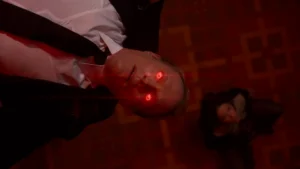
Reed Richards is standing inside a catastrophe, staring at Victor von Doom, and he does not ask the question I would have expected him to ask. He does not ask how Victor could do this, and he does not immediately condemn him. He asks whether Victor did it at all: “Did you do this, Victor?” Then, when Victor does not give him the answer he wants, Reed pushes harder: “Answer me, Victor. Did you do this?”
That distinction matters because Reed Richards is a character who has built his identity around imagining disaster before it happens. In The Fantastic Four: First Steps, Reed explicitly tells Sue that it is his job to think of terrible things so he can prevent them. Now Doomsday appears to place him inside a terrible thing he either failed to foresee or failed to stop, confronting the one man Sue describes as having always been the smartest person in the room.
That is why I think Doctor Doom has the potential to be Reed Richards’ perfect antagonist. Not because Doom can stretch farther, hit harder or win a science fair against him, but because a great villain attacks the hero’s answer to the story. Reed and Victor may both look at a dying multiverse and want to save it; the dangerous part is what each man believes being smart enough to solve the problem gives him the right to do.
I call that the rival solution. The villain does not need a different problem from the hero. Sometimes the strongest antagonist wants the same outcome and arrives with an answer the hero cannot morally accept.
Why Reed Richards And Doctor Doom Work As Hero And Villain
The easiest version of Reed Richards versus Doctor Doom is also the least interesting: two incredibly intelligent men hate each other because each believes he is smarter than the other. You can get plenty of mileage out of ego, rivalry and comic-book history, but Doomsday needs more than that if these two are going to help carry a movie involving Avengers, X-Men, the Fantastic Four and three colliding universes.
The better version gives Reed and Victor the same fundamental problem. Reality is breaking, people they love are in danger and somebody has to find a solution before the cost becomes irreversible. Both men look at catastrophe and believe intellect can impose order on it; the difference is what happens after they find the answer.
Reed’s best stories ask whether intelligence can solve a problem without reducing the people inside that problem to variables. Doom becomes his perfect antagonist if Victor believes that once he has found the correct solution, everyone else loses the right to object. That difference sounds small when written on a page. Dramatically, it is enormous.
First Steps Already Shows Us Reed Richards’ Greatest Strength — And His Weakness
The most important Reed Richards scene in First Steps may not be one of his inventions or the final fight with Galactus. It is the argument he has with Sue after the world learns that Galactus offered to spare Earth in exchange for Franklin. People are terrified, billions of lives are at stake and they have no workable solution, so Reed describes giving Franklin to Galactus as something that can look “mathematical, ethical and available.”
Sue hears the sentence differently than Reed intends it. She knows he would never willingly hand over their child, but she also knows exactly how his brain works: Reed has already taken the unbearable possibility, placed it on the table and worked the problem. That is when he explains himself: “It is my job to think terrible things so that terrible things don’t happen.”
Sue’s response is what makes the scene more than an exposition dump about Reed’s genius. She tells him that this is not simply his job; that is who he is. Reed admits she is right. He imagines the worst possible outcome, enters it mentally and tries to understand it before it can hurt somebody.
That is a terrific heroic tool, but it is also a terrific vulnerability. Reed can look directly at an emotionally impossible choice long enough to analyze it, understanding why sacrificing Franklin might appear rational while simultaneously knowing he will never accept it. His intelligence allows him to enter moral territory that horrifies everyone else because he believes somebody has to understand the terrible option before they can defeat it.
But Sue identifies the cost: sometimes Reed’s ability to turn everything into a solvable problem hurts the people standing next to him. That does not mean Reed is cold; the movie proves the opposite almost immediately when he refuses to sacrifice Franklin and promises Sue he will solve the problem another way. Then he does what Reed Richards does.
Reed’s Heroic Answer Is Always: Find Another Way
Once Sue tells the frightened public that she will neither sacrifice her child for the world nor sacrifice the world for her child, Reed hears the phrase “move heaven and Earth” and turns it into a literal engineering problem. His teleportation bridge has moved something small, so Reed decides scale is the variable. Instead of accepting Galactus’ binary choice — Franklin or Earth — Reed proposes moving the entire planet.
That is the heroic version of his intellect. Reed does not defeat the impossible choice by pretending the numbers do not exist; he understands the numbers and refuses to accept that the available choices are the only choices. He can see the ugly answer and explain why somebody might consider it rational, but what makes him heroic is that he keeps searching for the third option after the ugly answer becomes obvious.
Even when the global teleportation plan fails, the Fantastic Four do not suddenly decide Galactus was right and surrender Franklin. They adapt again. Franklin becomes part of the trap rather than the payment, Reed rescues his son, and Sue, Ben and Johnny help force Galactus toward the portal. The plan changes, but the moral line does not.
That gives Doctor Doom exactly the weakness he needs to attack.
Doctor Doom Should Attack Reed’s Solution, Not His Intelligence
If Doomsday reduces Reed and Victor to a contest over who can finish the equation first, I think the movie leaves a lot of dramatic value on the table. Reed does not need a villain who proves Reed Richards is not actually very smart. He needs a villain who makes Reed’s way of using intelligence look insufficient.
That is the antagonist test: attack the hero where the hero believes he is strongest. Reed believes that if he can understand the problem deeply enough, he can find another path. He can think terrible thoughts without becoming the terrible person, model sacrifice without accepting sacrifice, and keep searching after everybody else has decided the available answer is good enough.
Doom becomes dangerous if he looks at that instinct and says: you are wasting time people do not have. Imagine the pressure without pretending we know the screenplay. Three universes are colliding, people are already dying and every attempt to preserve all three worlds keeps failing. Then Victor arrives with an answer that works.
Not a fake answer. Not an obviously stupid death ray that Reed can expose in five minutes. A solution that genuinely stops the catastrophe but requires a cost Reed refuses to accept. Now Reed’s greatest heroic trait becomes vulnerable because every second he spends searching for the third option can be reframed as another second people die because Reed Richards refuses to make the difficult choice.
That is how Doom attacks him.
“Did You Do This, Victor?” Tells Us Reed Has Already Lost Control Of The Problem
This is why that Doomsday trailer line lands so hard for me. Reed’s defining strategy is prevention: imagine the worst thing, understand it and stop it before it happens. Then the trailer gives us Reed apparently standing inside enormous destruction and asking Victor whether he caused it: “Did you do this?”
The question reveals uncertainty. Reed does not understand the system yet; he is looking for cause after the effect has already occurred. And notice the name he uses: Victor, not Doom. This is not some theatrical declaration that Reed has finally met the villain. The scene plays as a confrontation between people who already know one another.
Sue’s narration reinforces that history by describing Victor as someone who used to be different, someone who used to be kind and caring before everything he loved was taken from him. That makes Reed’s accusation personal in two directions. He is trying to understand the catastrophe, but he is also trying to understand whether the person he knew became capable of creating it.
Then Doom changes the question.
Doom’s “Stolen Lives” Line Makes The Heroes The Defendants
Reed asks Victor about responsibility for the destruction. Doom’s answer, at least in the way the trailer is constructed, turns responsibility back toward the heroes: “All of you have lived stolen lives, but now you must give them back.” That is a fantastic antagonist move because Victor refuses Reed’s framing.
Reed is effectively asking, Did you cause this? Victor’s apparent response is closer to: You did. Not necessarily Reed personally, but the heroes collectively — the lives they reclaimed, the timelines they changed and the people who survived outcomes that once appeared permanent.
Whether Doom’s interpretation is ultimately correct is almost beside the point at this stage. Dramatically, the important thing is that he appears to possess an explanation of the catastrophe that implicates the people Reed wants to save. Reed is no longer merely the scientist diagnosing an outside threat; Doom is potentially telling him that the system is behaving exactly as it should because the heroes themselves have accumulated a debt inside it.
Reed walks into the scene as investigator. Doom tries to turn him into defendant.
The Best Villain Forces The Hero Into A Choice
A villain does not become a great antagonist because he delivers the most persuasive monologue. Eventually the philosophy has to become a decision the hero cannot avoid, and that is where Doom needs to take Reed. First Steps gives Reed a version of this problem with Franklin: Galactus offers an appalling but clean equation, surrender one child and save billions, and Reed can acknowledge the mathematics without accepting the choice because his defining instinct is to keep looking for another answer.
Doomsday can attack that instinct by making the clock much crueler. What if Victor has already solved the collision, Reed checks the work and knows the solution is viable, and Victor’s answer saves more lives than every alternative Reed currently has? Now add the real problem: the cost is something Reed considers morally intolerable.
That is the choice. The question is no longer whether Reed is smarter than Doom; it is whether Reed can continue rejecting Doom’s solution when rejecting it has a measurable body count.
Doom Becomes Scary When He Has The Better Equation
This is the version of Doctor Doom I want because it allows Reed to lose without becoming stupid. Victor can be ahead of him, understand something Reed missed, anticipate a consequence Reed failed to model or build the device Reed wishes he had thought of first. None of that diminishes Reed. It creates the circumstance where Reed has to prove that intelligence is not the only qualification for deciding everyone else’s future.
Because that is the real moral danger inside genius characters. If you are consistently the smartest person in the room, it becomes incredibly easy to make the leap from “I understand this better than you” to “Therefore I should decide for you.”
First Steps keeps pulling Reed away from that conclusion. Sue challenges him, his family participates in the solution, the Future Foundation and the entire planet cooperate to build the teleportation network, Johnny solves pieces Reed cannot solve, and Shalla-Bal ultimately makes the sacrifice that finishes their last plan. Reed is brilliant, but the movie repeatedly makes salvation collaborative.
Doom becomes Reed’s rival solution if Victor looks at collaboration and sees inefficiency.
Sue’s Description Of Victor Makes The Parallel More Dangerous
The trailer’s description of Victor is important because Marvel is not presenting him as somebody who was simply born evil. Sue remembers a man who was extraordinarily intelligent, kind and caring before catastrophic loss changed him. That gives the Reed/Doom dynamic a stronger shape than “good genius versus bad genius,” because both men may be capable of imagining the worst possible thing.
The difference is what happens after the worst possible thing becomes personal. Reed experiences the possibility of losing Franklin in First Steps, with the entire world effectively telling him that a rational leader would sacrifice his child. He thinks through the terrible option, refuses it and keeps searching for an answer that preserves both the world and his family.
Victor appears to have experienced devastating loss that he could not prevent. If Doom’s grief transforms his relationship with intelligence, then his conclusion can become the dark version of Reed’s creed. Reed thinks terrible things so terrible things do not happen; Victor may decide terrible things happened because nobody had enough power to guarantee that they would not.
Reed’s answer is better understanding. Doom’s answer is better control.
Reed And Doom Should Want The Same Thing
This is the last part of the antagonist relationship that I think Doomsday has to nail. Reed and Doom become more interesting if they are not actually competing for opposite goals. They should both want existence to survive.
If Reed wants to save reality while Doom simply wants to blow it up because villains blow things up, there is no real argument; Reed is correct before the conflict starts. But if Doom wants to save the multiverse too, then the story has somewhere to go. Reed wants to preserve lives without allowing one mind to decide which lives are expendable, while Victor wants to guarantee survival and believes guarantees require authority.
That is the rival solution: the same destination reached through incompatible moral methods. The strongest hero-villain relationships often feel unusually intimate because they are not fighting because one cares and the other does not. They are fighting because both care about something deeply enough to reach incompatible conclusions about what must be done.
Pedro Pascal’s Reed Richards Comments Fit This Exact Divide
Pedro Pascal has already given us another useful clue about how Reed views Victor. When discussing their Doomsday relationship, Pascal described Reed as someone who does not accept responsibility for Doom’s actions because people are responsible for their own choices. That sounds like a small character note, but it lands directly on the larger argument.
Reed can understand Victor, know his history, understand the loss that changed him and even follow the intellectual reasoning behind Doom’s solution. But understanding somebody does not mean surrendering their moral responsibility. That distinction becomes especially important if Doom’s entire argument rests on blaming other heroes for the multiversal catastrophe.
Victor says their stolen lives created the debt. Reed’s worldview gives him a clean response: whatever happened to Victor may explain what Victor became, but Victor is still responsible for what Victor chooses to do next. Now the villain/hero relationship is attacking responsibility from both directions: Doom says the heroes have to answer for the consequences of their choices, while Reed says Doom has to answer for his.
The Real Fight Should Not Be Reed vs. Doom
At least not at first. The real fight should be Reed’s solution versus Doom’s solution. Let Thor fight Doom physically, let Sentinels fill the battlefield and let twenty-eight Marvel characters punch through whatever enormous visual spectacle the Russos have planned. Reed’s conflict should live underneath all of that.
Reed should be trying to solve the problem without becoming the kind of man who believes solving the problem entitles him to own the outcome. That is where Doom can hurt him, because every failure makes Victor’s certainty more attractive, every dead person makes Reed’s patience harder to defend and every collapsing world makes the third option look more like wishful thinking.
Eventually the movie needs to reach a point where Reed does not merely tell Victor he is wrong. He has to prove there is another way.
First Steps Already Gives Us The Shape Of Reed’s Answer
This is where I think First Steps matters more than simply introducing the Fantastic Four before the crossover. Galactus gives Reed an impossible binary choice: your son or your world. Reed understands why sacrificing Franklin is mathematically attractive, Sue catches him thinking through it, the public demands it and time is running out.
But the Fantastic Four eventually reject the structure of the choice itself. Sue says they will not sacrifice Franklin for the world and will not sacrifice the world for Franklin. Reed responds by trying to move the Earth, and when that fails, the family creates another plan. When that fails, they improvise again.
The heroic argument is not that Reed always has the perfect answer. It is that Reed refuses to let the first workable answer define the boundaries of what is possible. That is exactly the trait Doom should attack in Doomsday.
What Avengers: Doomsday Has To Make Reed Choose
I do not need Doom to be secretly correct about everything, and I do not need Reed to discover that morality was foolish and Victor was the only adult in the room. The movie becomes much less interesting if its final lesson is simply that authoritarian control works when the emergency gets big enough. Doom should, however, be correct about enough of the problem that Reed cannot dismiss him.
Victor should identify something real, his solution should accomplish something real and the cost should be real. Then Reed has to decide whether his refusal to accept that cost is a principle or merely a luxury available to the man who is not currently paying it. That is the hardest possible version of Reed Richards’ worldview.
Can Reed keep looking for another answer when the existing answer is already working? Can he protect individual choice while entire worlds are collapsing, or convince frightened people not to follow the man who promises certainty when Reed cannot promise them survival? Those are not questions about who has the higher IQ. Those are questions about what intelligence is for.
That is a villain built for this hero.
The Reed/Doom rivalry is one side of the equation. Our larger Doctor Doom argument looks at Victor as a mirror villain for the MCU itself and why Tony Stark’s familiar face can make Doom’s belief in intelligence and control even more dangerous.
More Avengers: Doomsday Coverage
This Reed and Doom argument is one piece of the larger collision. Our latest Doctor Doom, X-Men, multiverse and storycraft coverage assigned to Avengers: Doomsday will update below automatically.
Craft-Analysis
What if Bob Reynolds finally becomes Sentry, saves everyone in front of him, and still loses the world? Our Avengers: Doomsday theory explores how Doctor Doom…
Craft-Analysis
Doctor Doom doesn’t need to overpower Loki in Avengers: Doomsday. He needs to make Loki confront a much harder possibility: that preserving everyone’s freedom may be…
Opinion
The Multiverse Saga has felt disconnected because it has been disconnected. But Avengers: Doomsday may have a chance to turn that structural weakness into story by…
kjr
The new Avengers: Endgame Encore trailer brought Tony Stark’s warning about messing with time back into focus. What if Stephen McFeely’s big Secret Wars idea is…
explainer
Doctor Doom says Marvel’s heroes have lived “stolen lives.” That may be more than a threat. It could turn the MCU’s biggest victories into evidence against…
explainer
The X-Men aren't in Avengers: Doomsday just for nostalgia. Xavier, Magneto, Cyclops and Doom's Sentinels reveal the survival argument at the heart of Marvel's multiverse collision.
Why Doctor Doom Could Be Reed Richards’ Perfect Villain
The argument starts in First Steps with Reed doing exactly what Reed Richards does: looking directly at an unbearable possibility and working the problem. Galactus offers him a mathematically clean sacrifice, Reed understands why the answer looks rational and then refuses to accept that the available answer is the only answer. His defining strength is not simply that he can solve problems; it is that he keeps looking after everybody else has decided the problem is solved.
Doomsday can turn that strength into the crisis. Reed’s first confrontation with Victor appears to place him inside a catastrophe he failed to prevent, demanding to know whether Victor caused it. Doom answers by reframing the heroes themselves as responsible and may ultimately offer something Reed fears even more than destruction: an effective solution built on a moral cost Reed cannot accept.
That is the rival solution. The best villain does not merely obstruct the hero’s path; he solves the hero’s problem in a way that forces the hero to prove why the easier, faster or more certain answer is still the wrong one. That works far beyond Marvel because an antagonist becomes indispensable when defeating him requires the protagonist to defend the principle underneath his own method.
Doom shouldn’t prove Reed wrong. He should make Reed prove himself right.