
Full spoilers for Avengers: Age of Ultron. Trailer details for Avengers: Doomsday.
The farmhouse scene in Avengers: Age of Ultron answers a question the action scenes have not asked yet: what does this team’s work cost the people doing it, and what kind of life are they trying to protect? When Clint Barton brings the Avengers to his home, the film appears to step away from Ultron. In fact, it changes the meaning of the fight. The team has to see the human life waiting beyond the next mission before it can decide what to do next.
That is why the scene matters to the new Avengers: Doomsday trailer. There, Steve Rogers has the home he only glimpsed from the outside in Age of Ultron. The farmhouse sequence gives us a way to read the new images as more than a sentimental pause: the private life changes the pressure on a hero’s next choice. Our Doomsday trailer essay follows that reversal, while our Steve Rogers explainer separates the trailer’s story clues from the theories around them.
The farm does not pause the story; it changes the question
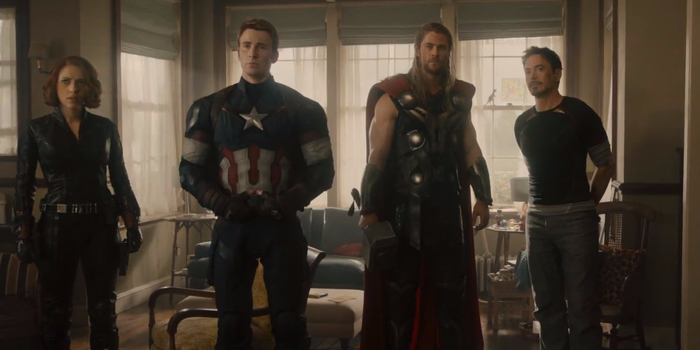
The Avengers reach Clint’s home after Wanda’s attack has destabilized the group. Her visions have made each hero confront a private fear, and the team has been scattered emotionally even before it is physically separated. They have been operating in public spaces, in armor, inside laboratories and vehicles. At the farm, the movie makes them cross a threshold into a life they do not control.
That threshold is the first important piece of scene construction. Clint is not simply taking his teammates to a convenient safehouse. The location is his family’s home. Laura opens the door; the children are there; Clint belongs to this place in a way his teammates have never seen. The audience has to revise its understanding of him at the same moment the Avengers do. A character previously defined by his usefulness to the team is revealed to have an entire identity the team has not been allowed to see.
That is a change in information, but it is also a change in value. Before the reveal, Clint can look like the most expendable Avenger: he has no powers, no armor, no grand public profile. After the reveal, he is the person carrying the greatest immediate personal risk into every mission. The same archer has not changed. Our understanding of what his choices cost has.
In scene design, that is a powerful kind of reversal. It does not require a new villain to walk in or a secret weapon to be uncovered. The reveal changes the emotional meaning of what has already happened. Clint’s absences, his evasiveness, and his willingness to take danger onto himself acquire new context. He has not been hiding because he has nothing to lose. He has been hiding because he has so much to lose that he cannot let the work find it.
The scene also redirects the audience’s attention from the Avengers as a brand to the people who make up the team. The heroes are no longer in the room because the world needs its protectors. They are guests trying to figure out how to sit at a family’s table. That shift in social behavior does important story work: for a moment, the team cannot solve its problem by fighting, flying, or calling in technology. It has to encounter another person’s life.
Clint’s secret life changes how we read the team
Clint’s family is not introduced as a new motivation just before the climax. It is a concealed part of the character that has been operating in parallel with the Avengers’ story. That distinction matters. A sudden revelation can feel like an emotional lever the writer pulls because the plot needs one. A hidden life feels earned when it makes earlier behavior newly legible and creates new consequences from the same character traits.
Clint has always been the Avenger who works at the edge of the frame. He is a human being among gods, super-soldiers, geniuses, and monsters. The farmhouse gives that apparent limitation a different dimension. He can be wounded. He can be replaced in the lineup. But he also has a family who know him outside the uniform. His life is not smaller than the team’s; it is simply less visible to them.
The secrecy creates a genuine tension rather than a clean heroic ideal. Clint has protected his family from the Avengers’ world by keeping them from the team, but now the team is physically inside their home. His secret has kept them safe in one sense and isolated them in another. Laura knows the life he leads, but his teammates do not. Once he opens the door, two worlds that he has kept separate can no longer stay separate.
That is why the reveal can support both warmth and unease. The children running to their father are not merely a cute image placed in the middle of an action movie. Their presence changes the stakes of every later decision Clint makes. If he leaves again, we understand what he is leaving. If he stays, we understand what he is protecting. The scene does not need to tell us which decision is morally pure. It makes the competing values visible.
Laura’s presence matters for the same reason. She is not only a sign that Clint has a family. She is the person who has to live with his choices when the Avengers leave. The heroes can call the mission necessary and return to the fight. Laura remains with the consequences of that decision in the home the movie has just shown us. That contrast gives Clint’s heroism an unseen cost, and it prevents the story from treating sacrifice as an abstract virtue.
Natasha and Bruce turn the reveal into a question about choice
The farmhouse scene spreads its dramatic work across the ensemble. Natasha and Bruce’s conversation is not an unrelated romantic subplot inserted between action beats. It is a second version of the scene’s central question: can someone shaped by violence still choose an ordinary future?
Bruce is afraid of bringing the Hulk into a life where other people could be hurt. Natasha has learned to describe herself through what the Red Room did to her. She tells Bruce that the program sterilized her, then uses the word “monster” for herself. The line does not simply tell us a piece of her past. It shows the emotional logic she has been using to interpret that past. She has been trained to think that what was done to her determines what she can be.
Bruce’s fear and Natasha’s shame are not the same problem, but the scene allows them to recognize one another inside them. Bruce believes his physical power makes intimacy dangerous. Natasha believes the Red Room’s violence has made her incapable of being a mother. Both imagine that the damage in their past has already made the decision for them. The conversation gives them a brief chance to speak as people who want a future, not just as weapons trying to manage their abilities.
The word “choice” is crucial here. Natasha’s story is not tragic merely because she cannot have children. It is tragic because the Red Room took that possibility away from her without consent, then taught her to see the result as proof that she is a monster. Her line identifies a violation of agency. Bruce’s response is shaped by another form of fear: he thinks he must deny himself a relationship to protect others from the Hulk.
The sequence does not solve either problem. A meaningful quiet scene does not have to repair every wound it reveals. Its function is to make the wound active in the present. Natasha and Bruce’s attraction now carries an obstacle that is emotional, bodily, and ethical. They cannot simply flirt their way into a future. They have to confront what each believes a future would cost.
That unresolved tension is part of what makes the scene more than a breather. The film lets a relationship alter the characters’ understanding of their options, but it does not pretend that recognizing a possible life makes the danger disappear. Clint’s home shows what family can look like; Natasha and Bruce show why that life may feel unreachable. The contrast makes both stories richer.
Steve is the outsider in the room
Steve’s function in the farmhouse sequence is quieter, but it is essential. He is present in the home without belonging to it. He sees Laura, Clint, and the children as a family from the outside, just as he has spent years looking back toward Peggy and the dance he lost. Wanda’s vision has already shown that longing. At the farm, Steve is placed among the ordinary rhythms he has not allowed himself to claim.
This gives the scene a second dramatic use: the same setting means different things to different characters. For Clint, it is home. For Laura, it is the place that must absorb the risk of Clint’s work. For Natasha and Bruce, it is evidence of a future they are unsure they can have. For Steve, it is a life he can recognize but has not chosen. That layering is a central craft advantage of an ensemble scene. The room is one; the emotional stories are several.
Steve does not need a speech about Peggy for the audience to feel the contrast. His stillness in a family space can carry the thought. In a story with a character like Captain America, silence is often more revealing than another declaration of duty. The audience already knows what he believes about fighting for people. The farmhouse allows us to notice what he lacks while he keeps doing it.
That absence becomes important in Endgame, when Steve finally chooses to stay with Peggy. The farmhouse gives that ending an earlier emotional reference point. We have seen Steve beside a family and understood that he is not indifferent to ordinary life. He has been carrying a version of that desire through the story. His final choice can therefore feel like the completion of a long-delayed personal need rather than a random reward delivered after the battle.
Fury’s arrival turns reflection into a decision
A domestic sequence can fail if it only asks the audience to enjoy a pause. The farmhouse avoids that by giving the pause a dramatic job. The characters arrive shaken and uncertain; the home reveals the personal stakes; Fury’s return offers a path back into action. The scene does not simply interrupt the plot. It prepares a decision about whether the team will continue.
Fury’s presence changes the scene’s energy. The heroes have been given a glimpse of a life outside the war, but the war has not stopped while they were at the farm. The question becomes whether they will accept the cost of returning to it. Clint’s family makes the risk tangible, and the conversations among Natasha, Bruce, and Steve expose other private costs. The choice to fight again now comes after the audience has seen what fighting threatens.
That sequence gives the farmhouse a hinge function. Before it, the Avengers are reacting to Wanda’s attack and Ultron’s growing power. After it, the group has to decide what kind of team it will be and what it is willing to protect. The scene changes the pressure surrounding the next action without changing the external objective. Ultron still has to be stopped; what changes is the human meaning of doing so.
This is one reason the scene can feel slow to viewers who measure every sequence by how much it advances the villain’s plan. Its progress is partly internal. The story is building a new understanding of the characters and altering the emotional value of the mission. That kind of movement is easy to miss if we treat only plot information as story information.
Robert McKee writes, “True character is revealed in the choices a human being makes under pressure.” The farmhouse does not reveal character by giving everyone a tidy answer. It shows the pressure that will make later choices legible. Clint has a family to return to. Natasha and Bruce see the limits they fear they cannot cross. Steve is confronted with a life he has not had. Fury asks the Avengers, in effect, whether they will go back into the fire knowing what the fire can take from them.
Why the quiet scene earns its place
The most useful test for a quiet sequence is not “Does it slow the movie down?” It is “What does the story make possible after this scene that it could not make possible before?” The farmhouse makes Clint’s choices more costly, gives Natasha and Bruce a future to fear and desire, and puts Steve’s longing into a visible domestic setting. It also gives the audience a clearer answer to the question of what the Avengers are fighting for.
Remove the farmhouse and the team can still return to the plot. They can still assemble, confront Ultron, and try to save the world. But Clint remains a capable archer without a life beyond the mission. Natasha and Bruce remain a possible romance without the same revealed barriers. Steve’s yearning for Peggy remains part of his history, but the film loses this shared space where he can see another person’s ordinary life up close. The action would still happen; it would mean less.
That is the difference between decorative emotion and structural emotion. Decorative emotion asks the audience to feel something while leaving the story’s choices unchanged. Structural emotion changes what an action costs, what a character can lose, or what a decision means. The farmhouse does not replace the fight. It gives the fight a human scale.
The Doomsday trailer uses a related idea in reverse. Steve is no longer watching Clint’s family from the outside. He has built a family with Peggy, and the Fantastic Four arrive to pull him back toward the public identity he once set aside. Our analysis of why the trailer needs Steve’s family looks at how that reversal can make the return emotionally costly. For the more literal question of why Steve is back, read what the trailer confirms about his return.
The farmhouse scene earns its place because it changes the next choice. The room is quiet, but the decision waiting outside it becomes heavier.