Full spoilers for The Last Kingdom and Seven Kings Must Die follow.
Short answer: The Last Kingdom never definitively tells us whether Uhtred dies. At the end of Seven Kings Must Die, Uhtred is gravely wounded after the Battle of Brunanburh and returns to Bebbanburg. His living family and friends are behind him. Ahead of him, he sees Valhalla filled with warriors and people he has lost.
Then the story stops before Uhtred chooses either world. Maybe he dies and enters Valhalla. Maybe he survives and remains at Bebbanburg. The ambiguity is intentional, but I think asking whether Uhtred’s heart literally stops misses the more interesting thing the ending is doing.
For his entire life, Uhtred has existed between two worlds: Saxon and Dane, Christian England and the pagan beliefs of his childhood, Alfred’s kingdom and the Bebbanburg he has spent decades trying to reclaim. The Last Kingdom ends by putting him exactly where he has always been — between those worlds — except this time, both of them finally have a place for him.
Start With Our Seven Kings Must Die Review
This page goes deep on Uhtred’s final fate. For our complete take on the movie — including Æthelstan, the Battle of Brunanburh, the plot yoga required to give Uhtred one more arc and why Mary thinks this is basically The Last Kingdom 5.1 — start with our full review and podcast.
Does Uhtred Die At The End Of Seven Kings Must Die?
We don’t know. Uhtred is badly wounded during the Battle of Brunanburh, but he survives long enough to return home. Inside Bebbanburg, he stands with the people who are still alive and hears another celebration coming from a nearby hall.
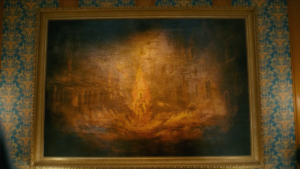
When Uhtred looks toward that hall, he sees Valhalla and several people from his past feasting inside. He stands in the doorway with the living on one side and the dead on the other. The movie never shows him crossing into Valhalla, but it also never shows him recovering from his wounds.
The Ambiguous Ending Is Intentional
This is not an ending where the filmmakers secretly know that Uhtred definitely lives or definitely dies and simply refuse to tell us. Alexander Dreymon has spoken positively about the ambiguity of the final scene, particularly the idea that Uhtred is being presented with a choice between the people he still loves and the people he has lost.
Screenwriter Martha Hillier has likewise explained that there was no definitive behind-the-scenes answer that the audience was supposed to discover. Uhtred may survive his wounds. He may die that night. The story deliberately leaves both possibilities alive.
Mary Thinks Uhtred Dies. I Think The Choice Matters More.
Mary’s interpretation is wonderfully uncomplicated: Uhtred is gravely wounded, he sees Valhalla, he is approximately a thousand years old at this point, and the story ends. He dies. Case closed.
I read the scene differently. Whether Uhtred medically survives is less important to me than what the image represents. The series has spent years refusing to choose one identity for him, so I think the final scene preserves that idea. Both destinations are real to Uhtred. Both contain people he loves. For once, nobody else gets to tell him which one he has to choose.
Why Uhtred Seeing Valhalla Matters
Valhalla represents much more than a destination after death. It represents the Danish part of Uhtred’s identity that he has refused to surrender even while spending most of his adult life serving Christian kings and helping create a Christian England.
Uhtred may love Christian people and fight repeatedly for Saxon kingdoms, but Ragnar, Brida and the world that raised him remain part of him. Seeing Valhalla means that the Danish life he carried for decades has not simply disappeared because Alfred’s political vision ultimately won. That world still recognizes Uhtred too.
Uhtred Has Always Been A Man Between Two Worlds
The central dramatic problem of The Last Kingdom has never really been Bebbanburg, even though Bebbanburg gives Uhtred the concrete goal that drives most of the series. Underneath that goal is a harder question: where does Uhtred actually belong?
He is born Saxon but raised Dane. He loves people from both cultures, despises plenty of the institutions around Christian Wessex and still risks his life repeatedly to preserve it. Alfred needs Uhtred precisely because he can move between worlds Alfred cannot, while Brida eventually comes to resent him because she believes he keeps choosing Saxons over the Danish identity they once shared.
Uhtred belongs to both worlds, which means he has spent most of his life never feeling entirely claimed by either one. The final scene changes that. The living want him. Valhalla wants him. The man who could never find one place capable of containing all of him discovers that both places have room.
The Final Shot Turns Uhtred’s Entire Life Into One Image
The staging is not subtle, and I don’t think it needs to be. Uhtred literally stands in a doorway. Behind him is Bebbanburg and the life he spent decades fighting to reclaim. Ahead of him is Valhalla and the people connected to the Danish identity he never surrendered.
Saxon or Dane. Christian England or pagan Valhalla. The world he helped build or the world that made him. The Last Kingdom takes the internal conflict it has been dramatizing since the first season and finally makes that conflict physical.
Why Bebbanburg Matters To Uhtred’s Ending
Uhtred is not facing death in some anonymous field hundreds of miles from home. He is standing inside Bebbanburg, the place that represented the life stolen from him when he was still a child.
For most of the series, Uhtred believes reclaiming Bebbanburg will repair something fundamental about his identity. Kings change, kingdoms rise and fall, lovers die and alliances break, but Bebbanburg remains the destination he can point toward when everything else becomes complicated.
Season 5 finally gives him that victory. By the time the movie reaches its ending, Uhtred has Bebbanburg, his family, his friends and the knowledge that Alfred’s dream is finally becoming England. Very little remains unfinished, which is why the possibility of death no longer feels like the story taking something away from him.
Is Uhtred One Of The Seven Kings Who Must Die?
The movie deliberately plays with the possibility. Uhtred repeatedly points out that he is not technically a king, but by this stage he rules Bebbanburg, commands enormous loyalty and possesses enough political power that actual kings repeatedly need him.
I don’t think we need to turn the prophecy into medieval arithmetic to make the idea work. Uhtred has always occupied the space beside kings. Alfred cannot achieve what he achieves without him. Edward needs him. Æthelstan’s path toward England again depends on him. History remembers the kings, while The Last Kingdom spends six chapters asking us to remember the man standing beside them.
Uhtred’s Final Choice Completes Alfred’s Story Too
Alfred spends much of the series imagining an England that does not yet exist. Wessex is never supposed to be the final destination. He believes the separate kingdoms can eventually become something larger, even if he will never live long enough to see it completed.
Uhtred spends those same years resisting being absorbed into anyone else’s vision. He wants Bebbanburg, his own destiny and the freedom to define himself rather than become another piece on Alfred’s political board. Yet through one of the great ironies of the series, Uhtred becomes one of the people who makes Alfred’s dream possible.
By the end of Seven Kings Must Die, the political work is essentially done. Æthelstan has the kingdom earlier generations kept reaching toward, Bebbanburg is finally Uhtred’s and England exists. That does not mean Uhtred’s life has to end. Dramatically, however, it means the story can.
Does Uhtred Die In Bernard Cornwell’s Books?
No definitive death scene from Bernard Cornwell’s novels forced the filmmakers into this ending. Uhtred remains alive at the end of War Lord, the final novel in Cornwell’s Saxon Stories, which gave the television adaptation room to create its own final image for this version of the character.
I think that freedom helped. Instead of simply adapting a literal death, the movie creates an ending built around the television Uhtred’s defining conflict. A character split between identities is given two possible destinations, and the story refuses to declare that one half of him ultimately mattered more than the other.
So, Does Uhtred Die?
Maybe. Uhtred survives Brunanburh long enough to return to Bebbanburg, where he stands gravely wounded between the living people who love him and a vision of his dead friends celebrating in Valhalla. The movie never shows him enter the hall, but it never shows him recover either.
You can read that as Uhtred dying. Mary certainly does. You can also read it as a final choice deliberately left unresolved. Either interpretation preserves the emotional ending that matters.
The boy who lost his first home finally reclaimed Bebbanburg. The Saxon raised by Danes helped create England. The warrior who spent his entire life caught between identities finally discovers that there is a place for him on both sides of the door. Uhtred’s destiny was never simply to survive. It was to belong.
More Last Kingdom Guides From Mary & Blake
Explore The Complete Last Kingdom Story
Our main Last Kingdom hub connects all five season guides, Seven Kings Must Die, the complete Mary & Blake podcast archive, Uhtred explainers and the real history underneath the road from Northumbria to England.
Pull Up A Chair
If you like talking about why stories work, why endings matter and why we’re still arguing over whether Uhtred died years later, join us inside the Nerd Clan for bonus conversations, community discussion and whatever fandom takes over the kitchen table next.