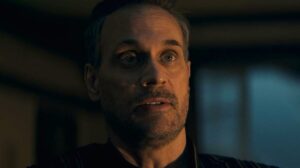
Doctor Strange is one of the most important characters in Marvel’s Multiverse Saga because the MCU keeps turning his greatest strength — control — into moral debt.
The more Strange wins by using forbidden tools, impossible calculations and “only way” logic, the more the story teaches us that his competence has a cost. He usually survives the immediate crisis. The problem is that the consequence does not always disappear with it.
Quick answer: Doctor Strange matters to Marvel’s Multiverse Saga because he is the hero most willing to justify dangerous choices when reality is collapsing. From sacrificing others to using the Darkhold and dreamwalking, Strange repeatedly reaches for the move that solves the immediate problem and accepts the possibility that somebody else will pay for it later. That makes him an important bridge between Marvel’s multiverse chaos, Avengers: Doomsday, Doctor Doom and Secret Wars.
Spoiler note: This article discusses full spoilers for Doctor Strange in the Multiverse of Madness and broader MCU multiverse storylines.
Listen Right Here
Why Doctor Strange’s Moral Debt Matters
Here is the craft question driving this entry: how do you make a hyper-competent hero feel dangerous without suddenly making him stupid? You do not take away the intelligence that made the audience trust him. You make the methods that intelligence produces increasingly expensive.
That is the tool here: Moral Debt. A hero can borrow a victory by crossing a line, sacrificing something or using a dangerous shortcut. The immediate problem gets solved, but the dramatic cost does not disappear simply because the hero won. Eventually the story has to send the invoice.
Doctor Strange has been accumulating those invoices for years. When reality begins collapsing, his instinct is almost always the same: find the move that works, accept the ugly calculation and deal with the consequences afterward.
The dangerous part is that Strange is usually very good at it.
Doctor Strange’s “Only Way” Reflex
Multiverse of Madness opens by giving us a brutal version of the pattern. Defender Strange is being chased through the Gap Junction with America Chavez when he realizes they may not escape. His solution is to take America’s power, knowing the process will kill her.
America reminds him that they are friends. Strange still reaches for the calculation: in the grand calculus of the multiverse, her sacrifice is worth more than her life. He is not portrayed as secretly evil in that moment. He genuinely believes the horrible choice has become the necessary one.
That is the Doctor Strange problem in miniature. Under enough pressure, possibility collapses into calculation, and Strange becomes frighteningly comfortable deciding which cost is acceptable.
The film then makes the character pattern explicit at Christine’s wedding. Nic West asks Strange whether there truly was no other way to defeat Thanos, and Strange insists he made the only play they had. Christine later names the trait underneath that confidence: Stephen always has to be the one holding the knife.
That line matters because it turns Strange’s competence into a moral question. Is Stephen the person willing to make the difficult choice because somebody has to, or has he become the person who needs to be the one deciding what everybody else must sacrifice?
The difference is where Moral Debt begins.
Earth-838 Shows What Happens When The Debt Scales
Earth-838 gives Strange a version of himself whose methods have already reached their logical conclusion. That universe’s Doctor Strange used the Darkhold while searching for ways to defeat Thanos, dreamwalked through alternate realities and ultimately triggered an incursion that destroyed another universe.
The Illuminati do not condemn him because he wanted catastrophe. They condemn him because his attempt to save reality helped destroy one anyway. His intentions remain heroic while the consequences become apocalyptic.
That distinction is crucial. The story is not saying Doctor Strange is secretly a villain. It is saying that a heroic pattern can become dangerous when the scale changes.
A single shortcut can look necessary. Repeated shortcuts become a method. A method backed by enough cosmic power can become a worldview.
That is Moral Debt growing interest.
Our Doctor Strange Sees The Warning — And Crosses The Line Anyway
The smartest thing Multiverse of Madness does is show Stephen exactly where that road can lead and then put him under enough pressure that he uses the same forbidden tool anyway. When America is trapped and the available paths disappear, Strange uses the Darkhold to dreamwalk into the corpse of his dead variant.
The choice is understandable. It is inventive. It is also explicitly forbidden.
That is why this works better than making Strange suddenly reckless. He has evidence that the Darkhold corrupts people. He has seen another version of himself help cause an incursion. Wong warns him about what he is doing, and Wanda correctly recognizes the hypocrisy in Strange condemning her methods while granting himself permission to cross dangerous lines when he believes the circumstances justify it.
Stephen still does it.
And the frustrating part for anyone trying to argue against him is that it works.
He saves America.
That is how a story makes competence dangerous. The forbidden move keeps producing victories.
Winning The Moment Does Not Erase The Cost
The film does not allow Strange to walk away completely clean. After the immediate crisis is over, the Darkhold leaves its mark and Stephen develops a third eye. Whatever exactly Marvel ultimately chooses to do with that consequence, the image itself is clear: using the forbidden tool changed him.
That is the important dramatic principle. A shortcut stops being meaningful if the story treats the violation as free simply because the hero had a good reason. If crossing the line works every time and leaves nothing behind, then the line was never really a line.
Doctor Strange becomes interesting when the audience can understand exactly why he made the choice and still wonder what the choice has cost him.
Why Doctor Strange Points Toward Doctor Doom
This is where Doctor Doom becomes relevant. I do not think Doom needs to tempt Strange with evil, and I do not need Marvel to force some arbitrary partnership simply because both characters use magic and have complicated histories in the comics. The stronger dramatic connection is already sitting inside Strange’s established behavior.
Both characters can become obsessed with the same outcome: stability. Reality has to hold. Worlds cannot keep colliding. The multiverse cannot remain an infinite collection of disasters waiting to happen.
The danger is method.
Strange repeatedly tells himself that the ugly move is acceptable because the situation demands it. Doom can take that logic one step further and build an entire system around it. Instead of temporarily crossing the line because reality is collapsing, Victor can argue that reality requires somebody powerful enough to decide where the line should be.
That makes Doom dangerous to Strange because Victor does not need to introduce him to an alien philosophy. He can offer a more absolute version of reasoning Strange already understands.
Doom’s “Stolen Lives” Argument Makes Strange’s Debt More Relevant
The newer Avengers: Doomsday material makes this old Doctor Strange argument more interesting because Doom is now framing the multiverse in terms of consequence. His accusation that Marvel’s heroes have lived “stolen lives” suggests that he does not simply see branching realities as a technical malfunction. He sees a debt.
That should sound familiar.
The MCU has repeatedly allowed heroes to solve impossible problems by reaching outside the normal boundaries of reality. Time travel restored the people lost to the Snap. Loki’s accidental escape created another life. The X-Men rewrote their future. Strange himself has repeatedly used forbidden multiversal tools when the immediate stakes became large enough.
None of that automatically makes Doom correct. But it gives his diagnosis something more interesting to attack than generic superhero hypocrisy. Strange already knows firsthand that good intentions do not prevent a dangerous multiverse choice from creating catastrophic consequences.
Earth-838 proved it.
Doctor Doom Can Weaponize Strange’s Greatest Fear
The most effective version of Doom does not tell Strange that sacrifice is good. Strange already understands sacrifice. Doom tells him that the emergency has become too large for heroes to keep improvising exceptions.
Imagine the pressure without pretending we know the screenplay. Worlds are colliding, incursions are accelerating and every temporary solution creates another unpredictable variable. Strange wants to keep finding the play that saves the moment. Doom offers something more attractive and more terrifying: a system designed to make sure there is never another uncontrolled moment.
For a character whose instinct is to hold the knife, that offer should be deeply uncomfortable.
Because the question is no longer whether Strange will cross a line to save reality. We already know he will.
The question becomes whether he will allow someone else to draw the lines permanently.
Why Strange And Doom Should Not Simply Agree
This is where I would want Doomsday to resist the easy version of the relationship. Strange should be able to understand Doom’s reasoning better than most heroes without automatically endorsing his conclusion.
Stephen has already experienced the danger of believing one person can make every impossible calculation. He has met a version of himself whose attempts to control the multiverse destroyed another reality. He has watched Wanda justify monstrous choices through grief. He has been confronted by Christine over his need to hold the knife.
Those experiences should matter.
Doom can therefore become both temptation and warning. Victor represents the final form of the belief Strange keeps flirting with: if one person understands the danger better than everyone else, maybe that person should be allowed to decide what everyone else must lose.
Strange’s growth depends on finally rejecting that equation.
Multiverse Of Madness Already Gives Strange A Different Answer
This is why the climax with America Chavez matters. The movie begins with one Doctor Strange deciding America’s life is expendable because her power is more valuable than her survival. Our Stephen eventually reaches the opposite conclusion.
Instead of taking America’s power himself, he tells her that she can control it. He stops treating her as the variable that solves his problem and allows her to become the person making the choice.
That is not simply a nicer ending. It is the answer to the character flaw established at the beginning. Strange stops holding the knife.
Or at least he begins learning how to put it down.
That makes any future encounter with Doom much more interesting because Victor can pressure precisely the lesson Stephen has only recently begun to learn.
What Doctor Strange Has To Prove In Avengers: Doomsday
If Strange becomes important to the multiverse crisis again, the story should not merely ask whether he knows enough magic to help solve it. We already know he is powerful, inventive and willing to do something insane when the situation demands it.
The harder question is whether he has learned to distinguish responsibility from control.
Can Strange help save reality without deciding that his understanding gives him the right to sacrifice somebody else? Can he acknowledge that the multiverse has accumulated consequences without accepting Doom’s claim that one powerful man should determine how those consequences are corrected?
That is where all the old receipts become useful. Defender Strange sacrificing America, Earth-838 Strange causing an incursion, our Strange using the Darkhold and the final choice to trust America are not disconnected pieces of multiverse lore. They chart the same argument about who gets to hold the knife.
Keep Following Doctor Doom And The Multiverse
Doctor Strange’s moral debt is one part of Marvel’s larger Road to Doomsday. Our latest coverage of Doctor Doom, incursions, Loki, Secret Wars and the multiverse collision will update below automatically.
Craft-Analysis
What if Bob Reynolds finally becomes Sentry, saves everyone in front of him, and still loses the world? Our Avengers: Doomsday theory explores how Doctor Doom…
Craft-Analysis
Doctor Doom doesn’t need to overpower Loki in Avengers: Doomsday. He needs to make Loki confront a much harder possibility: that preserving everyone’s freedom may be…
Opinion
The Multiverse Saga has felt disconnected because it has been disconnected. But Avengers: Doomsday may have a chance to turn that structural weakness into story by…
kjr
The new Avengers: Endgame Encore trailer brought Tony Stark’s warning about messing with time back into focus. What if Stephen McFeely’s big Secret Wars idea is…
explainer
Doctor Doom says Marvel’s heroes have lived “stolen lives.” That may be more than a threat. It could turn the MCU’s biggest victories into evidence against…
explainer
“Did you do this, Victor?” may reveal the key to Reed Richards and Doctor Doom in Avengers: Doomsday: two geniuses trying to solve the same crisis…
Why Doctor Strange’s Moral Debt Still Matters
The argument begins with Defender Strange deciding that America Chavez’s life can become an acceptable cost because the multiverse is at stake. Multiverse of Madness keeps escalating that instinct until Stephen has seen an alternate version of himself create an incursion, used the Darkhold himself and finally reached the moment where he chooses not to take America’s power but to trust her with it.
That is Moral Debt. Every “only way” solution creates an obligation the story eventually has to confront, and Doom now represents the crisis-level version of the temptation Strange has spent years wrestling with: the promise that enough control can finally make the impossible choices disappear.
The craft lesson works far beyond Marvel. A competent hero becomes dramatically dangerous when the methods that keep producing victories also accumulate consequences, and growth only matters when the next crisis pressures the hero to reach for the same shortcut again.
Strange’s real test is not whether he can save reality. It is whether he can save it without needing to hold the knife.