
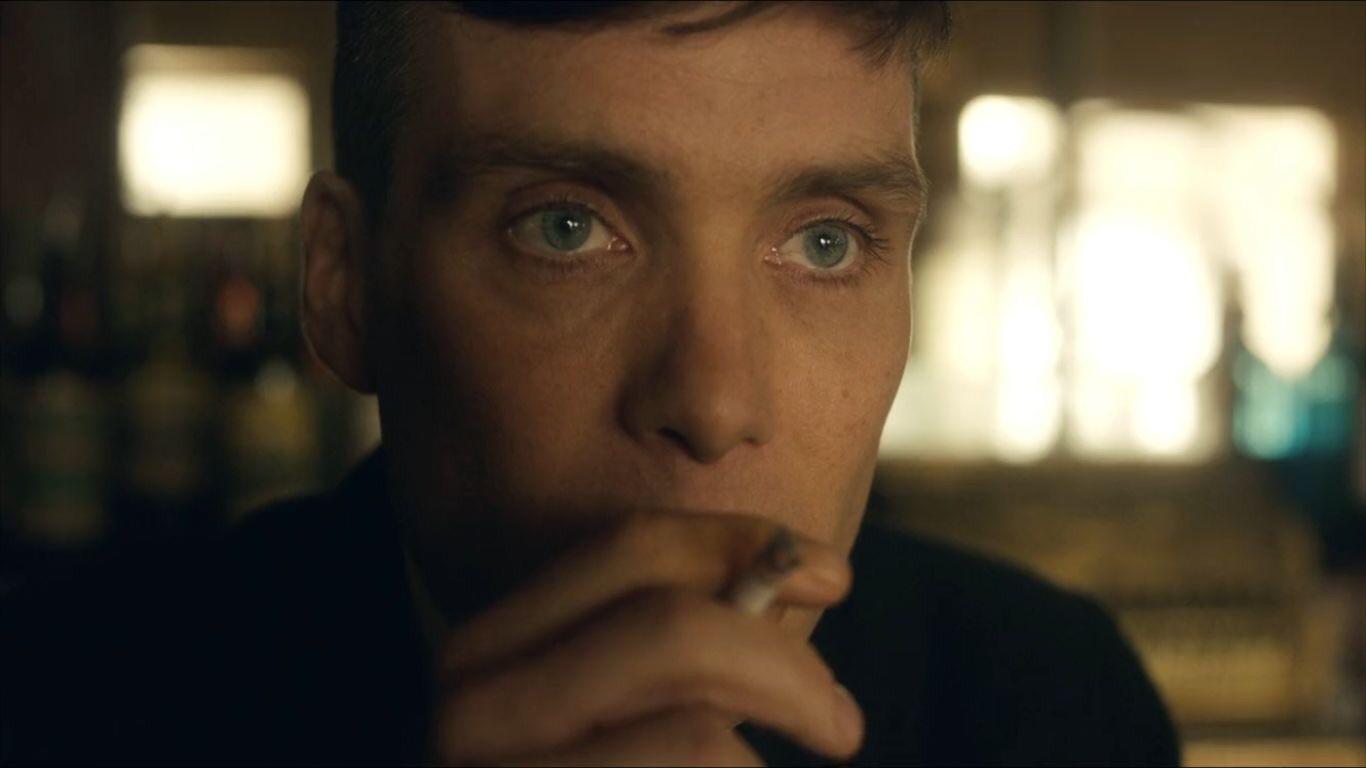
Season 1 Episode 6 spoilers follow. This explanation stays within Season 1.
The soldier’s minute in Peaky Blinders describes Tommy Shelby’s way of facing imminent danger: narrowing his attention to the immediate moment instead of carrying the unbearable weight of what came before or what might happen afterward. In the Season 1 finale, the idea surfaces as Tommy and his men face Billy Kimber’s forces. It offers a remarkably concise window into the psychology of a former soldier who has become a gangster and businessman.
The appeal of this exchange lies in a contradiction that Steven Knight has been developing since the pilot. Tommy is obsessive about the future. He thinks through betting markets, political leverage, family alliances and business expansion several moves ahead. Yet when his life is actually in danger, all that long-range calculation contracts into a much smaller unit of time.
What Does Tommy Mean by the Soldier’s Minute?
Tommy’s point is that a soldier approaching a deadly confrontation can survive mentally by concentrating on the next minute. The past contains things he cannot change. The future contains outcomes he cannot guarantee. The immediate present gives him a task he understands: assess the danger, take action, and stay alive.
The line is rooted in the character’s experience of the First World War. Tommy served in France, and the series repeatedly shows how his battlefield experiences have altered his sleep, his relationships and his behavior. The soldier’s minute is a survival-oriented way of thinking that remains available to him even after returning to Birmingham.
That is also why the exchange matters at this precise point in the season. Tommy expects a controlled operation against Billy Kimber at Worcester. Instead, his intelligence network has failed, his ally Grace has passed information to Campbell, and Kimber arrives on the streets of Small Heath. The business plan has become an immediate threat to the lives of the people Tommy leads.
Is the Soldier’s Minute a Real Military Expression?
The show gives the phrase its dramatic meaning through Tommy’s explanation. It is reasonable to connect the idea to battlefield stress and short-horizon survival thinking, but the episode itself does not establish that “the soldier’s minute” was a universally recognized British Army term in the First World War. Claims about its historical prevalence would require separate contemporary military evidence.
This distinction matters because Peaky Blinders regularly draws upon real history while using stylized language to reveal its characters. A phrase can express a psychologically credible experience without functioning as a verified historical quotation. The story’s immediate purpose is to let us understand how Tommy processes danger.
Why the Soldier’s Minute Matters to Tommy’s Character
For most of Season 1, Tommy’s ambition offers a compelling answer to his trauma. He builds plans, acquires influence and attempts to create a future in which the Shelby family will never again be powerless. Much of his outward confidence depends upon the belief that sufficient intelligence and determination can place events under his control.
The finale tests that belief repeatedly. Grace’s betrayal exposes the limits of his information gathering, Ada interrupts the anticipated gunfight, and Danny Whizz-Bang dies even though Tommy defeats Kimber. These outcomes show the limits of strategic brilliance when other people’s choices and the randomness of violence enter the equation.
The soldier’s minute helps explain Tommy’s composure under those conditions. In a battle, he can let go of the vast plan and deal with the crisis directly in front of him. It also helps explain his emotional isolation. A person who survives by suppressing the past and suspending the future may find everyday intimacy much harder than facing an armed opponent.
Related Coverage
- Knee Jerk Reaction: Peaky Blinders Season 1 Episode 6 Review: Tommy Shelby’s Victory Offers Little Peace Within The Life He’s Created
- Peaky Blinders Season Guide: Peaky Blinders Season 1: Episodes, Cast, Recap & Complete Guide
Get Peaky Blinders Updates
Get Mary & Blake’s Peaky Blinders Knee-Jerk Reactions, deep episode breakdowns, character studies, screenwriting craft, and the real history behind the Shelby world.
How the Finale Uses Time as a Dramatic Tool
The episode places three different experiences of time in collision. Tommy’s plan to remove Kimber represents the future he is trying to manufacture; his trauma and loyalty to Danny represent the past that still claims him; and the confrontation outside the Garrison forces him into the immediate present. Knight condenses all three into the same sequence.
The effect is especially poignant when Tommy succeeds externally but loses Danny. Tommy can survive his minute and still be left with consequences that last for years. In that sense the idea reaches beyond one memorable line: it describes both the strength that allows him to lead and the limitations that make peace so elusive.
Where to Go Next
For the wider wartime context, read our Flanders Blues explainer. For the full showdown, Danny’s death and the ways the finale echoes the pilot, continue with our Season 1 Episode 6 KJR. Our Peaky Blinders Season 1 guide brings the entire first-season analysis together.