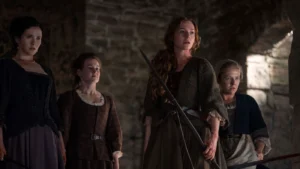
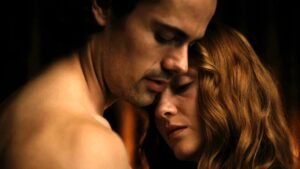
Full spoilers for The Rings Of Power Season 1 Episode 7, “The Eye,” follow.
Mary & Blake recap and react to The Rings Of Power Season 1 Episode 7, “The Eye,” as Galadriel and Theo walk through the ashes of the Southlands, Míriel loses her sight, Elendil believes Isildur is dead, Elrond risks his relationship with Durin, and the land created by Mount Doom receives its new name: Mordor.
The episode slows the story down after the eruption and asks what each character will carry forward from the disaster. Galadriel recognizes the damage created by obsession and tells Theo that guilt becomes difficult to release once a person accepts it as an identity. Elendil carries the apparent loss of his son. Míriel carries a failed expedition and a future she can no longer see. Durin chooses his friendship with Elrond even when that choice costs him his standing with his father.
Those relationships give the devastation meaning. The orange skies, burning buildings, ash-covered faces, and frightened survivors establish the scale of the catastrophe. The conversations inside that landscape reveal what the catastrophe changes.
Mary’s rating: 5 rings out of 5. Blake’s rating: 4.87 rings out of 5.
Watch or listen to the complete recap and reaction below, then revisit the season with our complete The Rings Of Power Season 1 recap and episode guide.
Watch Or Listen To Our Rings Of Power Episode 7 Recap
Use the podcast player above to listen to the full episode, or watch our complete The Rings Of Power Season 1 Episode 7 recap and reaction on YouTube.
Subscribe For New Episodes
APPLE PODCASTS SPOTIFY YOUTUBE
The Rings Of Power Season 1 Episode 7 Recap: What Happens In “The Eye”?
“The Eye” begins in the immediate aftermath of Mount Doom’s eruption. Galadriel awakens beneath an orange sky with ash covering her face and the destroyed Southlands burning around her.
The survivors are scattered throughout the ruined village. Galadriel finds Theo, and the two begin traveling toward the Númenórean encampment. Theo does not know whether Bronwyn or Arondir survived.
Their journey gives Galadriel an opportunity to speak honestly about guilt. Theo believes the eruption happened because he surrendered the sword hilt to Adar. Galadriel tells him that she gave power to the enemy and understands what it means to feel responsible for destruction.
She also warns Theo against placing the entire burden upon himself. Once guilt becomes something a person believes must be carried forever, putting it down becomes increasingly difficult.
Galadriel tells Theo that other forces may be working in the world, even when their design remains impossible to understand. Theo struggles to accept that idea because his home has been destroyed and the meaning behind the loss remains invisible.
The pair hide from Orcs beneath the roots of a tree before continuing toward the camp. Galadriel also reveals that she once enjoyed dancing and riding horses, showing Theo a life beyond the warrior identity that has defined her throughout the season.
She speaks about her husband, Celeborn, whom she believes she lost during the war. The revelation adds another source of grief beneath Galadriel’s pursuit of Sauron.
At the encampment, Theo reunites with Bronwyn and Arondir. Bronwyn survives the eruption and continues supporting Halbrand as the promised king of the Southlands.
Halbrand has suffered a serious wound. Galadriel decides that he must be taken to Eregion for Elven medicine, placing the two characters on the road toward Celebrimbor.
Míriel survives the destruction but loses her sight. She initially conceals the injury from her soldiers while Elendil helps move her away from the camp.
The queen tells Galadriel that Númenor will return with a larger force. The expedition has ended in disaster, yet Míriel refuses to abandon the alliance she formed with the Elves and the people of the Southlands.
Elendil believes Isildur died beneath the burning structure that collapsed during the rescue efforts. Isildur’s horse, Berek, refuses to leave with the Númenóreans and runs back toward the ruined land.
In Khazad-dûm, Elrond asks King Durin III for access to the mithril that may save the Elves from fading. The king refuses because mining the newly discovered veins presents a serious danger to the Dwarves.
Durin IV rejects his father’s decision and continues digging with Elrond. Their work uncovers a vast mithril deposit, proving that the mountain contains enough ore to help the Elves.
King Durin discovers the disobedience, sends Elrond away, and strips his son of the symbol representing his status. Durin IV’s choice to help his friend creates a direct rupture with his father.
Disa encourages her husband to remember the kingdom he will inherit. She believes Durin IV will become king and should stop allowing his father’s fear to define their future.
After sealing the mithril shaft, King Durin throws away the Elven leaf Elrond left behind. The leaf falls into the depths of the mountain, where its renewed life and light reveal a Balrog waiting below Khazad-dûm.
The Harfoots arrive at their seasonal grove and discover that ash from the eruption has destroyed the plants and food waiting for them.
The Stranger attempts to heal one of the damaged trees. His uncontrolled power frightens the Harfoots and nearly harms Nori and the other children.
Sadoc tells the Stranger to leave the caravan. After his departure, the tree produces a new crop of apples, showing that his power succeeded even though the process appeared dangerous.
The mysterious trio following the Stranger arrives at the camp. Nori attempts to mislead them, but one of the figures uses magic to burn the Harfoots’ wagons and belongings.
Nori, Poppy, Sadoc, and Marigold decide to follow the Stranger and warn him about the people searching for him.
Adar and the Orcs gather in the land they have created. When asked what the new home should be called, the screen replaces “The Southlands” with “Mordor.”
The Rings Of Power Season 1 Episode 7 Review
“The Eye” works as the emotional aftermath to “Udûn.” The eruption has already happened, so the episode concentrates on shock, grief, responsibility, and the decisions that follow defeat.
Charlotte Brändström’s direction and Alex Disenhof’s cinematography give the opening a visual identity that belongs to the series. Galadriel’s eye appears through layers of ash before the camera reveals a landscape filled with smoke, fire, and orange light.
The images establish Mordor before the episode gives the land its name. This world has already changed at the level of color, air, visibility, and movement.
The episode’s strongest writing appears in the quieter relationships. Galadriel recognizes herself in Theo’s guilt. Elrond and Durin test the limits of a friendship shaped by decades of trust. Disa supports Durin while challenging the authority that continues to control him.
Mary gives the episode a perfect score because the emotional relationships, atmosphere, and consequences all work together. Blake considers it the strongest episode of the season at that point and gives it a 4.87.
Galadriel Finally Understands The Weight Of Her Obsession
Galadriel’s conversation with Theo represents one of her most important moments of growth during Season 1.
Theo believes he caused the destruction because he surrendered the sword hilt. Galadriel responds by acknowledging her own responsibility. Her pursuit of Sauron, her refusal to stop, and her decisions throughout the campaign helped place everyone in the Southlands.
She understands the instinct to transform responsibility into a permanent burden because she has carried her brother’s death in that way for centuries.
Galadriel tells Theo that he did not intend for the disaster to happen. She asks him to consider what existed in his heart when he made the choice.
The advice introduces compassion into the way Galadriel evaluates failure. Throughout much of the season, she has judged actions according to whether they advance or obstruct her mission. Theo’s grief forces her to recognize the difference between intention, consequence, and identity.
Her warning comes from experience: once someone decides that guilt must be carried forever, surrendering it can feel like betraying the people who were lost.
Why Galadriel And Theo Work Together
Galadriel and Theo appear to be an unusual pairing, but both characters are shaped by anger, guilt, and a desire to fight the darkness surrounding them.
Theo has been drawn toward the sword hilt and the sense of power it gives him. Galadriel has allowed her pursuit of Sauron to consume every other part of her identity.
The destruction of the Southlands places them at different stages of the same emotional path. Theo is beginning to believe that his worst decision defines him. Galadriel has spent centuries allowing loss and failure to define her purpose.
She can therefore offer Theo something more useful than reassurance. She knows what carrying the burden can do to him.
The journey also allows Theo to see parts of Galadriel that rarely appear. She speaks about dancing, horses, love, and the husband she believes she lost. The warrior begins to sound like a complete person rather than a weapon aimed at Sauron.
What Happened To Celeborn?
Galadriel tells Theo that she was married to Celeborn and that she has not seen him since he went to war.
She speaks as though he is dead, although the episode does not show his death or provide confirmation of what happened to him.
The revelation adds another layer to the grief Galadriel has carried. Her brother is not the only person she lost during the conflict with Morgoth and Sauron.
It also raises an unresolved question for the story. Celeborn may have died, disappeared, been captured, or survived somewhere beyond Galadriel’s knowledge.
Within this episode, the important revelation concerns Galadriel herself. She once had a relationship and a life containing joy, dancing, and companionship. Her current identity represents what remained after war stripped those parts away.
Why “The Eye” Is The Right Episode Title
The title works through several meanings at once.
The opening image belongs to Galadriel’s eye as she awakens in the ash. Míriel loses her eyesight during the eruption. The episode also depicts the creation of the land audiences associate with the Eye of Sauron.
Mary connects the title to the eye of a hurricane. The battle and eruption have passed, leaving an eerie period of quiet while the characters assess the destruction. The larger storm has not ended.
The episode feels slower because the characters are standing inside that temporary calm. Númenor must return home. Galadriel is carrying Halbrand toward Eregion. Elrond has been expelled from Khazad-dûm. The Stranger is separated from the Harfoots. Adar has created Mordor.
The immediate violence has stopped. Every storyline is now positioned for another collision.
Míriel’s Darkness Becomes Literal
Tar-Palantir warned Míriel that darkness awaited her in Middle-earth.
The episode initially appears to fulfill that warning through the eruption, smoke, ash, and sky created by Mount Doom. Míriel then reveals that the darkness has become personal because she can no longer see.
She describes a world of smoke and gray, language that also reflects the moral landscape facing the characters. Survival will increasingly require choices without a clear division between victory and loss.
Míriel’s response is defiance. She promises that Númenor will return with a larger army rather than allowing blindness and defeat to end the mission.
The promise gives her courage while creating another question. Míriel must return to a kingdom already divided over its relationship with the Elves and explain why an expedition ended with death, destruction, and no visible victory.
Why Isildur’s Disappearance Still Matters When We Know His Future
The episode leaves Isildur missing and presumed dead beneath the ruins.
Viewers familiar with the larger story understand that Isildur has a future beyond this moment. That knowledge changes the source of suspense.
The important question concerns Elendil. He believes his son is dead and must return to Númenor carrying that loss.
His grief may change the way he understands Míriel, the Elves, the expedition, and the political struggle waiting at home.
Berek’s refusal to leave suggests that the horse senses Isildur remains alive. The story can therefore separate father and son long enough for each character to change before their eventual reunion.
The apparent death functions as an emotional event for Elendil rather than a genuine mystery about Isildur’s survival.
Who Is The Rings Of Power Written For?
The Isildur storyline and Mordor reveal lead Mary and Blake into a larger discussion about the show’s intended audience.
A deeply knowledgeable viewer already knows that Isildur survives and understands the significance of Mordor. A completely new viewer may experience Isildur’s disappearance as a genuine death and the Mordor title as the introduction of another place.
The series appears aimed primarily at viewers who recognize the broad images, characters, and mythology from the films without remembering every name, date, or historical detail.
That audience can recognize the Balrog, understand that Mordor matters, and appreciate the visual similarities without knowing exactly how every event connects to the future.
The challenge comes when a reveal depends entirely upon audience knowledge. The word “Mordor” has enormous meaning for the viewer, while Adar and the Orcs do not react to the name because it appears as text rather than dialogue inside the story.
Does The Mordor Name Reveal Work?
Mary and Blake are divided over how the episode introduces the name Mordor.
The screen displays “The Southlands” and transforms the text into “Mordor” through fire. The moment makes the new identity unmistakable to the audience.
Mary would have preferred the change to occur through the map language the series had already established. Tolkien’s maps are an important part of the world, and the show frequently uses them to move between locations.
Blake sees an opportunity for Adar to name the land himself. That choice would connect the word to a character and create additional irony when Sauron eventually takes control of the home Adar created.
The existing reveal operates as information delivered directly to the viewer. A map transition or a line from Adar could have made the naming feel more connected to the storytelling world.
Elrond And Durin Remain The Heart Of The Show
Elrond and Durin’s friendship gives the episode its strongest emotional relationship.
Elrond needs mithril to save the Elves. Durin wants to help because Elrond is part of his family, even when the king refuses to risk the Dwarves.
The story gains texture through details that exist beyond the immediate argument. Durin and Elrond remember their old competition. Elrond admits that he allowed Durin to win while conceding that the effort still left him winded.
The episode also reveals that Dwarves possess private names shared only with family. Durin’s willingness to discuss that tradition shows how deeply he has accepted Elrond into his life.
The friendship matters because the larger mythology depends upon it. The fate of the Elves, the discovery of mithril, the tension inside Khazad-dûm, and the awakening danger beneath the mountain all move through this relationship.
The spectacle has emotional weight because Elrond and Durin have something personal to lose.
Why Durin Defies His Father
Durin believes his father’s caution has become an excuse for refusing to act.
King Durin sees the mithril vein as a danger to the Dwarves. Prince Durin sees a resource capable of saving his closest friend and an entire people.
Helping Elrond therefore becomes both a moral decision and an assertion of independence. Durin is no longer willing to let his father’s fear determine every boundary around his future.
The decision costs him immediately. King Durin sends Elrond away and removes the symbol of his son’s status.
The confrontation leaves Durin separated from his father at the moment Disa begins speaking more openly about the kingdom they will eventually inherit.
Is Disa Becoming Ambitious?
Disa’s speech to Durin comes from love, frustration, and belief in her husband.
She sees Durin allowing his father’s authority to diminish him and reminds him that the kingdom will eventually belong to them. Her support resembles the pressure Mary has given Blake during conflicts involving family, work, and independence.
Blake does not read the scene as simple greed. Disa wants Durin to stop living according to another person’s fear and make choices for their family.
Mary sees the possibility that ambition could grow from that support. The future stories about the Dwarves involve digging too deeply and desiring the wealth beneath the mountain.
Disa may remain the person encouraging necessary change. She may also discover that mithril gives her family access to power beyond what King Durin has allowed them to claim.
The strength of the scene comes from both possibilities existing inside the same speech.
Why Does The Elven Leaf Awaken The Balrog?
King Durin throws away the leaf Elrond brought from Lindon after closing the mithril shaft.
The leaf falls through the mountain and lands near the Balrog. Its presence reveals the creature and appears to awaken it.
Mary interprets the leaf as more than a physical object making a small sound. The leaf carries the restored life and light created through its proximity to mithril.
That energy enters one of the darkest places beneath Khazad-dûm and collides with an opposing force.
The image connects the Elves’ attempt to preserve life with the danger waiting beneath the Dwarves’ kingdom. Saving one people may encourage the mining that releases destruction upon another.
The Stranger Creates Life Through Uncontrolled Power
The Stranger attempts to heal the ruined grove, but the force of his magic frightens the Harfoots and nearly injures Nori.
Sadoc responds by sending him away. The Stranger’s intentions may be good, but the caravan cannot trust power that remains unpredictable.
After he leaves, the tree produces apples and restores part of the food supply. His magic succeeded even though the immediate experience looked dangerous.
Mary sees the apples as evidence that the Stranger is moving toward goodness. He creates life rather than destruction and appears confused by abilities he has not learned to control.
The scene continues separating intention from consequence. The Stranger wants to help, causes fear, and eventually provides what the Harfoots need.
Who Are The Three Mystics Following The Stranger?
The three figures following the Stranger are identified in the credits as the Dweller, the Ascetic, and the Nomad.
The podcast gives them the more practical names Eyebrows, Stick, and Shield.
They possess magical abilities, appear to know something about the Stranger, and respond violently when Nori attempts to send them in the wrong direction.
One of them extinguishes a flame with her hand before using magic to burn the Harfoots’ wagons.
Their arrival transforms the Stranger’s identity from an internal mystery into an immediate threat. Someone is searching for him and believes he has a larger role in the conflict developing across Middle-earth.
Is The Stranger Sauron, Gandalf Or Saruman?
The episode continues encouraging several interpretations of the Stranger.
Sadoc discusses a new evil rising, and the editing immediately cuts to the Stranger. That transition invites the audience to connect him to the darkness spreading through Middle-earth.
His actions point in another direction. The Stranger restores the grove, produces apples, cares about Nori, and appears frightened by the harm his uncontrolled magic can cause.
Mary moves away from the Sauron theory and begins supporting Saruman. That identity would allow the Stranger to begin as a good wizard whose future contains the possibility of corruption.
Blake remains wary of a reveal designed primarily for viewers rather than characters inside the story. Learning that the Stranger is Gandalf would carry enormous meaning for the audience while changing little for Nori, who does not recognize the name.
The finale needs to move the mystery into character. The Stranger’s identity should explain what he wants, why the Mystics are searching for him, and what choice he must make next.
Is Halbrand Sauron?
Before the finale, Blake places his bet on Halbrand being Sauron.
Halbrand possesses unusual strength, a violent history, an uncertain identity, and a connection to Adar that neither man has fully explained.
He asked Adar whether he remembered him. Adar believes he killed Sauron. Halbrand also admitted that he took the Southlands crest from a dead man.
Galadriel has repeatedly pushed Halbrand toward the identity of a king even when he expressed reluctance and warned her that she did not understand his past.
Episode 7 now sends the wounded Halbrand to Eregion, where Celebrimbor is attempting to solve the crisis threatening the Elves.
The pieces place him at the exact location where knowledge, mithril, ambition, and the need for Rings are about to meet.
Does “The Eye” Create Enough Momentum For The Finale?
The episode contains relatively little forward movement because the characters spend much of the hour walking, grieving, recovering, or remaining in place.
Mary describes the momentum as anxious. The characters are sitting inside the eye of the storm while the pressure for the final episode builds around them.
Halbrand and Galadriel are traveling toward Eregion. Elrond is returning from Khazad-dûm without the mithril he needs. The Stranger is alone while the Harfoots attempt to warn him. Númenor is returning home after a devastating failure. Sauron’s identity remains unresolved.
Blake’s concern involves the Rings themselves. The season has reached its penultimate episode without spending meaningful time establishing why Rings must be forged, how Celebrimbor will make them, or why the objects will take that particular form.
The emotional momentum is strong. The finale still carries a large amount of plot that must arrive quickly.
Our Final Verdict On “The Eye”
Mary’s perfect 5 reflects her investment in the Stranger’s growing goodness, the Elrond and Durin friendship, Galadriel’s development, and the atmosphere surrounding the aftermath of the eruption.
Her frustrations involve Ontamo’s death and the decision to place a newly blinded Míriel beside a dangerous mountain ledge.
Blake’s 4.87 reflects the episode’s distinctive cinematography, Charlotte Brändström’s direction, the emotional depth between Elrond and Durin, and the way Galadriel’s conversation with Theo turns catastrophe into character growth.
His reservations involve the Isildur death tease, the audience-dependent Mordor reveal, and the amount of Ring-related story still waiting for the finale.
“The Eye” understands that destruction matters through the people forced to live after it.
Galadriel sees what her obsession can become. Theo begins learning that one terrible choice does not have to define his entire life. Durin chooses his friend and loses part of his inheritance. Míriel loses her sight and recommits herself to the cause.
The Southlands have become Mordor. The episode’s real story concerns the identities its survivors choose next.
Continue Through Middle-earth With Mary & Blake
- Continue With The Season 1 Finale: “Alloyed”
- Return To Episode 1.06: “Udûn”
- The Rings Of Power Season 1 Recap, Ending And Episode Guide
- Continue With The Rings Of Power Season 2 Premiere
- Is The Stranger Gandalf? His Identity And Name Explained
- Who Is The Dark Wizard — And Why Is He Not Saruman?
- Who Made The Rings Of Power? Every Ring, Owner And Power Explained
- The Complete Rings Of Power Episode Guide
- Listen To Every Episode Of The Rings Of Power With Mary & Blake
- Explore Mary & Blake’s Complete Rings Of Power Podcast Guide
Join The Nerd Clan
For bonus podcasts, deeper conversations, spoiler-heavy analysis, community discussions, and more from Mary & Blake Media, join the Nerd Clan at JoinTheNerdClan.com.
The Rings Of Power With Mary & Blake is an independent fan podcast and is not affiliated with or endorsed by Amazon Studios, Middle-earth Enterprises, the Tolkien Estate, or any related entity. All names and trademarks belong to their respective owners.
Our Producers
These NerdClan members help make Mary & Blake possible.
Associate Producers
- Aimee Suiter
- Alicia Singer
- Alison Cole
- Alison Kitching
- Allison Indaburu
- Amanda
- Amanda Allen
- Amanda Brockett
- Amanda Chappell
- Amanda Kertz
- Amanda Letendre
- Amanda M.
- Amber Bryant
- Amber Kemmerling
- Amber Walker
- Amy Clark
- Angela Burgess
- Angie Phillips
- Anita Fangmeier
- Anna Deyle
- Anna N
- Anna Spain
- Anne Fox
- Anniem24
- April Pittendreigh
- Arne Croell
- Ashley Crawley
- Ashley Matthews
- ASHLEY Miller
- Audra Hoynacki
- Bec
- Bekah
- Beth Bartkowiak
- Beth Farias
- Beth Kleinschmidt
- Blair Weber
- Bonnie Bryden
- Brenda Spangler
- Bridges Adams
- Brittany LaFountain
- Bunny Arszman
- BustamoveR
- Cam
- Candace Burns
- Candace Combs
- Cara Doyle
- Cara Verity
- Carla Pena-Gaiser
- carol a lewis
- Carol Filbeck
- Carol Renna
- CarrieAllison
- Casey Carmolli
- Catherine Soprano
- Catherine Steib
- Catie Halfmann
- Chelsea lucas
- Cheryl Lee-Collins
- Cheryl Murphy
- Chris Holifield
- Chris Lombardi
- Christen Beltz
- Christine
- Christine Romeo
- Cindy Lassen
- Claire McCarthy Gul
- Clelia Keen
- Corbie Sinclair
- Cori Whelan
- Cyndi Merrill
- Cynthia Kline
- Cynthia Poch
- Daniel
- Dara Lovitz
- Darinda Noah
- Dawn-Marie Young
- Dawne Moffatt-Fairbanks
- Dawn McSwain
- Dawn Rogers
- Debbie McCrary
- Debbie Soderlund
- Deb Srulevich
- Deirdre Hosking
- Denise Aitchison
- Denise Franklin
- Denise Stewart
- Diana Smirl
- Donna Peek
- dorothy clorite
- E Finlay
- Ekua Walker
- Elizabeth
- Elizabeth Janney
- Elizabeth Kangro
- Ellen Dreyer Pedersen
- Ellen Mostoller
- Emily Gill
- Emily Narkis
- Emma Dzamko
- Erika Menzies
- Erin Mays
- Erin M McKenney
- Fiona Tobin
- Franca Montevago
- Franli Newman
- Fran Williams
- Gaynor Pilbeam
- Gillian Nelson
- Gina Dabney
- Ginny Pickel
- Gloria Costa
- Gloria Hernon
- Grethe Strand
- H
- Hanley
- Heather Staible
- Heike Tichatzky
- Hillary
- iloveclarkk kent
- Jacki James
- Jamie
- Janelle Spedding
- Janet Joy
- Janine Jones
- Jan Valdez
- Jeanne Tucker
- Jen
- Jen Davis
- Jenna Bach
- Jennifer
- Jennifer Barrett
- Jennifer Bernth
- Jennifer Farmer
- Jennifer Furman
- Jennifer Hyatt
- Jennifer Maus
- Jennifer Swanson
- Jennifer Wittke
- Jerri Grebeck
- Jessica Thomas
- Jess Lee
- Jess Lyne
- Jill Guinther
- Jillian Harig
- Jo-Anne Lewis
- Joanne
- Joanne Brophy
- Jolene Johnston
- Jordan Cook
- Jordan Pitts
- J O Thacker
- Joy Welday
- Juanita Nesbitt
- Julia
- Julie Gautreau
- Julie Jorgenson
- Julie McAllister
- Julie Tharp
- Kaitlyn spencer
- Karen Cyr
- Karen Guittar
- Karen Morley
- Karen Rutledge
- Katherine Haff
- Kathy Jancic
- Kathy Luecke
- Kathy Sullivan
- Katie Gomes
- Kay Cook
- Keelin Dawe
- Kellie
- Kelly Castro
- Kenit Golabi
- Kimberly Charles
- Kimberly Downing
- Kimberly Zagar
- Kim Graf
- Kim Halloran
- Kim K
- Kirsten McDaniel
- Kjersta Swanson
- KO
- Krista Thomas
- Kristen Frederickson
- Kristi
- kristie o
- Kristin Bacchiocchi-Stewart The Flute Academy
- Kristine Wilcox
- Kristin Solander
- Laura Feldman
- Laura Larsen
- Laura Robertson
- laurel gallucci
- Lauren 8376
- Lauren Biddle
- Lauren Fitts
- Leah Christenson
- Leah P
- Leah Prengaman
- LeeAnn Hart
- Lesley Spray
- Leslie Deiss
- Leslie Kish
- Lillian Carey
- Linda Little
- Lindsay Maki
- lindsay thompson
- Linh Tran
- Lisa DiGiorgio-Haag
- Lisa Enfinger
- Liz Armstrong
- Liz Lossin
- LK
- Loretta
- Lotte Andersen
- Lynda Burgoine
- LYNDA TURNER
- Lynne Freeman
- Lynne Kopchains
- Lynn Freeman
- Lyn Robinette
- M. Elizabeth
- Majda
- Mandy Lake
- Mandy Taylor
- Marcia Beckwith
- Marcie Schweitzer
- Marci Finegood
- Margie McLeod
- Maria Da Silva
- Maria G.
- Marie Ivey
- Marielouise
- Marine Perot
- Martina Prior
- Mary Ann Calderone
- Mary Iversen
- Mary Joiner
- Mary Klein
- mary lovett
- Matt
- Megan Flaherty
- Megan Reed
- Meghan Oats
- MegLikesSleep
- Mel
- Melanie Brown
- Melissa Carolan
- Melissa Gillespie
- Melissa Grinnell
- Melissa Hart
- Melissa Osborne
- Melissa van de Putte
- Meredith Bustillo
- Michelle Chandler
- Michelle Kirksey
- Mikayla Wagner
- Missy Willey
- Monica
- Monica Buchanan
- Monica Williams
- Monique Willshire
- Mo Whitman
- Nadine Singh
- Najwa Mohamed
- Nancy Lazarus
- nancy taverna
- NicoleAndrus
- Noa
- Opalessence
- Patricia Arena
- Patricia Rickard
- Patti
- patti wilson
- Paula Cartagena
- Phyllis Smith
- Queen Bee's Hive by Angela Hickey
- Rachael Janoso
- Rachael Janoso
- Rachel Brantley
- Rebecca Curlett
- Renee Vallely
- Rhonda Martin
- Rita Ryan
- Robyn Garrett
- Rosemary Riess
- R Weigel
- Ryleigh Groat
- Sandra Costa
- Sarah Smith
- Sarah Stanage
- Sarah Wennell
- SaraPeterson
- Sara Sanders
- Sara Wisser
- Shani McNair
- Sharon Levere
- Sharon Neilson
- Shirley Carlisle
- Shonna Chapman
- Sofie Sunde
- Solange Ducrocq
- Stefanie Preston
- SteffiL
- Stephanie Hamby
- Stephanie L Jones
- Stephanie Morris
- Stephanie Rickmeier
- SuAn
- Sue Doran
- Susahn
- Susan & the Kitty Cats
- Susan Farley
- Susan Goodrich
- Susan Hurst
- Susan L Price
- Susanna Kaartinen
- Susan Parker
- Tama Poncar
- Tam Davis
- Tammy Spencer
- Tara Ross
- Taylor Cantwell
- Terri
- Terri Miller Majcher
- Terri Smith
- The Gouldmans
- Theresa Brown
- Theresa Strange
- Tiffany
- Tina Marcucci
- Tinera Brown
- Toni Tubb
- Tonya Serda
- Torie T
- Trish Arbetman
- Valerie B
- Vanita Mountain
- VIckie Applegate
- Vickie Looney
- Vicki Johnston
- Vickums
- Wendy Runnion
- Wendy Watson
- Will Spence
- Wynn Bailey
- Yolanda Hawkins
Co-Producers
- Agnieszka Widlaszewska
- Allyssa Sullivan
- Andrea
- Angie L
- ANNE
- Bonnie Ricci
- Brenda Lowrie
- Brrrrenda-ha
- Caitlin Harmon
- Candy Hartsock
- Carolyn Needham
- Cathy
- Charlene Horn
- Charlotte Tait
- Cheetoberry
- Chris Holifield
- Christina Peters
- Christina Tomazinis
- Christine Milleker
- Cindy Sessions
- Coreen Starr
- Cynthia
- Daniela Spencer
- Dawn Ruminski
- Debbie Flatla
- Debbie Stelluto
- Donna Walsh
- Dorian Kunkel
- Elaine Cherry
- Elaine Southern
- Ellen Mostoller
- Erica Connor
- Gail B Smith
- Hannah McCreary
- Hannah Sage
- Heather Jackson
- I Smoke and I Know Things
- Jackie
- Jana Gibson
- Jennifer Dolan
- Jennifer Richie
- Jennifer Shikany
- Jenny Rogers
- Jessica Berry
- Jessica Guevara
- Julia M
- Julie Glick
- Karen
- Karen Snelling
- Karen Swinehart
- Katelyn Cassidy
- Katharine Wagner
- Kathy M
- Kerry Shasteen
- Kimberly lehman
- Lara Weber
- Laura Forni
- Laura Roche
- Linda H
- Linda Hide
- Lisa K
- Lisa Kincaid
- Liz Wothe
- Lois Scozzari
- Loretta Bailey
- Lori Groinus
- Lori Rickman
- Lynne
- Lynne Ehrman
- Lynn Rankinen
- Maggie Gallagher-Mondak
- Marilyn L Neenan
- Marissa Howard
- Marla
- Mary Felix
- Mary King
- Mary Zielinski
- Megan
- Melanie Brown
- Melissa Paul-Perez
- Michelle
- Midge Foley
- Mo (Maureen) Edwards
- Monica
- Nicole Walsh
- Nikki
- Nikki Packee
- Nina Wohl
- Pamela Phelps Smith
- PStern85
- Rachel Shira
- Rachel Shira
- Roberta R
- Rosie Santavenere
- Roxanne Ruden
- Ryleigh Groat
- Sandy Ritchey
- Sharon Garrard
- Susan Deacon
- Suzanne Markwood
- Suzanne Moss
- Tammy Flowers
- Terri Anderman
- Victoria Anderson
- Wendy Thompson
- Zman_NYC
Executive Producers
- Amy Russo
- April
- Brooke
- Carol Filbeck
- ConstanceTsouvalos
- Cynthia Young
- Dana Mott-Bronson
- Deana King
- Deanne Dekle
- Emily Clinton
- Erica Johnstone
- Erika Garcia
- Heidi
- Jean Akesson
- Jessica Lanzillotti
- KarynT
- Kathleen
- Linda F Crafts
- Marcia Cronin
- Marcia Olson
- Marie S. Reilly
- Martha
- Michael McGarry
- Michelle Miller
- Nichole Baier
- Patty Hurlock
- Richard Mallory
- Siobhan M. O'Connor
- Susan Bruno
- Susan Stillman
- SuzyQ
- Tamarina
- Tiffany Grygus
- Vanessa Herbert
- Vicki Adams