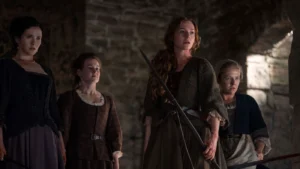
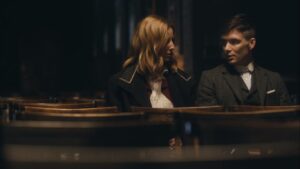
Why is Small Wonder in VisionQuest Episode 3? The show playing on Thomas Shepherd’s hotel television is a 1980s sitcom about an engineer who builds a robot girl and raises her as part of his family. Marvel puts that sitcom in “Reboot” at the exact moment Vision insists that Tommy cannot really be his son. The joke is sitting in plain sight: a television father accepts an artificial child while an artificial father struggles to accept a child whose beginnings were magical.
But the reference is doing more than inviting us to notice a clever reversal. It exposes the mistake Vision keeps making throughout the episode. He can explain the Hex, reconstruct Wanda’s history and calculate hundreds of ways to deliver bad news, but he cannot answer the question Thomas is actually asking: Can I belong to this family? I think Small Wonder gives us a way to see why his explanations keep failing long before the swimming-pool rescue forces him to change.
The craft tool here is the Sitcom Mirror: an apparently incidental piece of media inside the story presents the character’s central conflict in a smaller, simpler form. We watch the character fail to recognize what the mirror is showing him, then we watch the plot make that blind spot impossible to maintain. In “Reboot,” the mirror starts with a robot daughter who belongs to a human family. It ends with a synthezoid father who has to decide whether his son belongs to him.
Spoilers: This article covers VisionQuest Season 1, Episode 3, “Reboot,” along with connections to WandaVision and Agatha All Along. It does not address subsequent episode revelations.
Start with the bigger argument: Our VisionQuest Episode 3 Knee-Jerk Reaction explains how Tommy’s worst memory becomes the way he saves Vision, and why that reversal finally makes the father-son relationship feel earned. For everything in the series, visit the VisionQuest hub.
What Is Small Wonder, the TV Show in VisionQuest?
Small Wonder was an American science-fiction family sitcom that ran in first-run syndication from 1985 to 1989. Its central character is V.I.C.I., a robot girl usually called Vicki, whom inventor Ted Lawson brings into his household. Vicki’s name stands for Voice Input Child Identicant. Ted and his wife Joan present her as a daughter while trying to keep her robotic nature secret from neighbors, and Vicki grows up in a household that also includes their son Jamie. The premise is unusual, even by the standards of 1980s sitcoms, but the day-to-day stories repeatedly treat family belonging as something people create through living together rather than as a simple biological fact.
Vicki is not just a normal child with one unusual trick. The series regularly plays her literal interpretations, programmed behavior and mechanical abilities for laughs. That is precisely why the selection is useful here. VisionQuest doesn’t need the audience to know every episode of Small Wonder; it needs us to recognize the basic absurdity of a very ordinary television family built around a child who is unmistakably artificial. For background on the original sitcom, the Television Academy’s Small Wonder archive documents the premise and production history.
What Is the Chess Scene Tommy Watches in Reboot?
The clip on the hotel television shows Vicki and Ted playing chess. Ted is astonished that she has beaten him in only five moves; Vicki responds that better programming could have allowed her to win in four. It is a quick mechanical-child joke, the kind of exchange a sitcom can resolve before the laugh track finishes. But consider where VisionQuest places it. Nearby, Vision is running version after version of a conversation meant to explain why Thomas cannot be Tommy Maximoff, and every attempt ends with Thomas wounded, angry or walking away.
That juxtaposition is striking. The robotic child on television diagnoses her creator’s program as the limitation; the father in the hotel assumes that he merely needs to find a better way to deliver the same conclusion. Both scenes are about trying to improve an outcome by optimizing the instructions. Yet the circumstances are different in one crucial respect: Vicki is playing a game with knowable rules, while Thomas is asking another person to recognize his lived experience. A faster chess victory is a technical problem. A son who feels rejected is not. The laugh track becomes almost cruel because Vision is trying to solve the wrong kind of problem while the actual child in the room is asking to be heard.
Why Does Tommy Find Old Sitcoms Comforting?
Thomas admits that old television makes him feel better. He likes its familiar music, its laugh tracks and its reassuring sense of a world where people keep returning to the same household. Those details are not incidental characterization. Thomas has been uprooted by confusing memories of Wanda and Vision, pursued by Paladin, and told by a synthezoid who might be his father that the life he remembers could be an illusion. A sitcom offers the opposite experience: faces stay recognizable, relationships have names, and the problems usually fit inside a half-hour structure.
Vision knows that Wanda Maximoff also loved old television, which makes the connection to WandaVision immediate. Wanda’s sitcoms were never only an affection for retro production design. They provided a language of family, safety and predictable resolution that she used to build an artificial refuge from grief. Thomas gravitates toward the same comforting grammar at a moment when his own identity feels unstable. We don’t need to claim that a taste for old television proves parentage; it matters because both characters look for the same emotional shelter. The screen offers an orderly family even while the family sitting in front of it is falling apart.
There is also a sharp distinction between Wanda and Thomas. Wanda, through the Hex, could force her world to conform to the rhythms of her television fantasies, at a terrible moral cost to other people. Thomas cannot rewrite the hotel room or force Vision to love him. He can only watch a comforting fiction while waiting for an honest human response. That difference makes the reference poignant instead of merely nostalgic. The escape mechanism is familiar, but the new character has far less power over the world that frightens him.
The Reversal: Small Wonder Has a Human Father and a Robot Daughter
The most obvious parallel is also the one VisionQuest deliberately twists. Ted Lawson is a human father who builds a robot girl; Vision is an artificial being trying to determine whether a magically created boy can be his son. In the sitcom, the family’s behavior treats Vicki as one of its children despite her origin. In the hotel room, Vision keeps treating Thomas’s origin as a reason the relationship cannot count. The fictional examples are not equivalent in their science or supernatural rules, but they rhyme in the question the characters have to answer: does the way a child came into existence determine whether the relationship is real?
That is the blind spot the sitcom exposes. Vision repeatedly describes Wanda’s family as something she conjured during an unacceptable violation of Westview. He is correct that the Hex harmed real people and that the rebuilt White Vision did not personally experience the marriage and childhood memories that he now carries. None of those facts answers whether Thomas deserves the care of a father who remembers what the other Vision felt. Vision has turned an account of causation into a ruling on belonging. Small Wonder allows us to see the category error before Vision does.
I also like how imperfect the comparison is. Ted built Vicki himself, whereas Vision did not choose how Wanda’s children came into being. The original sitcom often treats Vicki’s artificiality as a secret to conceal, while Thomas’s struggle is a desperate wish for someone to acknowledge what he remembers. Those differences prevent the reference from functioning as a cheap one-to-one Easter egg. The sitcom gives the audience a model of an impossible family; VisionQuest asks whether Vision can find the courage to take responsibility for his version of one.
Why Do Vision’s Simulations Fail While the Sitcom Plays?
After Thomas reacts badly to Vision’s explanation of Wanda and the Hex, the episode shows Vision trying other approaches. Each simulation rearranges the argument without healing the wound. The premise of his answer stays fixed: Thomas’s sense of being Tommy is impossible or mistaken. His problem is not that he has failed to optimize the speech. He has failed to listen to the person for whom the explanation would have life-altering consequences.
That is an excellent screenwriting distinction because the internal problem becomes visible action. We do not have to listen to someone lecture about artificial intelligence and empathy. We watch a sequence of apparently rational choices produce the same negative result, with a sitcom about a programmed daughter flickering in the background. Ultron needles Vision because the failed simulations reveal something embarrassing: for all his power, Vision cannot compute his way into another person’s trust. The scene plays like comedy, but the accumulation of rejection gives it dramatic weight.
In writer-room terms, the sitcom is doing two jobs at once. It establishes a thematic counterexample—a family can behave as a family without sharing ordinary human origins—and it supplies ironic commentary on Vision’s method. Vicki’s chess gag says that better programming would make a system perform better. Vision keeps testing better programming for the same conversation, but every result proves that no version of the script can compensate for his emotional refusal to participate. The named craft device, our Sitcom Mirror, works because the embedded entertainment is not repeating the plot. It is exposing the limits of the protagonist’s strategy.
How Does the Small Wonder Reference Pay Off in the Pool Scene?
The payoff arrives when Vision’s body begins failing and the AIs realize he needs a complete shutdown and a massive external surge to restart. Thomas knows how dangerous his emerging powers feel, and he is terrified of the water because bullies nearly drowned him there. Vision chooses the pool because water can cool his system and conduct the energy Thomas can create through his speed and vibration. The technical problem appears straightforward enough. The emotional problem is anything but.
Here the episode finally forces Vision to abandon the posture he kept taking in the hotel. He cannot produce one more simulation, carefully worded objection or definitive answer about the Hex. He has to hand his future to the boy standing beside him. Crucially, he tells Thomas that Tommy Maximoff is real, admits that he has not listened well enough, and trusts him to act. Thomas then uses the frightening ability born from his near-drowning to bring Vision back to life. It is the opposite of the earlier chess joke: success does not come from a better program. It comes from a different relationship.
The reference also helps make sense of the title “Reboot.” Of course the episode contains a literal restart of Vision’s operating system. But it also reboots the terms on which father and son understand each other. Thomas begins the hotel sequence looking for a family that might tell him who he is. Vision begins it trying to prove which part of that family is artificial. By the pool, neither man’s origin has become simpler. What changes is their choice to trust one another, and that is what gives the mechanical resurrection an emotional cost. Our full Episode 3 review follows that Crisis Reversal beat by beat.
Is Small Wonder an Easter Egg or a Clue About Tommy?
It is clearly a deliberate thematic reference; Episode 3 does not present the sitcom as proof of a new supernatural rule or a secret answer about Tommy’s origins. The show is playing while Thomas and Vision discuss Wanda, fabricated family life and whether a created person can still be real. Its father-daughter premise matches the argument too closely to be accidental in its dramatic effect. But treating it as a coded clue to a future character reveal would move beyond what the scene establishes. The stronger reading is simpler: the reference makes Vision’s present mistake visible.
That is where I think Mary & Blake’s approach can offer something beyond identifying the show on the television. The object is not to collect another Marvel reference and move on. It is to ask why this exact show appears in this exact scene, what the characters cannot see about themselves, and how the crisis later changes the meaning of what we watched. If you want the larger family-and-identity trail, our Tommy Shepherd explainer covers his new body and powers, while our White Vision guide covers why inherited memories cannot settle the father’s own identity crisis.
Keep Going with VisionQuest
- VisionQuest hub: episode coverage, character explainers and storycraft analysis
- Episode 3 KJR: the pool scene and what it costs Vision to trust Tommy
- WandaVision and control: why the sitcom world was an expression of grief
- Who is Tommy? the drowning, reincarnation and new powers explained
Love getting under the hood of television stories? Pull up a chair with the NerdClan for more of the craft, conversation and shared obsession that makes the watching better.
Final Word: The Family Is the Point
So why put a cheesy old sitcom about a robot daughter in the middle of Vision’s argument with his son? Because the Sitcom Mirror lets the audience see a family accepting its unlikely child while Vision is still trying to explain why his own cannot count. The five-move chess joke begins as a joke about improving a program. The swimming-pool crisis ends by proving that Vision’s real failure was never computational: he was withholding trust from a person who needed him.
That lesson travels beyond Marvel. A character’s clever explanation is not a substitute for the relationship the explanation threatens, and a well-placed story-within-the-story can reveal that blind spot long before the protagonist understands it. You cannot program belonging. You have to choose it.