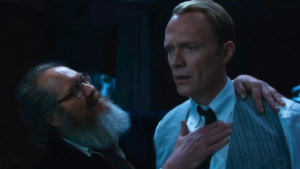
Tommy in VisionQuest is Thomas Shepherd, a mysterious young man the official Disney+ synopsis describes as someone who may be Vision’s son reincarnate. The connection starts in WandaVision, where Tommy Maximoff exists as one of Wanda and Vision’s twin sons inside the Hex, and continues through Agatha All Along, where Billy helps Tommy’s disembodied soul find a new body.
Quick answer: Tommy did not simply grow up offscreen after WandaVision. The Hex version of Tommy disappeared when Wanda brought Westview down. Agatha All Along later revealed that Tommy’s soul still existed, and Billy used his power to place that soul into the body of a dying boy. VisionQuest now identifies that young man as Thomas Shepherd and turns the resurrection into a much bigger question: if Tommy is Vision’s son, what does this rebuilt Vision owe him?
That is the story tool I am calling The Living Consequence. A past relationship stops being backstory when it walks into the present and demands something from the protagonist. Tommy is valuable to VisionQuest because he does not merely remind Vision that he once had a family. He can force Vision to decide whether that family still creates responsibility.
Spoiler note: This explainer covers WandaVision, Agatha All Along and publicly released VisionQuest material.
Keep reading: Our VisionQuest Episode 1 KJR. The final threat—“I have your son”—lands because Episode 1 has already shown how hard Vision works to avoid a real relationship. Our KJR follows the complete setup and payoff. Read our “No Strings” review and craft breakdown →
Follow The VisionQuest Family Story
Who Is Tommy Maximoff In WandaVision?
Tommy Maximoff is one of the twin sons Wanda and Vision raise inside the Westview Hex. Billy and Tommy are born under impossible circumstances because Wanda’s reality-altering magic has turned her grief into a functioning family and sitcom world. The boys grow quickly, develop distinct personalities and become emotionally real to the people living inside that family even though the entire situation is supernatural.
Tommy is the speedster of the pair, echoing Wanda’s brother Pietro. Billy develops magical abilities that point toward the character comic readers know as Wiccan. The twins are not background decorations in Wanda’s fantasy. They are children Wanda and Vision love, parent and eventually have to lose when the Hex comes down.
That last point matters for VisionQuest. Whatever metaphysical explanation Marvel eventually gives Tommy’s new body, the emotional fact is already established: Vision once acted as this boy’s father.
What Happened To Tommy At The End Of WandaVision?
When Wanda dismantles the Hex, the magical reality sustaining the Westview version of her family disappears with it. Hex Vision says goodbye to Wanda, and Billy and Tommy also vanish as the house collapses back into the empty lot that existed before Wanda’s spell.
WandaVision deliberately leaves the audience with uncertainty because Wanda later hears the twins calling to her while studying the Darkhold. Doctor Strange in the Multiverse of Madness turns that longing toward alternate-universe versions of Billy and Tommy, but the MCU still has another thread available: what happened to the souls or identities of Wanda’s own Westview children?
Agatha All Along begins to answer that question through Billy.
How Did Tommy Come Back In Agatha All Along?
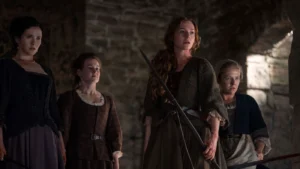
Agatha All Along reveals that Billy Maximoff survived in an unusual form. After the Westview Hex collapsed, Billy’s soul entered the body of William Kaplan at the moment William died in a car crash. The person who emerges carries a new physical life and the soul or identity connected to Wanda’s son, creating another version of the same continuity problem that now surrounds White Vision.
By the end of the series, Billy realizes that Tommy’s soul also exists without a body. In the climactic sequence, Billy reaches for his brother and helps place Tommy into the body of a boy who is drowning. Series creator Jac Schaeffer later clarified that this was indeed the mechanism the show intended: Tommy’s soul finds a new host at the edge of death.
That means Tommy enters VisionQuest carrying two histories at once. He is connected to the child raised in Westview, but he now inhabits the life and body of someone else. The series can therefore give father and son parallel identity problems instead of making Tommy a simple plot device.
Is Thomas Shepherd Really Tommy Maximoff?
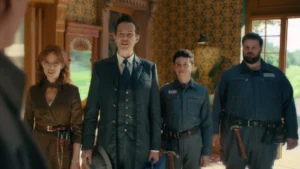
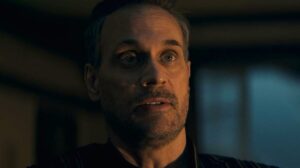
The official Disney+ synopsis calls Vision’s young companion Thomas Shepherd and describes him as a boy who may be Vision’s son reincarnate. Marvel is clearly inviting the Tommy connection while preserving some mystery about exactly how much of the Westview child survives inside this new person.
Comic readers will recognize the name immediately. In Marvel Comics, Tommy Shepherd is the speedster who becomes Speed and is ultimately identified as one of the reincarnated twin sons of Wanda Maximoff and Vision. The MCU has changed the mechanics substantially, but the name is not accidental.
The safest way to describe the live-action version before the show explains everything is this: Thomas Shepherd appears to be the new physical life carrying the Tommy identity that originated with Wanda and Vision’s son. VisionQuest still has to tell us what Thomas remembers, what he feels and how he understands that inheritance.
Related Explainers
Why Tommy Matters More Than Another Young Avengers Setup
It would be easy to look at Tommy and jump straight to franchise machinery. In the comics, Speed is a Young Avenger. The MCU has already introduced Billy, Kate Bishop, Kamala Khan, Cassie Lang and other characters who could eventually fit that corner of Marvel. That may matter later.
For VisionQuest, Tommy has a more immediate dramatic job. He makes Vision’s identity problem hurt. White Vision can debate whether he is the original Vision in private, but Tommy creates a person who may remember or need him as a father before Vision has decided whether he accepts that role.
That is why Kevin Feige’s basic mandate to Terry Matalas — Vision would meet his son — is such a strong story choice. It converts philosophy into relationship. The series does not have to make Vision deliver a speech about whether he is capable of love; it can put Tommy in danger and see what Vision does.
Tommy And White Vision Are Mirrors Of Each Other
The father and son may be built from the same paradox. White Vision carries an old body and restored memories while questioning whether the emotional identity belongs to him. Tommy carries a new body while apparently inheriting the soul or identity of a child whose original physical existence ended with the Hex.
One is asking whether memory can make a new consciousness continuous with an old life. The other is asking whether a soul or identity can make a new body continuous with an old child. Put them together and VisionQuest can explore the same theme from opposite directions.
That makes the family connection dramatically useful instead of merely sentimental. Vision and Tommy can each recognize something in the other that they cannot yet prove about themselves.
“I Had A Family” Is The Wound Under VisionQuest
In the final trailer, Vision says, “I had a family.” The wording is important. He does not simply list Wanda, Billy and Tommy as data points in his memory. The statement carries loss, distance and uncertainty about whether the family belongs to his present identity.
Tommy then becomes the answer that refuses to remain in the past. If Thomas Shepherd really carries Tommy Maximoff’s identity, Vision’s family is no longer a set of archived memories. A member of that family is alive and standing in the story.
This is The Living Consequence: the past crosses the threshold and demands a present-tense decision.
“Free Me And Save Your Son” Is Why Tommy Changes The Whole Show
The final trailer appears to push that relationship toward crisis when Ultron tells Vision, “Free me and save your son.” We do not yet know the exact sequence of events, but the line reveals the kind of pressure the writers are interested in applying. Vision’s relationship with Tommy can become expensive enough that he has to risk unleashing the worst part of his inherited past to protect the boy.
That is much more powerful than telling Vision, “You used to be a father.” The story can ask him to behave like one before he feels ready to claim the identity. Choice comes first; certainty may have to follow.
The Living Consequence Is Tommy’s Real Job
Tommy’s starting proof beat is the end of WandaVision, when the family disappears and Vision’s role as a father appears to end with the Hex. Agatha All Along keeps that consequence alive by giving Tommy a path back into the world. The apparent VisionQuest crisis then raises the cost by making Tommy’s survival something Vision may have to choose over his own safety and control.
That is why Tommy belongs at the center of this story. A strong continuation does not bring back a relationship only to trigger nostalgia. It brings the relationship back because it can force a new choice the old story never had to make. That craft principle works far beyond Marvel: the past becomes dramatic when it returns with a bill attached.
Tommy is not proof that Vision had a family. He is the reason Vision has to decide whether he still does.