Full spoilers for Avengers: Infinity War, Spider-Man: No Way Home, and Doctor Strange in the Multiverse of Madness.
Doctor Strange matters to Marvel’s Multiverse Saga because he is the one character who understands that power always sends an invoice.
That is what separates him from being just another lore-delivery system. In weaker multiverse storytelling, the wizard exists to explain the rules, open the portal, and move the plot to the next set piece. Strange can do all of that, sure. But that is not why he matters. He matters because Marvel keeps putting him in the position no one else wants: the one who sees the cost first.
The Thesis
Doctor Strange is the moral pressure point of the Multiverse Saga because he keeps breaking dangerous rules for the right reason — and then finally proves his worth by refusing the one shortcut that would destroy his soul.
Why Strange Matters More Than Most Marvel Heroes Right Now
The simplest mistake you can make with Strange is to treat him like a plot device. The guy who knows the spell. The guy who understands the timeline. The guy who says one ominous sentence and points the audience toward the next movie. But Marvel has actually built something more useful than that.
It has built the multiverse around his judgment.
Start with Infinity War. On Titan, Strange looks ahead and sees one winning path. That already puts him in a different category from almost everyone else in the saga. He is not improvising in the moment. He is carrying knowledge that would crush most people in the room. When Tony asks how many they win, Strange answers, “One.” The line matters. But the real point is the burden underneath it. Strange already knows that victory is going to demand a wound.
And then he accepts that wound.
He gives up the Time Stone. He lets the loss happen. He lets Tony hate him for it. He lets the universe break in the short term because he believes the longer arc requires it. That is not just strategy. That is moral debt. Strange is the character Marvel uses when it wants to ask the ugliest version of the question: what if the right move still looks unforgivable in the moment?
The Real Strange Pattern
That is the pattern with him. Strange uses the forbidden tool. Strange takes the ugly option. Strange borrows against tomorrow because the alternative feels worse. But the story never lets him leave clean.
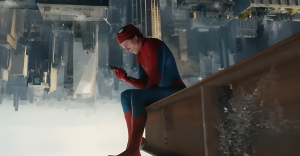
In Spider-Man: No Way Home, the memory spell goes wrong because Strange treats reality like something he can manage. In Multiverse of Madness, that flaw gets pushed even harder. The movie keeps circling the same challenge: are you holding the knife because you are wise enough to do it, or because you cannot imagine anyone else being allowed to?
That is why the America Chavez material matters so much.
Strange is not a pure hero. He has crossed lines before. He used the Time Stone. He tampered with memory. He dreamwalked into a corpse. His moral value is not that he stays perfectly clean. His moral value is that, after all that compromise, he still finds a line he will not cross.
That line is simple: he will not spend the kid.
And in multiverse storytelling, that matters more than any spell.
Because the easiest shortcut in a story this big is always the same. Turn a person into the solution. Use the child. Use the variant. Use the disposable universe. Use the body that seems easiest to sacrifice for the greater good. Strange becomes essential because he finally rejects that logic. He stops trying to be the one holding the knife. He tells America to trust herself. That is the moment where all the earlier moral debt finally pays off in character.
Why That Matters for Secret Wars
If Marvel wants Secret Wars to work, it cannot just make the canvas bigger. Bigger skies, more collapsing worlds, more legacy cameos, more timelines folding in on each other — none of that means much unless the story protects the pressure underneath it.
That is why Secret Wars works best as a story engine, not a lore dump. At its best, the multiverse is not about possibility. It is about pressure. Pressure that closes exits. Pressure that turns every available choice ugly. Pressure that forces somebody to decide what gets saved and what gets sacrificed.
That makes Strange central almost by definition.
Not because he is the strongest Avenger. Not because he is the smartest man in the room. Because he is the character most trained to live inside catastrophic choice. He knows what hidden knowledge does to a person. He knows what it means to choose the path that wounds people now in order to save them later. He knows the seduction of control. And most importantly, he knows the cost of assuming your judgment automatically outranks everybody else’s.
That is what makes him so useful as the saga moves toward Doom.
Moving Towards Doomsday
If Doom is the argument for control without mercy, Strange is the answer built from scar tissue. He has touched the same temptation. He has used the same kinds of dangerous tools. He has looked into the same abyss of “I know best.” The difference is that he finally finds a refusal point. He finally decides that saving reality cannot come at the price of turning another human being into fuel.
That is not small. That is the whole game.
If you want the bigger multiverse framework before going further, start with What Secret Wars Is (Defined In LOKI Season 1). That piece lays out the engine: pressure, impossible choice, and the scar that sticks.
Prefer audio? You can also listen to MCU Diaries Entry 2: Secret Wars Explained (As a Story Engine) — Loki Season 1 Is The Match. And if you want the full map of the series, head to The MCU Diaries hub.
The Takeaway
Doctor Strange matters because he gives the Multiverse Saga a conscience.
Without him, the multiverse can collapse into trivia: rules, portals, variants, jargon, spectacle. With him, it stays anchored to guilt, cost, and consequence. He is the character who knows every shortcut sends an invoice. He is the character who understands that power without restraint turns story into noise. And he is the character who proves his value not by controlling reality, but by refusing to spend another human being to fix it.
The craft tool here is the refusal line: the moment a character with every reason to go too far chooses not to.
The argument starts on Titan, where Strange accepts the ugly path no one else can see. It closes in Multiverse of Madness, where the man who has crossed rule after rule still refuses the final corrupt shortcut and puts the power back where it belongs: in America’s hands, not his own.
That is the transferable lesson. Big event storytelling does not hold because the mythology gets bigger. It holds because somebody inside the myth draws a line and pays to keep it.
That is why Doctor Strange matters.