
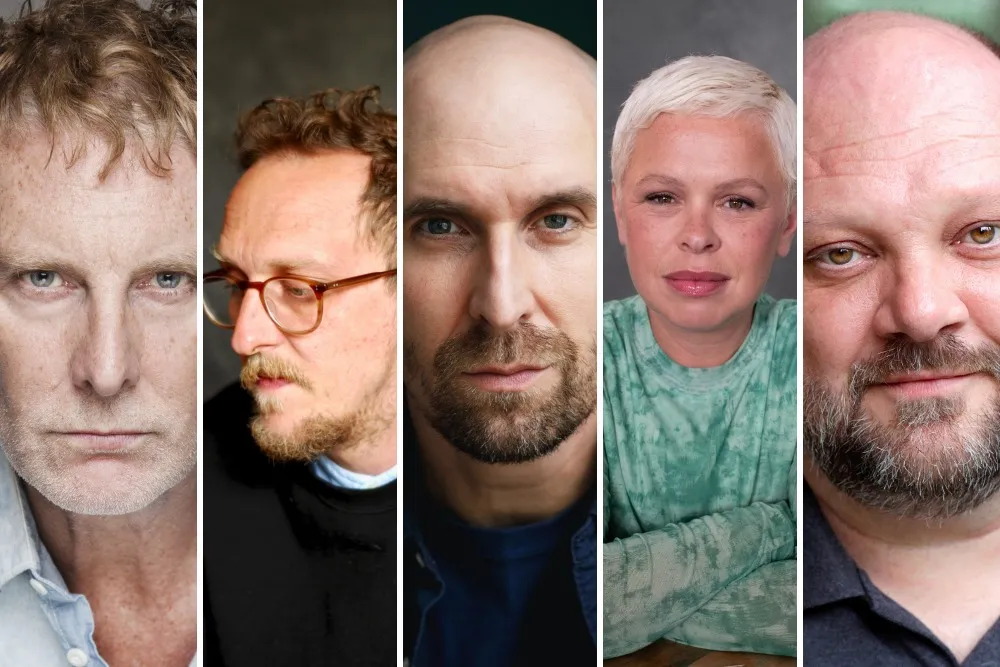
HBO has cast David Threlfall as the voice of the Sorting Hat, Leo Bill as Nearly Headless Nick, Andrew Brooke as the Bloody Baron, Daniel Fearn as the Fat Friar, and Laura Smyth as the Fat Lady in Harry Potter and the Philosopher’s Stone. The five additions were reported following HBO’s October 30, 2026 announcement, ahead of the series’ December 25 premiere.
On paper, this is a delightful collection of magical supporting characters. In the story, though, these characters are connected by something much more interesting. The Sorting Hat assigns children an identity, the Hogwarts ghosts carry their house identities beyond death, and the Fat Lady controls the entrance to the place Harry will call home. Each one asks, in a different way, who belongs at Hogwarts and who gets to decide.
And the Sorting Hat introduces that question at the exact moment Harry Potter finally gets the courage to answer it for himself. For a boy who has been told his whole life what he is worth, that matters far more than the novelty of a talking hat.
Who Is Playing the Sorting Hat, Nearly Headless Nick and the Other Hogwarts Characters?
David Threlfall, best known to many viewers for the original British Shameless, provides the Sorting Hat’s voice. Leo Bill plays Sir Nicholas de Mimsy-Porpington, better known as Nearly Headless Nick, the Gryffindor house ghost. Andrew Brooke takes on the Bloody Baron, Slytherin’s ghost, while Daniel Fearn plays Hufflepuff’s Fat Friar. Laura Smyth portrays the Fat Lady, the enchanted portrait guarding the entrance to the Gryffindor common room.
There is an important distinction in that last casting: the Fat Lady is a portrait, while Nick, the Baron and the Friar are ghosts. They represent different kinds of magic, but they all make the school feel occupied by people and personalities who existed long before Harry arrived. This announcement names three house ghosts; the Grey Lady, Ravenclaw’s ghost, is not among these five additions. For the wider ensemble, including the professors, students and Peeves, we are keeping our complete HBO Harry Potter cast guide updated.
The Sorting Hat Is Harry’s First Chance to Tell Hogwarts Who He Wants to Be
Think about where Harry is emotionally when he walks into the Great Hall. At Privet Drive, the Dursleys have spent eleven years treating him as an embarrassment. In the wizarding world, strangers recognize the scar on his forehead and celebrate him as the Boy Who Lived. Both worlds have given him an identity before asking whether that identity has anything to do with the person underneath it.
Then Hogwarts places a battered old hat on his head. The Hat looks past the famous name and the lightning scar and discovers something Harry finds frightening: he could do well in Slytherin. The boy who has just learned that Voldemort belonged to that house is suddenly confronted with the possibility that the qualities associated with someone he fears might also exist in him. That is an uncomfortable discovery for an eleven-year-old who is desperate to find somewhere he fits.
Harry’s response is one of the defining acts of his first year. He resists Slytherin, and the Hat takes his preference seriously, eventually placing him in Gryffindor. His choice is shaped by limited information and the prejudices he has already absorbed about the houses, which makes the moment more human. He is a frightened child trying to make a moral decision with the little he knows. The significance is that his wishes enter the conversation, and the institution adjusts.
That is the great dramatic irony of the Sorting Ceremony. The whole school sees a public ritual that assigns a child to a group. Under the Hat, Harry experiences a deeply private confrontation with his own potential. Hundreds of people are waiting for the answer, but only Harry and the Hat know how complicated that answer has become. It is a terrific opportunity for television to dramatize the difference between how the world sees Harry and how Harry sees himself.
David Threlfall’s Voice Can Make the Sorting Ceremony Feel Personal
There is an interesting performance challenge in casting David Threlfall. The Sorting Hat needs to sound like an ancient part of Hogwarts, with enough eccentricity to make its songs and pronouncements entertaining. Yet the most important part of its job happens inside Harry’s head. The voice has to shift from addressing an entire hall to having an unsettlingly intimate conversation with a child who does not fully understand his own abilities.
For HBO, this is where sound design and editing can make the scene its own. Imagine the Great Hall buzzing with nervous students, the Hat dropping over Harry’s eyes, and that enormous room suddenly receding from the soundtrack. We remain with Harry as the Hat weighs his potential, questions him and considers a future he does not want. The sound and performance could make the ceremony feel less like the announcement of a school assignment and more like a test of character.
There is also a structural reason to let this moment breathe. Ron has arrived with years of Weasley family expectations. Hermione has tried to prepare for Hogwarts through books, yet knowledge cannot entirely control what the Hat decides. Neville is struggling to believe he deserves a place among the confident children around him. Their Sortings offer a way to reveal what each child fears before the friendship and rivalries of the season fully take shape.
For the actors and the writing, the task is to make the audience understand the emotional stakes of belonging to a house without treating the houses as permanent moral verdicts. Harry’s experience works because the Hat recognizes possibility while Harry begins learning that character must be expressed through choices. That distinction echoes throughout the books, and HBO has the room to establish it carefully from the beginning.
The Hogwarts Ghosts Reveal What Happens When an Identity Outlives You
Now consider the strange counterpoint provided by the ghosts. The Sorting Hat divides eleven-year-olds into houses, and centuries later those same house identities are still being represented by people who have died. Nearly Headless Nick remains Gryffindor’s ghost. The Bloody Baron remains Slytherin’s. The Fat Friar remains Hufflepuff’s. Hogwarts has turned a school tradition into something that can follow a person beyond an entire lifetime.
That is a fascinating idea for a story preoccupied with inheritance and the weight of the past. The children arrive full of possibilities, but the castle is populated by figures whose histories are already fixed. These spirits can introduce house pride, offer advice and provide humor, while also reminding us that Hogwarts has a memory extending far beyond the current generation. The ghosts suggest that the school can preserve a past even when it has not fully reckoned with it.
They also give the series three very different personalities to work with. Nick is sociable, fussy about his dignity and acutely aware of the absurdity of his own death. The Fat Friar is remembered for his warmth and generosity. The Bloody Baron, by contrast, carries a frightening reputation and a history that becomes more meaningful as the wider mythology unfolds. Their differences should inform how each house feels to the students who live there. For readers who want to dig into those histories, the official Hogwarts ghosts guide is a useful reference.
This is also the sort of material that benefits from a long-form adaptation. A ghost floating through a hallway once is a charming visual effect. A ghost we encounter repeatedly can become a recognizable member of the school community, complete with loyalties, grudges and contradictions. Over eight episodes, those encounters can make Hogwarts feel like an institution that existed before the camera arrived and will continue after the students leave.
Nearly Headless Nick and the Boy Who Lived Have More in Common Than You Think
Of all the new castings, Nearly Headless Nick may have the most interesting relationship to the story’s central theme. Nick’s actual name is Sir Nicholas de Mimsy-Porpington, yet everyone knows him by the grotesque detail of a botched execution. The nickname turns a traumatic event into his defining feature, and it follows him centuries after his death. He is still trying to be treated with the dignity his full identity deserves.
Now look at Harry. Before he knows anything meaningful about his parents, the wizarding world knows him as the Boy Who Lived. His reputation comes from a violent night he cannot remember, a tragedy that cost him his family and gave other people a story to tell about him. Harry’s scar and Nick’s neck are vastly different kinds of wounds, but both characters have been reduced to public labels connected to what happened to them.
That gives Harry’s introduction to Nick the potential to be more than a comic ghost encounter. Here are two characters entering a relationship with their reputations already attached. Nick can be funny, vain and ridiculous, and still offer Harry a glimpse of what it feels like to have one moment define your entire existence. In a series about growing up under the burden of a legend, that connection deserves room to breathe.
The Fat Lady Turns Belonging Into Something You Can See
Laura Smyth’s Fat Lady has a different job, and it is beautifully simple. She guards the entrance to Gryffindor Tower, allowing students through when they know the password. The portrait is a piece of magical school infrastructure with a personality, which means a practical act such as returning to your dormitory becomes an encounter with another character.
For Harry, that threshold can carry real emotional weight. He grew up in a house where he was made to feel unwelcome, with his sleeping space literally tucked beneath the stairs. At Hogwarts, the entrance to Gryffindor Tower can become the doorway to friendships, safety and a private life that finally belongs to him. Learning the password is a small ritual of membership, the kind of ordinary detail that can quietly make a fictional home feel real.
It also tells us something about Hogwarts. Even a place of belonging has rules about who can enter, who is kept outside and who is recognized as a member. The Fat Lady can deliver comedy and routine, but the repeated image of that portrait opening onto a warm common room can build an emotional association across the season. Production design becomes storytelling when crossing a doorway changes how a character feels.
What HBO Needs to Get Right About Hogwarts
There is a temptation with a cast this large to think success means giving every beloved character a recognizable entrance. HBO already has plenty of familiar iconography to work with, and the original films created durable images of the Great Hall, the Sorting Ceremony and the ghosts drifting through the corridors. The opportunity now is to make those familiar details operate as parts of one consistent dramatic world.
That begins with Harry’s point of view. The Sorting Hat should feel like an institution trying to understand and classify him. The ghosts should make the histories of the houses visible. The Fat Lady should turn the Gryffindor common room into a space where he feels he belongs. None of these roles needs an enormous amount of screen time to matter. They need scenes in which character, performance and magical design change our understanding of the boy moving through the castle.
As we approach the Christmas Day premiere, our Harry Potter Season 1 guide will track the eight-episode adaptation, while our analysis of HBO’s new Hogwarts design examines what the castle itself promises about Harry’s journey. You can also follow the larger book-to-screen conversation with The Potterverse with Mary & Blake.
The Mary & Blake Take: The Hat May Sort Harry, but It Cannot Define Him
There is a reason the Sorting Ceremony resonates long after the novelty of a talking hat has worn off. Harry comes to Hogwarts looking for a place where he can finally be wanted, and the school immediately asks him to accept another label. Yet he discovers, in a conversation no one else can hear, that he has a voice in the decision.
The ghosts show us how long a label can last. The Fat Lady shows us how belonging is recognized. And Harry, sitting beneath a battered old hat in a room full of strangers, begins to understand the most important lesson Hogwarts can teach him: the world may decide what to call you, but your choices reveal who you become.