Rob Roy in Outlander: Blood of My Blood was a real person. Born Robert MacGregor in 1671, he became one of Scotland’s most famous outlaws after building a career in the cattle trade, falling into a bitter financial dispute with a powerful nobleman, and turning to cattle theft and protection payments. He also had genuine connections to the Jacobite cause. That makes his appearance in Episode 7, “Luceo Non Uro,” an especially fitting piece of history for a story about stolen cattle, dangerous alliances, and Dougal MacKenzie’s political ambitions.
There is an important distinction, though: the historical Rob Roy’s involvement in cattle theft does not establish that he stole the Grants’ cattle or attended the particular gathering at House Nairne depicted in the series. Blood of My Blood places a real man with a remarkable history inside a fictional conflict involving its characters. Understanding the man behind the name makes the episode’s political stakes considerably more interesting.
Spoiler note: This article discusses Blood of My Blood Season 1, Episode 7, and the historical events surrounding the 1715 Jacobite Rising. It does not reveal future plot developments from the Outlander books.
This Week’s Blood Of My Blood Coverage
- Recap & Reaction Podcast: Blood Of My Blood 1.07: Ellen Shines, Henry Is Suddenly Better(?!) & The Escape Goes Off The Rails | Recap & Reaction
- Knee Jerk Reaction: KNEE-JERK REACTION | Blood Of My Blood Episode 7: “Luceo Non Uro” Shines Until The Pressure Burns Away
Get The Droughtlander Dispatch
Smart Outlander and Blood of My Blood updates — episode coverage, podcast drops, character guides, history explainers, and the stories worth remembering.
Who Is Rob Roy In Blood Of My Blood Episode 7?
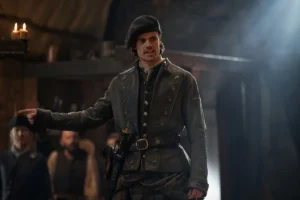
In “Luceo Non Uro,” the Grants discover that their cattle have been stolen, and suspicion initially falls on the MacKenzies. Dougal’s disappearance seems to make matters worse until Ellen discovers that her brother has gone to House Nairne, where Jacobite supporters are gathering and Rob Roy is among them. What begins as a dispute over cattle quickly becomes a much more dangerous situation once Malcolm Grant arrives with Redcoats and the soldiers realize the house is full of people involved in the Jacobite cause.
Rob Roy’s presence makes sense because the real man’s reputation was built around precisely this combination of cattle, personal alliances, and conflict with powerful authorities. In the episode, he helps turn what might otherwise feel like an ordinary clan dispute into an encounter with Scotland’s larger history. The character is played by Jamie Sives, whose appearance gives the story a recognizable historical figure without taking the focus away from Ellen, Dougal, Brian, and Murtagh.
That is also where the show makes an effective connection between character and history. Dougal sees an opportunity to support a cause he believes in, while Ellen sees the danger of committing MacKenzie money and reputation without Colum’s approval. The stolen cattle bring these competing interests into the same place. Rob Roy’s real life explains why a man associated with cattle could also belong in that political conversation.
Who Was The Real Rob Roy MacGregor?
Robert MacGregor was born in 1671 in the Scottish Highlands, near Loch Katrine. His nickname, Rob Roy, comes from the Gaelic word ruadh, meaning red, a reference to his hair. He grew up within the MacGregor clan and eventually became a cattle dealer, a profession that could bring considerable money and influence to someone who knew the Highland routes, livestock markets, and people involved in moving animals across Scotland.
To understand Rob Roy’s importance, we need to understand what cattle represented. They were valuable property, a source of income, and a form of wealth that could be moved from one place to another. A person who could acquire livestock, transport it safely, and sell it at a good price could build relationships with landowners and powerful families. A person who knew how to steal or recover that same livestock could also make himself extremely difficult to ignore.
The real Rob Roy operated in both worlds. National Museums Scotland’s account of his life describes his career as a cattleman alongside his later activities as a thief who demanded payments in exchange for protection. The museum also preserves a remarkable document recording his obligation to deliver the Duke of Montrose sixty Highland cows and a bull. It is a useful reminder that Rob Roy’s cattle dealings were a substantial business before they became material for legend.
That history gives the Episode 7 cattle raid its immediate appeal. The show introduces Rob Roy in the kind of trouble that helped make him famous, but the real story of how he became an outlaw is more complicated than the idea of a Highland rogue making off with somebody else’s animals.
How Did A Cattle Trader Become Scotland’s Famous Outlaw?
Rob Roy’s fortunes changed after a financial arrangement with James Graham, Duke of Montrose, went badly wrong around 1712. Accounts differ over the precise sequence of events and responsibility for the missing money, but the result was a serious dispute between a cattle dealer and one of Scotland’s most powerful men. Rob Roy was outlawed, and the conflict with Montrose became a defining part of his subsequent life.
That distinction matters because Rob Roy’s famous cattle raids were tied to a struggle over property, money, and power. Montrose could pursue him through legal and political channels, while Rob Roy knew the Highland landscape, possessed local relationships, and could attack the wealth that helped sustain his opponent. Stealing cattle became part of a continuing feud in which each man had ways to hurt the other.
Rob Roy also ran a protection operation involving livestock. Cattle owners could pay for the security of their herds, although the threat of theft helped make those payments necessary. The romantic version of Rob Roy tends to emphasize the daring outlaw who defied a powerful nobleman. The historical record also presents a businessman whose methods could include theft and extortion. Both aspects help explain why he became such a formidable figure in his own lifetime.
That is an important piece of context for Blood of My Blood. When the Grants lose their cattle, the theft has consequences far beyond a missing herd. Wealth, clan reputation, and the ability to command other people are all at stake. Rob Roy’s history places the fictional dispute inside a world where those consequences were very real.
Was Rob Roy A Jacobite?
Yes. Rob Roy had documented connections to the Jacobite movement, which sought the restoration of the displaced Stuart dynasty. He joined Jacobite forces with his father during the 1689 rising, long before the events surrounding the 1715 rebellion. His involvement, however, sits alongside a history of shifting alliances and personal disputes that makes his position more complicated than a simple declaration of loyalty.
By the time of the 1715 Rising, Rob Roy had connections to the Duke of Argyll, who commanded government forces in Scotland and was an enemy of Montrose. Rob Roy therefore had relationships and interests pulling him in different directions. National Museums Scotland describes him as having divided loyalties during that rising, a useful reminder that clan politics, personal protection, and political allegiance could overlap in unexpected ways.
That complexity makes him an interesting figure to place beside Dougal. In Episode 7, Dougal’s enthusiasm for the Jacobite cause puts him at odds with Colum’s concern for the MacKenzies’ future. Ellen understands that committing her dowry is a decision with consequences for the entire family. Rob Roy’s real history shows how support for a political cause could coexist with urgent personal questions about enemies, property, and survival.
For the wider context behind these choices, read our 1715 Jacobite Rising explainer. It follows the pressures surrounding the Stuart succession, the decisions facing Highland families, and the conflict moving toward Brian and Ellen’s generation.
Did Rob Roy Fight In The 1715 Jacobite Rising?
Rob Roy accompanied the Jacobite army in 1715, but his role at the Battle of Sheriffmuir is an important example of how the historical man differs from the straightforward Highland-warrior legend. The battle took place on November 13, 1715, between Jacobite forces led by the Earl of Mar and government troops commanded by the Duke of Argyll. It was a major encounter in a rebellion that ultimately failed to restore the Stuarts.
According to Historic Environment Scotland’s battlefield record, Rob Roy and his men accompanied the Jacobite army but did not take part in the fighting at Sheriffmuir; they were in the vicinity of Cromlix at the time. National Museums Scotland also notes his divided loyalties and describes accounts of him observing rather than participating in the battle.
That does not erase his Jacobite involvement. It gives us a more revealing picture of the political world he inhabited. A man could associate himself with the Stuart cause while facing other obligations, rivalries, and dangers that affected what he actually did when the fighting began. For Blood of My Blood, this is the kind of history that makes the MacKenzies’ disagreement so compelling: supporting a cause in conversation and committing your people to its consequences are different decisions.
Rob Roy’s life also helps establish which Jacobite generation the series is exploring. He died in 1734, before the 1745 Rising that dominates the original Outlander story surrounding Jamie, Claire, and Culloden. His appearance in the prequel belongs to an earlier chapter of the same larger conflict.
Did Rob Roy Really Steal The Grants’ Cattle Or Attend House Nairne?
Rob Roy’s history of cattle dealing, cattle theft, and Jacobite involvement is real. The specific theft of the Grants’ cattle and the gathering at House Nairne in “Luceo Non Uro” belong to the television story. The historical sources used here establish why Rob Roy is a plausible figure to introduce through a cattle dispute, but they do not document the episode’s particular raid or his involvement with Ellen, Dougal, Malcolm Grant, and the other characters at that meeting.
There is also a fun possibility Mary and Blake discuss on our Episode 7 podcast: could the cattle associated with Marcus MacRannoch somehow connect to the cattle that later feature in the original Outlander story? It is an enjoyable connection to think about, especially given the way the prequel keeps bringing familiar names into view. For now, it remains a theory rather than an established link between the two stories.
The distinction between history and fiction actually makes Rob Roy’s appearance more useful. The series can use a genuine historical reputation to make the cattle theft immediately credible, then let that dispute expose the conflicting interests of the fictional families. We get a sense of the world outside the MacKenzie and Fraser households without losing sight of the choices driving the episode.
How Did Rob Roy Become A Legend?
Rob Roy became famous during his lifetime, but later writers helped turn his already remarkable career into something larger. A fictionalized account of his life, The Highland Rogue, appeared in 1723. Sir Walter Scott’s 1817 novel Rob Roy then helped establish the enduring image of a daring Highland outlaw whose adventures could be retold long after the historical disputes that shaped them had faded from popular memory.
The nickname “Scottish Robin Hood” captures part of that legend, particularly the appeal of an outlaw standing against a wealthy and powerful opponent. It can also make the real man sound simpler than he was. Rob Roy traded cattle, raided herds, sought protection from powerful figures, became entangled in political causes, and sometimes made choices that complicate the heroic image associated with his name.
That is what makes the historical cameo in Blood of My Blood work for me. Rob Roy arrives with a reputation that gives the cattle dispute immediate texture, while the surrounding story is still about Ellen recognizing the danger in Dougal’s choices. The episode invites us to enjoy the larger-than-life figure and then return our attention to the people whose futures are being decided around him.
Keep Exploring Blood Of My Blood
Rob Roy is one piece of the history surrounding the Frasers and MacKenzies. Our 1715 Jacobite Rising guide explains why the rebellion gathered support and how it changed the political calculations facing Scottish families. You can also revisit Blake’s Episode 7 Knee-Jerk Reaction for his take on the House Nairne gathering, Dougal’s ambitions, and the escape that follows.
For the full season, visit our Blood Of My Blood Season 1 episode guide or the complete Blood Of My Blood coverage hub for podcasts, reviews, history explainers, and character connections. You can also get the Mary & Blake app to keep the conversation going as you watch.
The Real Story Behind The Cattle
Rob Roy’s appearance in “Luceo Non Uro” works because the real man’s history gives the episode’s stolen cattle immediate significance. A missing herd could mean lost wealth, damaged alliances, and a dispute that powerful families were willing to fight over. Add a figure with Rob Roy’s reputation and a gathering of Jacobite supporters, and the Grants’ missing cattle become the beginning of a much larger problem.
That is the part of history I love seeing in Blood of My Blood: the moments when a familiar name opens a door onto the world these characters are trying to survive. Rob Roy has a legend big enough to fill his own story, but here his presence helps us understand just how dangerous Dougal’s next choice could become.