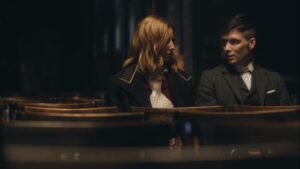
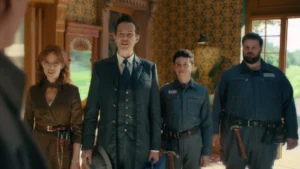
A tynchal was a traditional Scottish hunting method in which a large group of beaters surrounded an area and gradually drove deer or other game toward waiting hunters. The word appears in several historical forms, including tinchel, tynchal and tynchell, and the practice became closely associated with the large Highland hunts of Scotland’s nobility.
For Outlander fans, the word may sound familiar for another reason. The original series used a tynchal during the MacKenzie Gathering, and Outlander: Blood of My Blood brings the tradition back in Episode 9, “Braemar,” where the Earl of Mar’s hunt becomes the setting for romance, assassination, clan politics and the growing Jacobite cause.
What Is a Tynchal?
A tynchal was essentially a massive organized game drive. Rather than individual hunters wandering through the Highlands searching for animals, groups of men called beaters or drivers spread across a wide area and gradually closed the circle around the quarry.
As the ring tightened, the animals were pushed toward a location where the principal hunters were waiting. Deer were especially associated with the practice, although historical descriptions make clear that other game could be swept into the drive as well.
The scale could be enormous. A large tynchal might involve hundreds of people moving across miles of Highland terrain, which made the hunt as much a display of organization, manpower and social status as a way of putting meat on the table.
Is It Spelled Tynchal or Tinchel?
Both spellings refer to the same Scottish hunting tradition. Tinchel is the form commonly used by modern historical dictionaries, while older records contain variations including tynchal, tynchell, teinchill and tainchell.
The variation makes sense for a word moving between Gaelic and Scots across several centuries. The underlying Gaelic word is connected to the idea of surrounding or making a circuit, which describes exactly what the beaters were doing when they closed around the game.
For viewers searching after Blood of My Blood, “tynchal” is therefore perfectly recognizable even if historical sources may use “tinchel” more frequently. They are different spellings of the same basic hunting practice.
How Did a Tynchal Work?
The key to a tynchal was coordination. Beaters spread across the landscape and created a broad human boundary around the hunting area, then began moving inward while making noise and pushing the animals ahead of them.
The hunters themselves could wait in advantageous positions rather than chase the game across open country. As the beaters reduced the animals’ available space, the quarry was funneled toward the people positioned to make the kill.
That distinction also explains Brian Fraser’s role during the tynchal in “Braemar.” After Lord Lovat turns against him, Brian is assigned the lower-status job of helping drive the game rather than joining the principal hunting party. The episode places him out ahead of the others making noise and moving through the forest, which leaves him dangerously exposed when the Gallowglass begin firing arrows at him.
What Were the Tynchal Men or Beaters?
The beaters were the people who made the entire hunt possible. Their job was to move through the surrounding countryside, locate the game and steadily drive it toward the hunters while keeping the animals inside the shrinking circle.
That could mean covering substantial distances across difficult terrain. Historical accounts describe large groups sweeping the hills and forests, and the Dictionary of the Scots Language even records “tinchel man” as a term for one of the drivers participating in the hunt.
The job also carried less prestige than standing among the nobles waiting for the quarry. That social distinction matters in Blood of My Blood because Lovat uses Brian’s reassignment as another way of humiliating him after their confrontation.
Were Tynchals Only Used to Hunt Deer?
Deer are the animals most strongly associated with the historical tinchel, particularly the great Highland deer drives organized by powerful landowners. Medieval and early modern descriptions repeatedly connect the practice to deer hunting, and later writers continued to use the term for enormous deer drives.
The basic technique could sweep other animals into the hunt, however, because the beaters were driving game across a broad section of countryside. Blood of My Blood presents the Braemar event as a boar hunt, while the original Outlander story also uses the tynchal to bring the characters into dangerous contact with wild boar.
The television version therefore uses the genuine hunting structure while adapting the specific quarry for the drama. What matters to the story is the organized drive: beaters moving through the landscape while the main hunting party waits for the animals to be forced toward them.
Why Does Blood of My Blood Hold the Tynchal at Braemar?
Braemar is an especially appropriate place for the show to revive this tradition. The wider region around the Braes of Mar has a long association with large Highland hunts, including historical accounts describing major deer drives organized by the nobility.
That history also fits the political function of the gathering. A large hunt offered a legitimate reason for chiefs, nobles, retainers and fighting men to assemble in one place without announcing that the real purpose was a political meeting.
In “Braemar,” the Earl of Mar uses exactly that opportunity. The clans arrive expecting games and a tynchal, while Mar also brings them together to hear Rob Roy MacGregor argue for the Stuart cause and to decide whether they will support the coming Jacobite movement.
Was the Earl of Mar Really Connected to Braemar?
Yes. John Erskine, the Earl of Mar, is one of the central historical figures behind the 1715 Jacobite Rising, and Braemar became closely associated with his attempt to rally support for James Francis Edward Stuart.
The political gathering portrayed in Blood of My Blood draws on that real history. Mar gathered supporters in the Highlands before raising the Jacobite standard at Braemar in September 1715, turning political dissatisfaction into open rebellion.
The series combines that history with the traditional Highland hunt, allowing the tynchal to serve two purposes at once. Publicly, the chiefs have come together for a prestigious social and sporting event. Privately, they are deciding whether to risk their clans, families and futures on the Stuart cause.
Where Have We Seen a Tynchal in Outlander Before?
The idea goes all the way back to the beginning of Outlander. During the MacKenzie Gathering at Castle Leoch, the clan holds a tynchal as part of the festivities, bringing the men together for a large organized hunt.
That sequence becomes memorable when a wounded man is gored by a boar and Claire uses her medical knowledge to help him. The event is part of the same world of clan gatherings, oath-taking, games and hunting that Blood of My Blood is now showing us a generation earlier.
The connection makes “Braemar” especially fun for longtime viewers because the prequel is showing that these traditions were already part of the social fabric surrounding Colum, Dougal, Murtagh and the other characters long before Claire ever arrived at Castle Leoch.
Why the Tynchal Works So Well in “Braemar”
The tynchal gives Episode 9 much more than historical texture. It creates a believable reason for nearly every major storyline to converge in one location, which allows the relationships to start affecting one another instead of unfolding separately.
Henry sees Julia and his son. Ellen and Brian steal moments together inside a crowded gathering. Rob Roy exposes Dougal’s secret contribution to the Jacobites in front of Colum. Julia’s conversation with Ellen influences Ellen’s decision to leave Brian, while the hunt itself creates the isolated forest environment where Brian can be attacked by the Gallowglass.
The historical event therefore becomes a story engine. The gathering brings the characters together, and the tynchal eventually sends them back out into the landscape under conditions that create danger, secrecy and opportunity.
Why the Tynchal Matters Beyond the Hunt
Large Highland hunts were demonstrations of social power. Organizing hundreds of people across a wide landscape required authority, manpower and cooperation, which meant a successful hunt could show everyone present exactly how much influence a chief or noble possessed.
That makes the tradition particularly useful for a series about clans preparing for rebellion. The same relationships that allow powerful men to organize a huge hunt can also help them raise soldiers, move information and build political alliances.
“Braemar” understands that overlap. The characters may arrive for a hunt, but the gathering reveals the larger machinery of the Highlands: chiefs making alliances, brothers arguing about loyalty, nobles measuring one another’s power and men deciding whether their clans will follow them into war.
So What Does Tynchal Mean in Blood of My Blood?
For Blood of My Blood viewers, the simplest answer is that a tynchal is a traditional Scottish hunting drive in which beaters surround an area and push game toward waiting hunters. The word belongs to a genuine Highland tradition, and historical spellings include both tinchel and tynchal.
Episode 9 then turns that history into something much larger. The Earl of Mar’s tynchal provides the cover for a Jacobite political gathering, gives Brian’s enemies the opportunity to isolate him in the woods and places almost every major character in the same pressure-filled environment.
That is why the term matters beyond knowing the definition. In “Braemar,” the hunt is the mechanism that brings the season together.
Keep Going Through Blood of My Blood
The tynchal is only one piece of the history converging at Braemar. Our 1715 Jacobite Rising explainer breaks down why Scotland was heading toward rebellion, while our Rob Roy history guide explains the real man behind the Jacobite speech in Episode 9.
You can also follow every episode, explainer, review and podcast through our Blood of My Blood Season 1 Episode Guide.
This Week’s Blood Of My Blood Coverage
- Recap & Reaction Podcast: Blood Of My Blood – 1.09: “Braemar” Recap & Reaction | Yes, Matt Roberts Really Does Appear To Be Telling A Coherent Story
- Explainer: What Is a Gallowglass? The Warriors Hunting Brian in Blood of My Blood Explained
- Knee Jerk Reaction: KNEE-JERK REACTION | Blood Of My Blood Episode 9: “Braemar” Makes The Emotional Math Add Up
Get The Droughtlander Dispatch
Smart Outlander and Blood of My Blood updates — episode coverage, podcast drops, character guides, history explainers, and the stories worth remembering.