
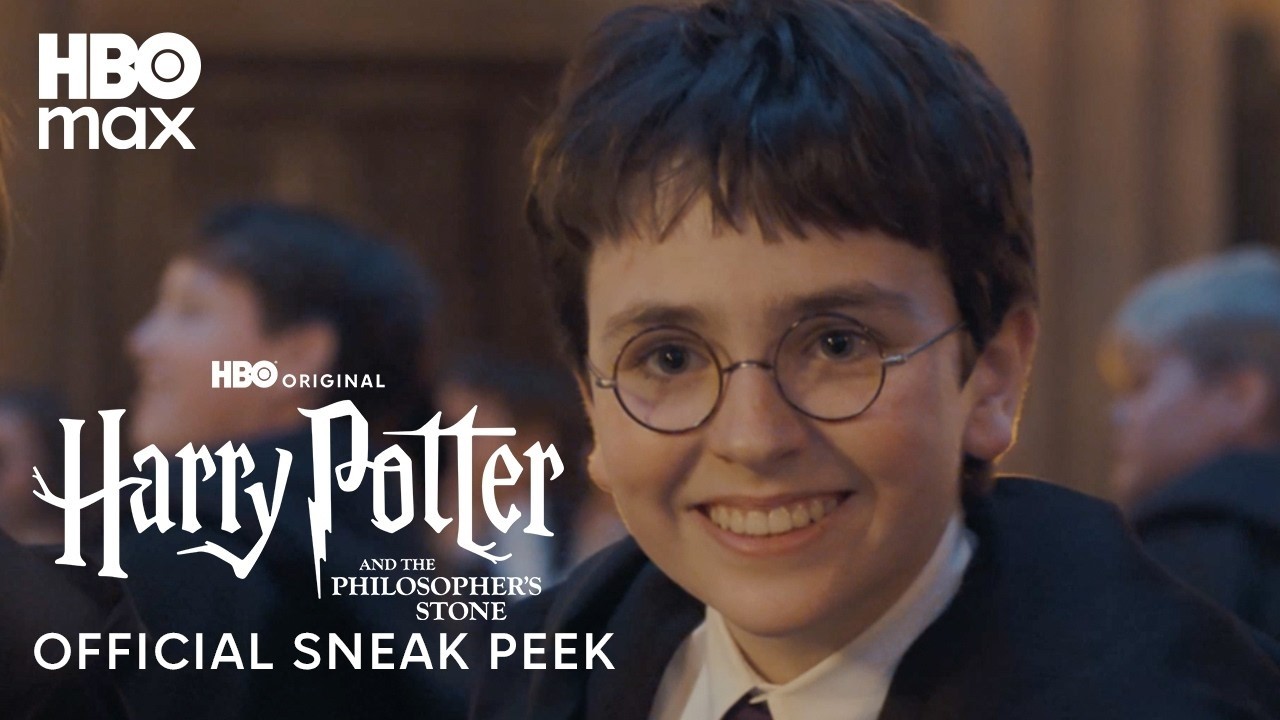
HBO’s new Harry Potter Great Hall scene is my clearest reason yet to feel optimistic about the television adaptation. The first banquet is playful, chaotic, and full of that lovely first-year energy. John Lithgow is beginning to find his Dumbledore, Hans Zimmer and his collaborators have delivered a delightfully whimsical cue, and one reaction from Harry tells us more about the boy than an entire speech could.
There are problems. The CGI food looks like it has spawned in from a video game, the scene feels heavily condensed for promotional purposes, and I keep wishing HBO would let some actual color into the Great Hall. Yet the exchange between Dumbledore and McGonagall about James Potter is so dramatically useful that it has me thinking this adaptation understands its best opportunity: exploring how the adults see Harry before Harry understands himself.
Context: This Knee-Jerk Reaction covers HBO’s official “Start-of-Term Banquet” preview ahead of the December 25, 2026 premiere of Harry Potter and the Philosopher’s Stone. The NerdClan deep dive later in this article discusses later-book developments.
Watch the Official Harry Potter HBO Great Hall Scene
Here is the official HBO start-of-term banquet clip. I recommend watching it before reading on, especially to catch what happens to Harry’s face after that first bite of chicken.
We’re tracking every new piece of the adaptation through our Harry Potter Season 1 guide, the permanent home for our first-year episode coverage and related analysis.
Harry Eating Chicken Tells Us Everything About Privet Drive
I absolutely love Harry’s reaction to that first bite of chicken. When the feast appears, Dominic McLaughlin plays Harry with this combination of amazement, uncertainty, and delight. He finally reaches for the food, takes a bite, and looks as though an entirely new possibility has opened in front of him. It’s a small piece of business, and it’s beautiful.
Think about where this kid has come from. Harry spent eleven years sleeping in a cupboard, wearing Dudley’s hand-me-downs, and learning that affection and generosity in the Dursley household were reserved for somebody else. He has been trained to take what he’s given and be grateful for it, however little that happens to be. Suddenly he’s sitting at a table where there is more than enough for everyone.
That’s the emotional achievement of this moment. The abundance means something because of the scarcity Harry has known. The performance invites us to fill in the history behind the reaction, allowing a piece of roast chicken to carry the emotional weight of his entire childhood. We see a boy beginning to experience what being welcomed feels like, and the scene makes the feeling accessible through something every child understands.
This is also why Hogwarts has to become emotionally valuable before the season begins sending Harry down forbidden corridors and into danger. Its promise of belonging gives the mysteries and threats something to endanger. Harry’s delight at the table is the beginning of that attachment, and McLaughlin sells it with a wonderfully human reaction.
Harry Potter HBO Music: Why the New Great Hall Cue Works
Hans Zimmer and Bleeding Fingers are creating an original score for the HBO series. HBO has not confirmed whether it will reuse John Williams’ Hedwig’s Theme, so the question for this scene is how the new cue shapes Harry’s experience. For the confirmed composers and broader series details, see our HBO Harry Potter confirmed-information guide.
I’ve seen some fans criticizing the music, and I actually think this scene gets the tone right. The cue is fun, lively, a little chaotic, and full of whimsy. It follows the rhythm of children discovering that their school can do impossible things as casually as serving dinner. There is a busy quality to the arrangement, but to my ear that’s part of its charm.
I hear the influence of John Williams in the playful orchestral writing and the quick, dancing energy. Williams established such a distinctive musical identity for Harry Potter that anything written for this universe will inevitably be heard in conversation with his work. Hans Zimmer, Kara Talve, and Anže Rozman seem comfortable acknowledging that heritage while developing their own musical personality. The excerpt feels familiar in spirit and fresh in its specific gestures.
Some listeners have compared the cue to overly cartoonish or circus-like music, and I understand that reaction. The arrangement is exuberant. But Harry and Ron are eleven years old, they’re surrounded by wonder, and their first night at Hogwarts should have room for silliness. I want the new series to remember how much genuine joy exists in the opening chapters before the darker material begins to accumulate.
The Great Hall Looks Impressive, but the Color Grade Is So Flat
The Great Hall includes details I genuinely admire. There are large house symbols worked into the architecture, elaborate stonework, and a feeling that this ancient castle has grown alongside the landscape surrounding it. I appreciate the institutional quality of the space; the room feels like part of a school that has stood for centuries and collected an enormous amount of history.
Yet I keep coming back to the color. The image has banners, costumes, food, and hundreds of students, but it still feels gray and unusually restrained. The saturation is muted, the contrast feels soft, and the entire space looks a little washed out. I was hoping this moment in particular would carry more warmth, because Hogwarts is supposed to feel like Harry’s world opening up.
It reminds me of a problem I’ve had with parts of the Marvel Cinematic Universe. Put a lot of colorful costumes, environments, digital effects, and competing light sources into one shot, and there’s a temptation to flatten the grade to make everything feel consistent. The image becomes unified, yet the blacks lose some richness and individual colors lose their punch. This clip gives me a similar impression, although I can’t claim to know the precise technical decisions made in its color pipeline.
Christopher Columbus’s 2001 Philosopher’s Stone gives Hogwarts a beautiful golden warmth, and that choice matters because Privet Drive feels so emotionally narrow by comparison. HBO should establish its own visual identity, of course, but this new palette has to do the same storytelling work. Harry’s first experience of abundance deserves a visual world that feels abundant, too. I’m hoping the finished episode allows for more variation and depth than this preview suggests.
That Food Effect Looks a Little Too Much Like a Video Game
And then we get to the food popping into existence. Dumbledore signals, dishes appear across the tables, and the students react with obvious excitement. As a piece of magical action, it’s perfectly suited to the books. The execution left me thinking about video games, where objects seem to spawn into a scene with a precision that makes their digital origins obvious.
There is something slightly too clean and instantaneous about the effect, particularly as the food appears right beside physical plates, hands, and table settings. Magic can be instantaneous, but the resulting food still has to look like it occupies the same world as everything else. Here I become aware of the compositing and presentation, and that awareness pulls me away from the wonder.
The pace may be magnifying the problem. This preview moves quickly from students chanting Dumbledore’s name to Harry and Ron’s exchange, then through the meal and the teachers’ conversation. My sense is that a longer scene has been condensed for promotional use, perhaps omitting Dumbledore’s speech or other connective beats. That remains a reasonable editing hypothesis rather than a verified account of how HBO cut the sequence.
When the complete episode arrives, I want to see how long the camera stays with Harry’s response. The effects provide the surprise, while his face gives that surprise meaning. A little extra time could make the emotional turn even more satisfying.
Dumbledore and McGonagall Are the Best Part of the Clip
Now here’s where I got excited. Dumbledore gently teases McGonagall about how pleased she must be that Harry has been sorted into Gryffindor. He reaches for the “cat that got the cream” expression, which is a delightful reference to McGonagall’s Animagus form. Lithgow’s playfulness feels comfortable and affectionate, and Janet McTeer responds with a warmth that suggests a very long shared history.
McGonagall remarks on Harry’s resemblance to James Potter, and there’s genuine feeling underneath it. She looks at this eleven-year-old boy and recognizes somebody she knew before the tragedy that shaped Harry’s life. Dumbledore responds with a beautiful little thought: “His nature is entirely his own.” Oh, I LOVE that. Those few words tell me more about the series’ dramatic instincts than the effects or production design.
McGonagall’s affection for James colors how she sees Harry, while Dumbledore is already thinking about Harry as an individual whose future will depend on his own choices. Those are two distinct ways of looking at the same child, and both will matter as the story unfolds. Harry will encounter people who admire his parents, people who resent them, and people who think they know who the Boy Who Lived should become.
That is exactly the sort of material I want from an eight-episode season. The series can spend time with the teachers, their private memories, their relationships with one another, and the emotional baggage they bring to Harry’s education. HBO has an opportunity to make Hogwarts feel like a community whose adults were living full lives before Harry arrived, and this tiny conversation is a promising start.
What Does Dumbledore Mean by “His Nature Is Entirely His Own”?
When McGonagall recognizes James Potter in his son, Dumbledore’s reply offers a different way to understand Harry. “His nature is entirely his own” means that Harry may resemble his father without being defined by his father’s personality, choices, or reputation. Harry has inherited a history that everybody at Hogwarts seems to know, yet he has barely begun to discover who he wants to be.
That distinction is a wonderful dramatic choice for the television adaptation. McGonagall’s memory gives the moment emotional warmth, while Dumbledore’s response introduces the question that will follow Harry through school: how does a child build an identity when adults already have expectations for him? The line gives the audience a useful lens for the Great Hall scene without demanding that Harry understand the conversation taking place above him. We explore its larger implications for the series in the NerdClan analysis below.
Letting Ron Answer Harry About Dumbledore Is a Smart Change
I also like the decision to have Harry ask Ron whether Dumbledore is a bit mad. In Chapter 7 of Sorcerer’s Stone, Harry directs that question to Percy Weasley, who respects Dumbledore’s brilliance while acknowledging his eccentricity. HBO moves the exchange to Ron and gives him a brisk, funny answer about the headmaster being off his rocker.
There’s a lovely bit of adaptation craft tucked into that choice: Ron makes a similar remark about Dumbledore much later in the first book, in Chapter 17. The show appears to be drawing on Ron’s established voice and moving that sentiment forward. It creates a natural moment between Harry and his new friend while preserving the wider spirit of the original dialogue.
Ron has grown up surrounded by wizarding traditions, family stories, and the everyday customs of this world. Hermione will bring research and academic knowledge to the trio, while Ron can help Harry interpret the people and social habits around him. That balance is part of what makes their friendship work, and this scene gives it a lovely early foothold.
My Knee-Jerk Verdict on HBO’s Harry Potter Great Hall Scene
I came away from this clip feeling optimistic, with a couple of real reservations about its visual execution. McLaughlin’s Harry feels emotionally recognizable, Lithgow brings a wonderfully mischievous personality to Dumbledore, McTeer gives McGonagall history and warmth, and the music has the playful energy I want in the first year. The color grading and food effects will be worth revisiting once we see the final episode.
The strongest sign is the writing. Harry’s delight at a simple meal and the professors’ conversation about James reveal the emotional engine of this story: a child arriving in a place where he might finally belong, surrounded by adults who already carry expectations about who he is. That’s the foundation of a compelling television adaptation, and it’s enough to make Christmas at Hogwarts feel like something worth anticipating.
More Harry Potter Coverage From Mary & Blake
Want the book-to-screen comparison? Our companion HBO Great Hall book-changes explainer breaks down the Dumbledore chant, Harry asking Ron instead of Percy, and the new McGonagall conversation. This KJR is where we unpack the performances, score, visual effects, and what the scene means emotionally.
Our Season 1 guide is the home for the coming episode coverage, the complete confirmed HBO cast guide puts faces to Harry, Dumbledore, McGonagall and their classmates, and the HBO Harry Potter series guide tracks the larger adaptation. For a deeper look at the setting, read our Hogwarts redesign analysis. You can also revisit the HBO trailer KJR, what faithful adaptation means, and what the premiere has to get right.
For new Potterverse reactions, podcast drops, and episode guides, join our dedicated Potter email list:
Get Harry Potter Updates From Mary & Blake
Get Potterverse podcast drops, Harry Potter episode coverage, explainers, adaptation analysis, theories, and the stories worth talking about as we head back to Hogwarts.
NerdClan members: The complete craft analysis continues below, where we’re digging into the story’s character web, the moral argument behind Dumbledore’s line, the point-of-view challenge of a television adaptation, and the dramatic responsibilities of the editing and color grade.
Unlock the rest of this article.
Join the NerdClan — or sign in if you are already a member — and the rest of this article will unlock right here on this page. This entry requires Associate Producer or higher.