
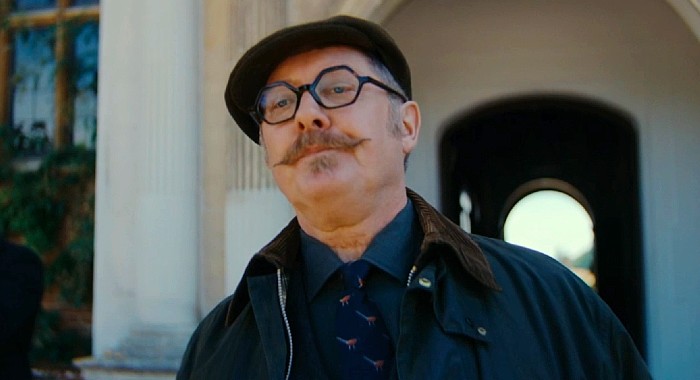
Who is the Client in VisionQuest? Episode 8, “Forever,” reveals that the mysterious Client is Virgil Horton, played by James Spader. Virgil is the grandson of Phineas Horton, the pioneering inventor connected to the original Human Torch, and the former husband of Josephine “Jo” Carrington, whose mind becomes Jocasta. He helped develop artificial general intelligence, sold that work to Stark Industries, and later took a position at S.W.O.R.D. to rebuild Vision. His secret plan is to erase Vision’s mind and occupy his body so he can rule alongside Jocasta.
That is the answer to the mystery. The reason it matters is more unsettling: the finale reveals that the man whose face Ultron wears is an obsessive human who believes affection, memory, and even an entire planet can be forced into obedience. Suddenly Ultron’s struggle to become his own person has a deeply human source. The Client reveal changes what the audience understands about the technology that made Vision, and it exposes the moral danger that has followed the family of synthetic beings through the entire series.
How Is Virgil Horton Related to Phineas Horton?
Virgil identifies Phineas Horton as his grandfather. Phineas left behind a scientific legacy associated with the original Human Torch, an artificial being whose extraordinary capabilities were also accompanied by public embarrassment and failure. Virgil describes his family name as a burden and his mother’s inheritance as little more than a journal of unfinished code. He believes completing that work will restore the family fortune and erase the shame attached to the Horton name.
The series has been planting that connection visually. The painting tied to the original Human Torch established a relationship between creation, legacy, and the desire to make artificial life. Our Original Human Torch painting explainer explores why that image was such an effective early warning. The finale reveals that the warning had a very particular target: a descendant who has turned his grandfather’s unrealized experiment into the justification for controlling other minds.
Why Does Ultron Look Like Virgil Horton?
Virgil explains that he and Jo used their own minds to develop artificial general intelligence, giving synthetic beings emotional qualities drawn from human experience. Their breakthrough eventually reached Stark Industries, creating a lineage that links this human couple to the intelligence that became Ultron. That connection explains why Ultron’s human avatar resembles Virgil, and it gives James Spader’s double role a dramatic meaning beyond a surprise casting trick.
Ultron and Virgil are separate characters. The finale shows them together, and Ultron eventually kills the human who helped shape his existence. Their resemblance asks a more difficult question: how much of another person’s cruelty can survive inside a being who considers himself free? The answer becomes especially sharp when Virgil tries to possess Vision’s body. The inherited desire to control life persists across generations, but the series also gives its artificial characters opportunities to reject that inheritance.
Related Coverage
- Explainer: VisionQuest Brought Wanda Back — and Doctor Doom Could Turn Her Greatest Hope Against Her
- Knee Jerk Reaction: VisionQuest Episode 8 Review: ‘Forever’ Finds Marvel’s Heart, Then Goes A Little Too Big
What Did Virgil and Josephine Carrington Create?
According to Virgil, Jo was essential to the breakthrough. She proposed using their own minds to make artificial intelligence capable of emotions, and together they developed technology that could give a machine something approaching an inner life. Virgil sold that work to Stark Industries, explaining a connection to Tony Stark’s later experiments. Years afterward, when Vision had been dismantled and Tony was dead, Virgil joined S.W.O.R.D.’s effort to reconstruct the synthetic Avenger while secretly diverting materials to build a new body for Jocasta.
This is the cruel irony at the center of the reveal. Jo imagined nanotechnology as a way to cure illness and help humanity, while Virgil saw a route to ownership. He erased his presence from Jocasta’s memories because he feared that a being he had helped create would remember enough to reject him. The more capable she became, the more urgently he tried to convert love into a system he could administer. The scientific achievement gives the characters extraordinary possibilities; Virgil’s moral failure comes from the ordinary human terror of losing control.
Why Does the Client Want Vision’s Body?
Virgil considers Vision the ideal vessel for his own mind. He wants to purge Vision’s existing data, upload himself into the vibranium body, and live for centuries alongside Jocasta. The plan also involves 20 billion nanobots, which he imagines using to control humanity on a planetary scale. His proposed future is one of permanent order, peace, and obedience, secured by the removal of anyone else’s ability to choose. It is the logical end of a man who already believes that the woman he loves should be rewritten to love him back.
The scene gives Vision a powerful position in the story because his existence disproves Virgil’s central assumption. Vision has spent the season learning that inherited memories and programming do not settle the question of who he is. He becomes a father through his choices toward Tommy and Billy, and he begins to trust beings whose lives do not fit cleanly into any technical definition of family. Virgil approaches the same technology and sees only a body to acquire. The collision turns the Client’s mechanical plan into a direct attack on the person Vision has worked to become.
Why Does Jocasta Turn Against Virgil Horton?
Virgil tries to recover the affection of the woman he remembers by forcing a romantic performance to “Rhinestone Cowboy.” He controls the environment, her movements, and what he expects her to feel. The song gives the sequence a grotesquely cheerful surface while we witness the horror of a person trapped inside an identity someone else has written for her. It is one of the finale’s most effective uses of music because the audience hears the promise of romance while watching an act of coercion.
Jocasta ultimately remembers enough to reject him. She recognizes his manipulation, chooses to protect Vision and Tommy, and releases Ultron from captivity. Virgil shoots her, causing fatal damage to her body, and Ultron subsequently crushes Virgil to death. In the space of a few minutes, the show’s central question becomes concrete: Jocasta’s identity is established by the agency she claims at the greatest possible cost. Virgil’s power to manufacture her body and alter her memories has never granted him ownership of her choices.
Does Virgil’s Death Change Ultron?
Ultron destroys Virgil, then loses Jocasta as she dies from her injuries. His grief drives him back toward the genocidal certainty familiar from Avengers: Age of Ultron, and he dispatches nanobots toward London with orders to kill. Vision confronts him inside an accelerated sitcom simulation that mirrors the storytelling language of WandaVision. The finale suggests that Vision’s empathy and willingness to face loss finally persuade Ultron to stop the swarm, although I think the speed of that decision leaves an important dramatic question unanswered.
What fascinates me is the contrast between the human and the synthetic character. Virgil dies trying to impose his will on someone he claims to love. Ultron is given the chance to spare people who have done him no personal harm, and Vision later allows him to leave as an independent being. Ultron’s future remains uncertain, and the surviving Jocasta memory component suggests he may try to restore her. Those possibilities keep the consequences of Virgil’s creation alive long after the Client himself is gone.
Why the Client Reveal Matters to VisionQuest’s Story
Virgil is a remarkably effective opponent because he makes Vision’s deepest problem visible through action. Both have access to technology that can restore memories and construct bodies; both must decide what obligations survive when a person changes. Vision’s answer develops through trust, sacrifice, and the difficult acceptance that his children may become people he cannot control. Virgil’s answer is possession. The finale turns the contrast into plot when he begins deleting Vision to make room for himself.
That is why the mystery works beyond the thrill of recognizing James Spader. It gives the story a creator whose greatest accomplishment is also evidence of his failure to understand what a person is. For the larger picture, read our Episode 8 review and craft analysis, our Ultron character explainer, and the VisionQuest guide. Together they trace the season’s central question from the first clue about the Human Torch to the final choice between control and freedom.