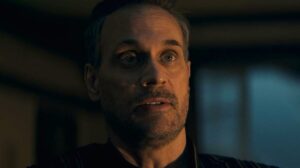
The Punisher belongs in Spider-Man: Brand New Day because Frank Castle is Peter Parker’s worst warning.
After Spider-Man: No Way Home, Peter has lost almost everyone who connected Spider-Man back to Peter Parker. MJ does not remember their relationship. Ned does not remember their friendship. The world still knows the hero, while the people who made the responsibility bearable no longer know the person carrying it.
That is why Frank Castle matters. He is not random MCU crossover stuffing, and he is not here only because Jon Bernthal is great in the role. Frank shows what happens when grief, isolation, and responsibility consume the person beneath the symbol.
Full spoilers for Spider-Man: Brand New Day, Spider-Man: No Way Home, The Punisher: One Last Kill, and Daredevil: Born Again follow.
Why Is The Punisher In Spider-Man: Brand New Day?
The Punisher is in Spider-Man: Brand New Day because he gives Peter Parker the clearest possible moral contrast after No Way Home. Peter believes people can still be saved. Frank believes some threats need to be ended permanently. Peter turns grief into rescue. Frank turns grief into punishment.
That contrast has always been the point of putting Spider-Man and Punisher together. They operate in the same city, pursue the same kinds of criminals, and understand the same basic truth: violence changes people. Spider-Man’s heroic identity depends on restraint, mercy, and responsibility. Punisher’s identity depends on certainty, execution, and the belief that some people have already forfeited their second chance.
Frank is especially dangerous for Peter because Brand New Day begins with Peter in the most isolated place he has ever been. Spider-Man is no longer one part of Peter Parker’s life. Spider-Man has become almost the only life Peter has left.
Frank Castle shows where that road can end when the person under the symbol disappears.
Start with the complete Spider-Man: Brand New Day board: Frank Castle is one part of a larger story about Peter Parker losing control of the boundary between the person and the mask.
- Read the review: Why Brand New Day finally lets Tom Holland become Peter Parker →
- Understand the mutation: Why Peter has headaches, organic webbing, and new powers →
- Follow Jean’s mystery: What V-Max means and what happened to Sarah Grey →
- Explain the ending: Ned, MJ, the handshake, and the Spider-Man detected in space →
The Punisher Started As A Spider-Man Problem
The comic history matters because Punisher did not begin as a separate street-level Marvel franchise. He did not begin as a Netflix antihero or as the man standing across from Daredevil on a rooftop arguing about killing.
Frank Castle began in a Spider-Man comic.
The Punisher first appeared in The Amazing Spider-Man #129 in 1974. In that story, the Jackal manipulates Frank into believing Spider-Man is a murderer, and Punisher hunts him with the certainty of a man who thinks judgment has already been passed.
That setup defines Frank immediately. Punisher is dangerous because his certainty can be weaponized.
That is why his first Spider-Man story still matters for Brand New Day. Punisher sees a target, decides the target deserves death, and acts. Spider-Man exists to challenge that kind of certainty. Peter’s code does not allow him to treat suspicion, anger, or even guilt as permission to execute someone.
From the beginning, Punisher has been a Spider-Man problem because he represents responsibility stripped of mercy. Frank has discipline, but that discipline is pointed toward killing. He has a code, but the code leaves almost no room for redemption. He has grief, but that grief has hardened into permission.
Spider-Man is built on a different sentence: with great power comes great responsibility. Frank Castle hears that sentence and twists it into something colder.
With enough pain, somebody has to pay.
Spider-Man And Punisher Have Always Been A Moral Clash
Spider-Man and Punisher do not clash because one jokes and the other broods. They clash because they are both wounded men who made opposite choices with their pain. Peter Parker lost Uncle Ben and eventually Aunt May, then decided his power had to protect other people. Frank Castle lost his family and decided his pain gave him a permanent war.
That is why their dynamic keeps working across comics, team-ups, and adaptations. Peter looks at Frank and sees a man who crossed a line he cannot cross. Frank looks at Peter and sees a good person who refuses to accept how ugly the world really is.
Neither man is confused about the other. They know exactly what they are looking at, which makes the conflict useful.
Frank can respect Spider-Man and still believe he is naive. Peter can understand Frank’s grief and still reject his method. They can pursue the same criminal, survive the same danger, and even land on the same side of a fight. They cannot agree on what justice is supposed to cost.
That is also why Punisher works better here than another traditional MCU mentor. Peter has already had Tony Stark, Nick Fury, and Doctor Strange shaping his relationship with the larger superhero world. After No Way Home, he does not need another powerful adult explaining the rules.
He needs a mirror dark enough to scare him.
Frank Castle Is What Happens When The Mission Eats The Man
This is where The Punisher: One Last Kill becomes important. The special leaves Frank in exactly the right emotional position for Brand New Day. He has finished the mission he believed would finally end the pain. The Nuccisi are gone. The kill wall comes down. Revenge, at least this version of it, has reached the finish line.
Frank finds nothing waiting for him there.
That is the real horror of the special. Violence gave Frank motion, but it did not give him peace. He hallucinates Curtis. He hallucinates Karen. He sees his family. He leaves the key to his weapons at his wife’s grave. He nearly ends his own life because the war he built to survive his grief no longer gives him a reason to keep moving.
The hallucinated Karen cuts straight to the wound when she tells him, “You’re not a victim. You chose it.” She then goes deeper: “I failed your family and now you’re failing the city.”
That is Frank accusing himself. He knows Matt and Karen were fighting for New York while he chased the final branch of his old war. He knows the Punisher identity keeps him moving, and he knows it keeps him alone.
That makes Frank the perfect warning for Peter Parker.
Peter also has grief, isolation, and a mission that will never stop asking for more. The danger is not that Peter suddenly becomes Frank Castle overnight. The danger is slower and sadder. Peter can begin using Spider-Man as the only place where his pain feels useful.
Frank stands at the end of that road. There is almost no Frank Castle left. There is the skull, the mission, the target, and the next body.
That is why he belongs in Peter’s story now. Frank is the answer to the question Peter may be afraid to ask: What happens if there is no Peter Parker left?
Our full premium analysis explores Peter’s mistaken belief about responsibility, Jean Grey’s role as his dramatic opponent, Frank Castle’s warning, and why the movie’s visual language makes Peter’s identity crisis visible.
Read the full Spider-Man: Brand New Day KJR inside The Nerd Clan →
How The Comics Keep Returning To This Dynamic
The early Spider-Man and Punisher comics keep returning to the same pressure point because the pressure point works. In The Amazing Spider-Man #129, Frank is aimed at Spider-Man as a target. He thinks Peter is a murderer, and Spider-Man has to survive Frank’s certainty long enough for the truth to matter.
That is the whole relationship in miniature.
Later stories complicate the relationship without changing the central argument. Once Frank realizes he has been manipulated, he can work beside Spider-Man against a shared threat. Alliance never becomes agreement. The Tarantula material and later team-ups keep proving the same thing: Frank and Peter can want the same criminal stopped without believing in the same kind of justice.
That is why the Daredevil crossovers also make sense. Matt Murdock lives between Peter and Frank. He understands darkness more intimately than Peter often does, but he still refuses to become Frank.
When Spider-Man, Daredevil, and Punisher are placed around the same problem, the story creates a clean moral triangle. Peter represents mercy, Matt represents guilt and law, and Frank represents execution.
That triangle explains why Punisher belongs in Brand New Day. Peter does not need Frank because Frank is right. Peter needs Frank because Frank makes Peter’s right answer harder to defend.
A no-kill rule sounds simple until the person standing beside you can point to bodies, repeat offenders, broken systems, and innocent victims who paid the price for someone else’s mercy.
Why Punisher Works Better Than Another MCU Mentor
Peter’s MCU journey has often been shaped by older heroes. Tony Stark gave him access to the Avengers machine. Nick Fury turned his summer vacation into a spy-world disaster. Doctor Strange gave him a doorway into magic, memory, and multiverse consequences.
Those figures made sense when Peter was learning how large the superhero world could become. Frank Castle serves a different function. He is not there to train Peter, give him gadgets, or provide another connection to the Avengers. He is there because Peter has entered the part of the story where Spider-Man could become a substitute for having a life.
Frank does not offer Peter a future. He shows Peter a dead end.
He is the man who kept choosing the mission until the mission became the only identity he had left. Frank can teach Peter almost nothing through advice and everything by existing in the same room.
Peter only has to look at him to understand the cost.
How Jean Grey Makes The Punisher Matter Even More
Frank pressures Peter from the outside. He forces Peter to defend mercy in a world where mercy can look naive. He makes Peter answer the practical question: What do you do when the dangerous person keeps getting back up?
Jean Grey pressures Frank from the inside.
Peter can tell Frank that killing is wrong, but Frank has heard that speech. He can argue with it all day. He can point to dead families, broken institutions, repeat offenders, and people who continued hurting others because nobody ended the threat permanently.
Jean reaches a different place. Her possession ability allows her to enter Frank’s mind and experience the grief, rage, guilt, and self-hatred underneath the Punisher identity.
The moment confirms that the skull is not simply a brutal code worn by a disciplined soldier. It is a machine Frank built around a wound, and the machine keeps running because stopping would force him to confront everything the mission has been covering.
That makes the Spider-Man and Punisher conflict sharper. Peter challenges Frank’s method. Jean exposes Frank’s wound. Together, they make Frank harder to simplify.
Follow the character pressure inside Brand New Day:
Why Does Punisher Fight Hulk?
Frank fights Hulk because Jean Grey has taken control of Bruce Banner and is using Professor Hulk’s body to break into the Department of Damage Control.
Peter needs immediate help containing him, and Frank responds in the only language he trusts. He opens fire.
The bullets do almost nothing, but Frank continues because his approach to danger begins with overwhelming force. Peter tries to immobilize Bruce, reach the person inside the body, and prevent anyone from being permanently harmed. Frank sees an enormous destructive threat and attempts to eliminate it.
The sequence turns their philosophical disagreement into action. Peter is still searching for the person beneath the danger. Frank treats the danger as the whole person.
That is also why the fight is darkly funny. Frank’s absolute certainty collides with a problem that cannot be solved by shooting it harder.
Why This Matters For Hulk, Damage Control, And Peter’s Mutation
Punisher helps clarify how the other Brand New Day pieces belong inside the same movie. Frank is one answer to dangerous power. Bruce Banner is another. Peter Parker is another. The Department of Damage Control is another.
Frank sees danger and eliminates it. Bruce sees danger inside himself and manages it. Peter sees danger and tries to save the person underneath. Damage Control sees danger and turns it into a containment and research problem.
Those are different answers to the same crisis, which is how a crowded superhero movie can hold together.
The question underneath the story is simple: What do you do with the dangerous part of yourself?
Peter’s mutation places him on both sides of that argument. He spends the movie insisting that dangerous people are still people, even as his own body develops organic webbing, increased strength, sensory overload, violent instincts, and powers he can no longer fully control.
The Scorpion fight turns that fear into action. Peter tears away Mac Gargan’s tail and nearly beats him to death. For a few seconds, Frank’s worldview appears to have evidence on its side. Spider-Man is dangerous. Mercy has limits. Somebody may need to stop him permanently.
Peter’s inhibitor becomes the technological version of the same argument. He wants a device capable of suppressing the part of his nature he considers dangerous. Damage Control sees how the same technology could be used against mutants and other enhanced people.
Frank turns the control argument outward. Peter briefly turns it inward. Damage Control turns it into policy.
Follow the movie’s control problem:
What The Punisher Adds To Spider-Man: Brand New Day
Punisher adds a limit test.
Spider-Man’s mercy sounds easy when the villain is colorful, the banter is working, and the story still feels safely superheroic. It becomes harder when the person standing beside him argues that the city would be safer if the worst people never received another chance.
That is Frank’s function. He makes Peter defend mercy under pressure.
He also keeps the movie grounded. Brand New Day includes Hulk, mutation, Jean Grey, psychic possession, Damage Control, and the beginning of a mutant story, but Punisher keeps one foot on the pavement. He brings the argument back to streets, bodies, crime, and consequences.
That matters because Spider-Man is not only a multiverse character. He is not only an Avenger or the kid who met Tony Stark and fought Thanos. He is a street-level hero who believes one person is worth saving, even when saving that person is expensive.
Frank Castle tests whether Peter can still believe that after losing almost everything.
How Frank Castle Changes By The End
Frank does not abandon the Punisher identity, but Peter forces him to confront the cost of treating every dangerous situation as a target.
During the final conflict, Frank fires at Jean and critically wounds Peter instead. The moment turns Peter into the collateral damage Frank usually believes he can avoid through discipline and certainty.
Frank carries Peter into the hospital and remains beside him while he recovers. He tells Peter that he is one of the bravest people he has ever met, recognizing that Peter’s refusal to kill does not make him weak. Peter’s mercy requires a kind of courage Frank has trained himself not to value.
Frank later puts on Spider-Man’s mask so Peter can leave the hospital without revealing his identity. The image gives the movie one of its clearest symbolic reversals. The man who represents punishment carries the symbol of mercy so the person underneath it can finally walk outside as Peter Parker.
Frank does not become Spider-Man. He briefly accepts the responsibility of protecting the person inside the symbol.
Why The Punisher Matters For Avengers: Doomsday
The Punisher also matters because Brand New Day performs street-level work for the larger Avengers: Doomsday argument.
At the street level, Frank says dangerous people need to be stopped permanently. At the institutional level, Damage Control says dangerous power needs to be contained. At the global or cosmic level, Doom may argue that dangerous worlds need one absolute ruler strong enough to control the chaos.
Those ideas are not identical, but they rhyme.
Frank gives the MCU a human-scale version of the control problem before Doom can scale it across nations and realities. He shows how easily fear, pain, institutional failure, and genuine danger can become permission.
Peter’s answer matters because Peter keeps insisting that power does not erase personhood. A criminal is still a person. A monster is still a person. A mutant is still a person. A broken man is still a person.
That belief is fragile. Frank pressures it. Damage Control attempts to institutionalize the alternative. Doom may eventually try to crush it.
Doomsday Movement
- What moves us toward Doomsday: Punisher gives Brand New Day a street-level version of the saga’s control problem. Frank eliminates danger, Damage Control contains danger, and Doom may eventually argue that only absolute control can save a broken world.
- What does not: Frank’s appearance matters because his choices affect Peter and the final conflict. A violent cameo would have provided heat without meaning. The movie makes him part of Peter’s moral argument.
- Spider-Man: Brand New Day review and Knee-Jerk Reaction
- Why Peter Parker has headaches and new powers
- What V-Max means and what happened to Sarah Grey
- The ending, Ned, MJ, and the post-credits scene explained
- Who Scorpion is and why Peter loses control fighting him
- Jean Grey, Sarah Grey, Damage Control, and the X-Men setup
- Why Savage Hulk returns and Bruce Banner’s control breaks
- Why Brand New Day matters for Avengers: Doomsday
- Visit The MCU Diaries hub for complete Marvel coverage
- Join The Nerd Clan for the craft, chaos, and conversation after the credits
The Takeaway
The Punisher belongs in Spider-Man because he shows what responsibility becomes when mercy dies.
That has been true since his first appearance in The Amazing Spider-Man #129. Frank Castle was built to test Spider-Man’s code. He was built to make Peter’s mercy look dangerous, naive, and expensive.
That is exactly why he fits Brand New Day.
Peter is alone. The life beneath the mask has been erased from almost everyone who mattered. The mission is still there. The responsibility is still there. The city is still there.
Frank Castle stands at the end of that road and shows Peter what happens when the mission is all that survives.
Great superhero writing does not pair characters because they look cool together. It pairs them because one character makes the other character’s choice harder.
Frank Castle makes Peter Parker’s choice harder.