The battle in Outlander: Blood of My Blood Season 2 Episode 5 was real. But the most revealing question isn’t how many men fell at Sheriffmuir. It’s why an army that could claim victory still failed to change Scotland’s future.
The short answer: The Battle of Sheriffmuir was fought on November 13, 1715, near Dunblane, Scotland, between Jacobites seeking to restore the exiled Stuart dynasty and troops loyal to King George I. Neither army won a clear battlefield victory. Each side defeated part of the other. But the Jacobites, despite having a much larger army, failed to break through toward Stirling and central Scotland. That failure gave the government time to regroup and helped doom the 1715 Rising. The real story is about the difference between winning a fight and accomplishing the reason you fought it.
Spoiler warning: This article discusses Blood of My Blood Season 2 Episode 5, “Forgive Me, Father,” and thematic connections to the original Outlander television series. It does not reveal events from later Blood of My Blood episodes or future book plots.
Why Did the Battle of Sheriffmuir Happen in the First Place?
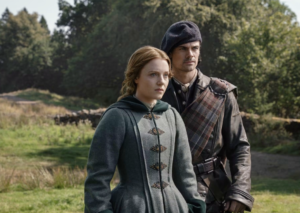
Picture the Scotland of Blood of My Blood. Brian Fraser and Murtagh can talk about loyalty as though it belongs to the people they love. Dougal can talk about loyalty as though it belongs to the cause. Colum has to consider what happens to an entire clan when powerful men choose a side.
All of them are looking at the same war. They are not necessarily looking at the same stakes.
The historical conflict wasn’t simply Scotland fighting England. Scots fought on both sides. So did people with different ideas about who should rule, what Parliament could decide, how religion should influence the monarchy, and what Scotland had gained or lost through the 1707 Union.
James Francis Edward Stuart, the exiled son of the deposed James VII and II, claimed that he was the rightful king. His supporters called him James VIII and III; opponents called him the Old Pretender. When Queen Anne died in 1714, George I of the House of Hanover took the throne instead. For Jacobites, the succession was still unsettled. For George’s supporters, defending the new monarchy meant defending the political order that had put him there.
The Earl of Mar raised the Jacobite standard in September 1715, attracting supporters with different motivations. Some believed deeply in hereditary Stuart legitimacy. Others opposed aspects of the Union, felt excluded from the new government, followed powerful patrons, or saw a chance to protect their clan’s position. The cause could unite these people in an army without giving them an identical reason to risk their lives.
That’s the first why of Sheriffmuir: a political argument becomes a battle when leaders ask ordinary men to put their families, land, and futures behind a single answer.
If you want the deeper causes—1688, the Union, religion, the succession, and the different reasons people backed the Stuarts—start with our guide to why the 1715 Jacobite Rising happened. Sheriffmuir is the point where those competing reasons had to survive contact with an actual army.
Why Was Sheriffmuir So Important If It Wasn’t a Capital or a Castle?
Because of what lay beyond it.
Mar’s Jacobites were based farther north at Perth. Their military opportunity was to move south, get past the government army, and gain access to the strategic centre of Scotland—including Stirling, the crossing routes around the River Forth, and potentially Edinburgh.
Argyll, commanding the king’s much smaller army, didn’t need to conquer the Highlands that day. He needed to stop or delay Mar’s advance.
That is a huge difference in what success looks like.
If Mar forced his way through, his army could threaten important government-held territory and turn a rebellion into something much more dangerous. If Argyll survived, held the way south, and bought time for reinforcements, the government could come out ahead even without an obvious battlefield triumph.
The Jacobites needed a door opened. The government needed it to stay closed. Sheriffmuir was fought over the key, not the name of the moor.
What Actually Happened at the Battle of Sheriffmuir?
On November 13, 1715, the armies met on the high ground near Dunblane. Historic Environment Scotland estimates roughly 7,000 Jacobite troops against just over 3,000 government troops, while noting the difficulties in reconstructing exact historical numbers. Mar had a numerical advantage. Argyll had a more seasoned army and much greater military experience.
Neither side managed to arrange the day as neatly as a battle map makes it look afterward.
Scouts saw enemy movements on the moor. Both armies rushed to take positions. The Jacobites moved uphill and attempted to reform their lines, but the advance was disordered. Wet, marshy ground constrained one side of their army, even after a hard frost. The cavalry ended up poorly positioned. Sections of the two lines didn’t even line up cleanly opposite one another.
Then the fighting produced one of history’s stranger results.
- On the Jacobite right, Highland troops charged and drove back the government left.
- On the government right, Argyll’s troops and cavalry broke the Jacobite left.
In other words, each army had a wing that won and another that lost. The victorious troops chased their opponents away from the central battlefield. Their commanders became caught up in those pursuits. For a time, neither army had a clear picture of what had happened to the rest of its own men.
The day’s fighting left both sides exhausted and badly shaken. With light failing, Argyll pulled back toward Dunblane and the Jacobites withdrew northward. Casualty figures vary significantly among sources, so a single precise death toll would suggest a certainty the surviving evidence doesn’t support.
This is why answering “Who won?” with a single name misses the most interesting part. The battle had multiple local victors and no decisive overall winner.
So Who Really Won Sheriffmuir?
The simplest answer is: neither side clearly won the battle, but the government came out ahead in the campaign.
A Jacobite officer might have remembered driving government troops from the field. A government soldier might have remembered routing Jacobites somewhere else on that same moor. Both could be telling the truth about what they personally saw.
But Mar had marched south because he needed to alter the balance of power. He did not destroy Argyll’s force. He did not secure Stirling. He did not open the route toward Edinburgh. Instead, his army returned north and began losing the momentum that had made the rising dangerous.
Argyll’s surviving force could regroup and eventually receive reinforcements. And as time passed, sustaining the Jacobite army became harder: troops were exhausted, supplies mattered, and men began returning home. Elsewhere, the Jacobite force at Preston in England surrendered around the same time, worsening the rising’s position.
Mar could point to parts of the field and say his men had won. He could not point to the original objective and say he had achieved it.
That is why historians often describe Sheriffmuir as a tactical draw but a strategic Jacobite failure. Historic Environment Scotland’s battlefield assessment is especially clear about the distinction.
Why Didn’t the Jacobites Finish Off Argyll’s Army?
This is the most revealing question about the battle, because it is a question about a choice made under pressure.
Mar’s army still had considerable strength at the end of the fighting. He might have pressed against Argyll’s reduced force and tried to turn a confused result into a decisive one. He didn’t.
It is tempting to stop there and declare Mar a coward or an idiot. Historical accounts are often unkind about his command. But a better explanation starts by recognizing what he could and could not know at dusk.
His troops had fought hard, and some had chased the enemy far from where the engagement began. He did not have a perfectly organized army waiting for one more order. Argyll’s remaining men had taken defensive positions behind walls and dykes, and the light was going. Renewing an attack might have won everything—or consumed the force Mar still needed for the rest of the rebellion.
Those circumstances don’t erase Mar’s responsibility. They explain why the decision was actually difficult.
The risk of attacking was visible in the men standing before him. The risk of refusing was hidden in the weeks ahead.
Mar chose not to gamble his remaining army in another assault. The immediate result was survival. The larger consequence was that he surrendered the opportunity the rising had been created to seize.
That tension—between protecting what you have now and doing what your larger goal requires—is why Sheriffmuir matters as more than a footnote in military history.
Why Does Sheriffmuir Matter So Much in Blood of My Blood Episode 2.05?
Because the show’s most important choice happens before anyone wins or loses a charge.
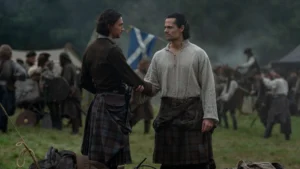
In “Forgive Me, Father,” Brian and Murtagh speak privately before the battle. Brian asks his cousin and best friend to care for Ellen and their child if he doesn’t come home. Suddenly the coming violence isn’t only about replacing a king. It is also about whether the people these men love will have someone left to protect them.
The scene gives their friendship an obligation. Brian can’t control who wins Sheriffmuir. He can’t control whether he survives it. But he can choose whom to trust with the people who matter most. Murtagh, in turn, must choose whether to accept that responsibility.
That is why the scene changes the way we understand Murtagh’s later loyalty to Jamie Fraser. His devotion is not merely a personality trait we take for granted when we meet him in the original Outlander. The prequel gives that loyalty a history of friendship, loss, duty, and promises that outlive the day they were made.
Importantly, this is the show’s fictional family story, not an attested event from the historical Battle of Sheriffmuir. There is no historical evidence that Brian Fraser and Murtagh had this conversation on the moor. The scene works because it puts a believable human choice inside a real crisis—not because it is a documentary reconstruction.
We dig into that scene and its consequences in our Blood of My Blood 2.05 Knee-Jerk Reaction and the 2.05 Outlander Cast recap and reaction podcast.
Why Dougal’s Anger Makes More Sense When You Know the History
After the battle, Dougal cannot accept the idea that the fighting is simply over. In the series, he pushes forward with a raid on a government supply train, and that decision leads to his capture alongside Old Angus.
The real Earl of Mar did not carry out Dougal’s fictional raid. But the emotional logic is grounded in the real army’s strategic problem: what happens when men have risked everything and their commander will not take the next step?
Dougal sees delay as surrender. From where he stands, refusing to act seems to make the sacrifices of the previous day meaningless. Yet the same impulsiveness that makes him determined to keep fighting also puts other people in danger.
And here is the difference between a slogan about courage and an actual dramatic choice: Dougal’s refusal to stop has consequences for Brian and Murtagh, who must now risk themselves to rescue him.
The series doesn’t have to declare either hesitation or aggression universally right. It shows that two people can respond to the same uncertain outcome with opposite decisions—and make different people pay for them.
Why Henry’s Place in the Battle Matters
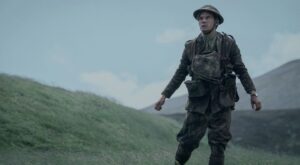
Henry Beauchamp adds another layer of irony. He’s a man marked by the First World War who finds himself inside a rebellion from a different century, fighting for a government whose future he already knows in broad historical terms.
His presence in the battle is fictional, but his dilemma is not. A soldier can be surrounded by the language of kings, causes, and national destiny while trying to make a much smaller decision: do I leave the person beside me, or do I help?
That is why Henry’s choice to remain and help others, including Arch Bug, matters more than trying to score the battle like a sporting event. The men ordering the campaign are fighting over the future of a crown. Henry is confronted with another person’s immediate life.
The show places two measures of victory beside each other: what an army can gain and what an individual refuses to abandon.
Why Sheriffmuir Makes the Original Outlander Sadder
The battle also creates a painful rhyme with Culloden, which takes place more than thirty years later, in 1746, during a different Jacobite rising. They’re not the same battle, the same campaign, or the same generation of fighters. But one failed Stuart campaign foreshadows another.
In Blood of My Blood, Old Rupert dies at Sheriffmuir. In the original Outlander, the younger Rupert’s fate is tied to Culloden. That pairing is a storytelling connection invented by the series, not proof that these fictional men belong in the battlefield’s historical record.
But it matters emotionally. Across generations, men inherit causes they did not create and risks they cannot fully control. When the original series reaches Culloden, viewers who know the prequel now carry the memory of another Rupert, another moor, and another family altered by the Jacobite cause.
For the real historical relationship between the two risings, read our Battle of Culloden explainer. The tragedy is not that Scotland simply fights the same battle twice. It’s that unresolved questions about loyalty, monarchy, and power keep drawing new people into old conflicts.
Did Sheriffmuir End the 1715 Jacobite Rising?
It helped break the rising, but it did not end everything on November 13.
The Jacobites’ failure to break through, combined with the collapse of their campaign in England, weakened the revolt badly. James Francis Edward Stuart finally arrived in Scotland in December. But an exiled claimant arriving after his supporters have lost momentum is very different from a leader arriving to command a victorious army.
The government gained time and strength. The Jacobite position deteriorated. In early 1716 James and Mar left Scotland, and the 1715 campaign came to an end.
It is tempting to look backward from that ending and say defeat at Sheriffmuir was inevitable. It wasn’t. That would erase the choices that made it happen. Mar had more men and a genuine opportunity. Argyll had a smaller force and a difficult defensive task. Neither commanded events perfectly. And once both armies left the moor, their decisions continued shaping lives far beyond it.
That is the real reason Sheriffmuir matters: history is not changed only by the army that fights hardest. It is changed by the leaders who understand what they must accomplish, the choices they make when certainty disappears, and the people who inherit the consequences.
Battle of Sheriffmuir: Quick Questions
When and where was the Battle of Sheriffmuir fought?
On November 13, 1715, on moorland east of Dunblane, near Stirling, Scotland, during the Jacobite Rising of 1715.
Who fought at Sheriffmuir?
Jacobite forces led by John Erskine, Earl of Mar, fought troops loyal to King George I led by John Campbell, Duke of Argyll. Scots fought in both armies; this was not simply a war of Scotland against England.
Who won the Battle of Sheriffmuir?
The battlefield result was inconclusive. Each side broke part of the other army. Strategically, the government benefited, because the Jacobites failed to move south and capture control of central Scotland.
Did Bonnie Prince Charlie fight at Sheriffmuir?
No. The 1715 Rising supported James Francis Edward Stuart, Bonnie Prince Charlie’s father. Charles Edward Stuart became central to the 1745 Rising. Sheriffmuir happened roughly thirty years before Culloden.
Did Rob Roy MacGregor fight at Sheriffmuir?
According to Historic Environment Scotland’s battlefield record, Rob Roy and his men accompanied the Jacobite army but did not take part in the actual fighting, remaining in the vicinity of Cromlix. This is an example of why a figure associated with a rebellion should not automatically be described as a combatant in every engagement.
Are Brian Fraser, Murtagh, Dougal, Henry, and the Ruperts real Sheriffmuir soldiers?
They are characters in the Outlander fictional universe. The battle and its historical commanders were real; their individual 2.05 storylines are the show’s dramatic invention. The value of the episode is how those invented choices help us think about the real war’s human stakes.
Read More and Keep the Conversation Going
For the larger political causes, start with Why the 1715 Jacobite Rising Happened. For the aftermath, read our Battle of Culloden explained and Murtagh’s love for Ellen and loyalty to the Frasers.
Then catch our Blood of My Blood Season 2 Episode Guide and the 2.05 podcast recap and reaction, or use the free Mary & Blake app as your second screen for the story.
Our question for you: Does Sheriffmuir make Dougal’s determination more understandable—or does it make Brian and Murtagh’s decision to put people before the cause feel even more important?
Historical Sources and Further Reading
- Historic Environment Scotland: Battle of Sheriffmuir (designated battlefield record BTL17) — battlefield terrain, accounts, commanders, the divided result, and its strategic consequences.
- UK Parliament: The 1715 Rebellion — the wider political crisis and the rising’s collapse.
- National Army Museum: The March of the King’s Forces to Perth, 1715 — the campaign and why failing to destroy Argyll’s smaller force mattered.
- The National Archives: Jacobites at Sheriffmuir, 1715 — contemporary Jacobite testimony.
Historical interpretation reflects the documentary and battlefield sources above. Character dialogue and plot developments come from Blood of My Blood 2.05 and are identified as dramatization, not as historical evidence.