
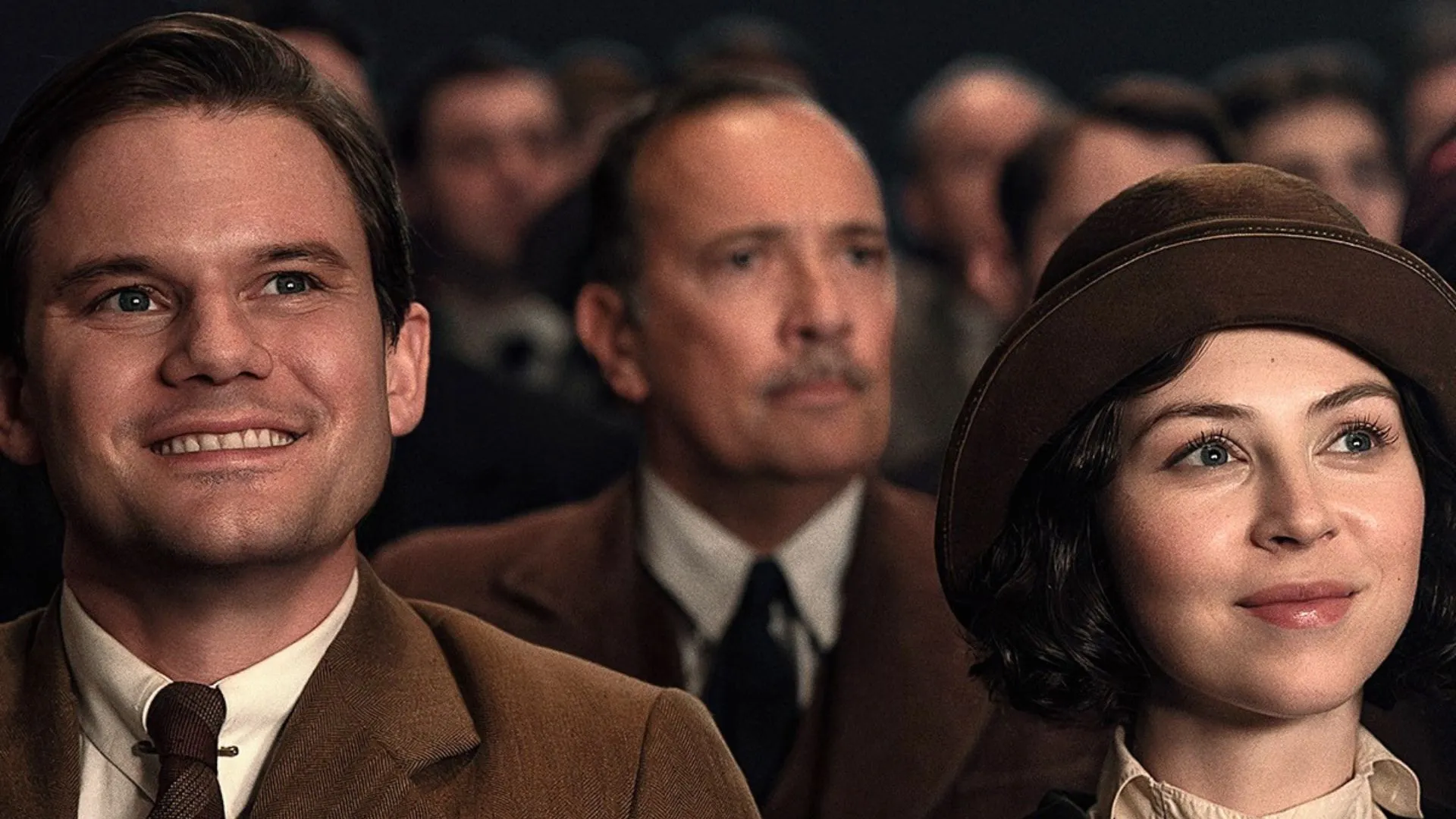
Outlander: Blood of My Blood Season 2 Episode 7, “Heart of the Highlands,” gives Brian Fraser one of his strongest moments of the series, but increasingly transactional flashbacks and predictable revelations leave the rest of the episode feeling stretched.
Spoilers ahead for Season 2, Episode 7.
I’m starting to get a familiar feeling watching Blood of My Blood, and it’s the same one I had around this point last season. The story is beginning to feel stretched. There are plenty of things happening, and the characters are certainly busy, but I’m not convinced all that activity is translating into particularly compelling drama.
I don’t think “Heart of the Highlands” is a bad episode. There isn’t anything fundamentally wrong with it, and I wouldn’t suggest that its quieter pace is inherently a problem. In fact, some of the best moments this week come from smaller conversations rather than elaborate action sequences. My frustration is that too much of the episode seems designed around moving pieces into position for whatever comes next, and I can increasingly feel the writers making those arrangements.
That’s an important distinction because a story can be carefully constructed without feeling mechanical. The best drama gives us the impression that events are unfolding because characters are pursuing their desires, encountering opposition, and making choices that produce consequences. When those elements are working together, we become invested in the journey regardless of whether we already know the destination. When they aren’t, even a perfectly logical sequence of events can feel like an exercise in getting characters from one plot point to another.
This episode offers examples of both approaches, which makes it an interesting one to examine from a storytelling perspective. Brian confronting Lord Lovat is easily the strongest material, and the difference between that sequence and much of the Henry and Julia storyline helps explain why I finished the hour feeling underwhelmed.
Brian Fraser Finally Gets a Scene Worthy of His Anger
Brian’s confrontation with Lord Lovat is the highlight of the episode, largely because it grows naturally from everything that has happened to Ellen. When Brian returns to Leoch and discovers that she has lost their child, the emotional devastation is immediate. Ellen had already imagined their daughter, even choosing the name Janet after her late sister, and she now believes that Lovat’s poisoning has destroyed any possibility of having another child. Her grief is compounded by the fear that Brian might no longer want her, a concern that says as much about the society in which she lives as it does about her own emotional vulnerability.
Brian’s response is appropriately furious. He arrives at Leathers, smashes Balloch’s face into the table, and confronts the man responsible for Ellen’s suffering. There’s a genuine intensity to Jamie Roy’s performance, particularly because Brian has generally been defined by his kindness and devotion to Ellen. We’ve seen his courage before, but this is an opportunity to examine what happens when that courage is fueled by a desire for vengeance.
The confrontation becomes especially effective when Lovat attempts to justify his actions through Maisri’s prophecy. He believes that Simon must become the last of his bloodline, which supposedly necessitates preventing Brian and Ellen from producing children. Brian immediately recognizes the hypocrisy in that reasoning. If eliminating competing descendants is truly necessary, why hasn’t Lovat sacrificed Brian himself? The question exposes how conveniently Lovat’s interpretation of destiny protects his own interests while demanding terrible sacrifices from everyone around him.
The scene escalates when Lovat insults Ellen, and Brian threatens to mutilate his father. It’s a brutal moment, but it also introduces an interesting moral complication. Brian has spent much of the series resisting his father’s cruelty, yet his anger now threatens to make him exercise the same kind of bodily control that Lovat inflicted upon Ellen. The scene therefore becomes about more than whether Brian will punish his father. It asks whether Brian can resist becoming the kind of man he despises.
Julia’s arrival supplies the final complication by reminding Brian that killing Lovat could lead to his execution. It’s a slightly convenient intervention, and I can see the writers positioning her to prevent a death that we already know cannot happen in the established Outlander timeline. Nevertheless, the emotional choice remains Brian’s. He must decide whether revenge is worth surrendering the future he wants with Ellen, and he ultimately chooses to preserve that future.
What makes the resolution satisfying is that Brian doesn’t simply abandon his objective. He demands the land near Broch Mordha, which will eventually become Lallybroch, and forbids Lovat from coming near Ellen again. The scene transforms his desire for vengeance into something constructive, providing a tangible consequence that grows from his emotional decision.
The subsequent moment with Ellen, when Brian presents her with the stone from the bridge where they first connected, is an especially lovely payoff. He intends to use it as the hearthstone of their future home, making the origins of Lallybroch deeply personal rather than merely another piece of franchise mythology. The stone represents the life Brian has chosen with Ellen, regardless of whether she can provide him with children.
That connection is particularly meaningful when contrasted with Colum’s assessment of Ellen’s supposed infertility. Colum evaluates her worth through the political and economic value of her ability to produce children, whereas Brian’s actions demonstrate that his love for Ellen is independent of that calculation. It’s a strong thematic contrast, and one of the few places this week where the episode’s emotional ideas, character development, and plot mechanics come together beautifully.
Henry and Julia’s Flashbacks Are Becoming Too Transactional
Unfortunately, the flashbacks involving Henry and Julia are considerably less effective, and they’re beginning to expose a recurring problem with the series’ approach to its twentieth-century material.
This week, we meet Charlotte, or Lottie, Henry’s former romantic interest. She belittles Julia, questions the circumstances of their marriage, and mocks the modest stone in Julia’s ring. Julia responds confidently, making it clear that she possesses something far more valuable than an impressive piece of jewelry: Henry’s love. The encounter reinforces the strength of their relationship, while the subsequent conversation allows Henry to acknowledge that Charlotte was his first love but that Julia is the woman with whom he wants to build his future.
There’s nothing especially objectionable about the material, and the actors make the exchanges perfectly pleasant. The problem becomes apparent when the conversation turns toward Julia’s ring and Henry explains the origins of its stone.
AMETHYST! WEEEEEEEEEEEEE!
Of course it’s amethyst. Of course Henry knows about a particular deposit in the Highlands. And of course this information becomes useful at precisely the moment when Henry needs gemstones to facilitate his family’s escape through the stones.
My issue isn’t that the revelation is impossible or that the writers have failed to establish a logical explanation for Henry’s knowledge. They’ve done exactly that. The problem is that I can practically see the functional purpose of the flashback before the scene finishes unfolding, and the emotional material surrounding that information feels secondary to the plot requirement.
A useful way to evaluate a flashback is to ask what it changes about our understanding of the present. Does it expose a previously hidden wound, complicate an established relationship, or introduce information that forces us to reconsider a character’s actions? In this case, we discover that Henry had a former girlfriend, that Julia is secure in his affection, and that her ring contains an amethyst connected to a location Henry knows about.
The first two details reinforce things we already understand about the couple. The third provides the information necessary for the next stage of the plot. Consequently, the flashback feels designed around the exposition it needs to deliver rather than an emotional discovery that meaningfully changes our understanding of the characters.
This has become something of a pattern with the Henry and Julia storyline. Their flashbacks frequently reaffirm the same central idea about their devotion to one another while conveniently providing information that becomes important to events in the eighteenth century. That affection remains an essential part of their relationship, but repeating it without adding much complexity eventually diminishes the dramatic value of returning to those memories.
Julia’s Revelation Was Predictable, but Maisri Remains Interesting
I’ve suspected for quite some time that Julia was able to travel through the stones because she was pregnant with William, and Episode 7 finally confirms that theory. Maisri explains that Julia does not possess the ability herself, meaning the family’s apparent progress toward returning home may have been futile from the beginning.
Naturally, I’m pleased that the prediction proved correct, but I can’t pretend the revelation surprised me. The series has supplied enough information for attentive viewers to arrive at this conclusion well before Maisri confirms it, which creates an interesting problem for the scene’s dramatic construction.
For Julia, the information is devastating. She has spent two seasons fighting to return to Claire, and her understanding of what is possible has just collapsed. The emotional consequences are significant, and Hermione Corfield does a fine job communicating the shock of that realization. From the audience’s perspective, however, the scene largely confirms an explanation we’ve already considered, reducing the surprise and placing much more responsibility on Julia’s emotional response to carry the moment.
The reveal also arrives after Henry’s elaborate expedition into the gorge to retrieve the gemstones. That sequence provides some physical danger, including his fall when the rope gives way, but it doesn’t substantially change Henry’s objective or challenge his understanding of himself. He begins determined to acquire the stones, overcomes the physical obstacles, and succeeds. Maisri then informs Julia that their plan may be impossible anyway, introducing another barrier to the same goal the couple has pursued for much of the series.
I’m becoming increasingly frustrated by that repetition. The story continues presenting new obstacles between Henry, Julia, and their return home, but those complications don’t always produce equally meaningful changes in the characters. There are only so many times we can watch them approach a solution before discovering another reason it won’t work.
Interestingly, the most compelling aspect of the Maisri scene has very little to do with time travel. When Julia confronts her about participating in Lovat’s cruelty, Maisri offers an almost casually pragmatic explanation. She’s earning a living, providing a service, and doing what she believes is necessary to survive. Nothing personal.
I like that characterization because it complicates the moral expectations surrounding someone with supernatural abilities. Maisri may possess extraordinary knowledge, but that doesn’t automatically make her benevolent or particularly concerned about the consequences of sharing it. Her willingness to rationalize participation in another person’s suffering gives her a moral ambiguity that I find considerably more interesting than another cryptic prophecy.
The Smaller Relationships Have Their Moments
Grace and Murtagh are fine, although I’m not particularly invested in their relationship yet. I appreciate that Grace’s decision to pursue intimacy with Murtagh carries meaning beyond romantic attraction, especially given the sexual exploitation she’s experienced and the restrictions imposed by her indenture. Her desire to experience affection on her own terms is genuinely important, and the episode gives that choice appropriate consideration. I simply need to see the relationship produce more meaningful consequences before it becomes one of the storylines I’m especially eager to revisit.
Dougal and Maura offer a more effective emotional development. Dougal returns from Sheriffmuir profoundly shaken, and his subdued behavior contrasts sharply with the reckless confidence that previously defined him. Colum’s public condemnation reinforces the consequences of his military decisions, while Maura’s response to his emotional withdrawal gives him an opportunity to reconnect with someone who cares about him. Their intimate scene works because we can observe a change in Dougal’s behavior without requiring him to deliver an explanatory speech about his trauma.
I also appreciated Arch Bug’s conversation with Henry about the child he and Murdina lost. His recollection of the boy he privately called Wee Bug gives his willingness to assist with the gemstone expedition a personal dimension. Murdina’s hope that the Fair Folk might bless them with another child could easily have been treated as a convenient reason to provide Henry with the directions he needs, but Arch’s grief gives the decision an emotional foundation.
These moments demonstrate that the show remains capable of thoughtful character writing, which makes the more mechanical elements of the episode stand out.
Final Thoughts and Kilt Rating
“Heart of the Highlands” is a perfectly acceptable episode, and I enjoyed enough of it to remain invested in the season. Brian’s confrontation with Lovat is easily the highlight, Maisri’s pragmatic morality offers a compelling character wrinkle, and the smaller relationships provide some welcome emotional texture.
But the episode also feels increasingly stretched, particularly when the Henry and Julia storyline returns to familiar obstacles and uses flashbacks to deliver information that the present-day plot conveniently requires. I understand the function of these scenes, but understanding their purpose doesn’t necessarily make them dramatically engaging.
Kilt Rating: 3.92 out of 5.
The most frustrating aspect of Episode 7 is that Brian’s storyline demonstrates exactly what makes Blood of My Blood effective when everything is working properly. His confrontation has a clear emotional objective, meaningful opposition, a difficult choice, and consequences that reflect the character’s values.
I wish more of the episode had operated with that same dramatic clarity.
More Blood of My Blood Coverage
Follow the season in our Blood of My Blood Season 2 episode guide. Our related explainers also explore Julia and Henry’s time travel, Maisri’s prophecy, and Lord Lovat’s ambitions. The episode connections are collected below.
This Week’s Blood Of My Blood Coverage
Get The Droughtlander Dispatch
Smart Outlander and Blood of My Blood updates — episode coverage, podcast drops, character guides, history explainers, and the stories worth remembering.
Pull up a chair, NerdClan. Below, I go deeper into the scene construction: why Brian’s confrontation creates a genuine moral turn, why Henry’s amethyst expedition feels more mechanical, and how the episode’s two stones reveal the difference between plot utility and emotional meaning.
Unlock the rest of this article.
Join the NerdClan — or sign in if you are already a member — and the rest of this article will unlock right here on this page. This entry requires Associate Producer or higher.