
FULL SPOILERS for Outlander: Blood of My Blood Season 2 through Episode 3, “Rabbits Don’t Swim,” and for previously aired seasons of Outlander follow.
Maisri’s prophecy in “The Veil of Time” is easy to treat like a riddle with one answer. A baby has two mothers and three fathers. The funny thing is…William Ransom fits that description almost absurdly well. So, case closed, right?
Nope. Here is why: the scene isn’t built that way. The more important clue may be the structure of Maisri’s vision. The show has already taught us how to listen to Maisri. The trick is not to listen like Lord Lovat. Lovat keeps asking loaded questions, Maisri keeps answering with separate images, and Simon Fraser repeatedly stitches those images into one flattering story about his supposed son becoming king. The prophecy may be describing several people, several generations and several moments in history at once.
William Ransom remains one of the strongest possibilities for a specific line. William Beauchamp may be the more important child for the story Blood of My Blood is actually telling. The white roses and the fox appear to describe the Jacobite Rising and Lord Lovat himself. The “three fathers” may even have political or heraldic echoes beyond literal parentage. The safest conclusion is no longer “Maisri predicted William Ransom.” It is that Maisri may be seeing an entire bloodline through the veil of time while Lovat hears only himself.
What Was In Maisri’s Wine In Blood Of My Blood Episode 6?
The spiced wine Maisri serves in “Small Mercies” contains a potion Lord Lovat says was intended to destroy the ability to bear children. The episode does not identify the ingredients, so naming a particular herb or historical medicine would go beyond what the story confirms. Ellen and Julia both become ill after drinking it; Ellen begins bleeding, reveals that she is pregnant and fears she has lost the baby. Lovat tells Julia he arranged the poisoning because he believes his supposed son Simon must be the last of his line for Maisri’s royal prophecy to come true.
That is the crucial distinction in the prophecy: Maisri presents a conditional vision, and Lovat chooses an interpretation and then tries to force reality to obey it. The potion reveals what he is prepared to do with a prediction about power. His certainty that Ellen will become barren is part of his confession, while the medical result remains unresolved at the end of Episode 6. The scene also raises an unsettling question about Maisri’s participation under Lovat’s authority without telling us enough to declare whether she acted willingly or under threat.
Our Ellen pregnancy explainer tracks what the episode confirms about her condition. For the character consequences and scene construction, read the “Small Mercies” Knee-Jerk Reaction.
Start With The Question Lord Lovat Asks
The scene begins with Lovat referring back to Maisri’s earlier Beltane vision. She had seen him triumphant beyond a field of thorns, and he asks whether that field represents the coming Jacobite Rising. Maisri answers plainly: yes. No vision could be clearer.
Then Lovat supplies the next idea himself. He asks whether that victory will lay a path to his son’s crown. Maisri does not confirm it. She casts her bones.
That distinction matters because Lovat has already linked three things before the new prophecy even begins: the Rising, the baby he believes is his son and a future crown. The scene then asks us to watch whether Maisri actually makes those same connections or whether Simon keeps making them for her.
The Episode Teaches Us How To Read Maisri Before Lovat Ever Hears The Prophecy
The prophecy scene does not arrive in isolation. Earlier in the episode, Mrs. Graham explains time travel to Henry through inherited stories, tea leaves and uncertain folklore. She knows the veil can grow thin, she believes intention matters, and she reads a broken line in the tea leaves as a journey that may continue. The episode is already establishing a world where signs can be real without being complete, and where interpretation matters almost as much as the sign itself.
Julia then gets the opposite kind of encounter with Maisri. She asks a direct question about whether she can pass through the stones, and Maisri gives her a direct answer: the gift is not in her. There is very little metaphor there. That matters because it proves Maisri is capable of speaking plainly when the story wants her to.
Only after that does Lovat enter and turn Maisri from a private source of truth into a political oracle. He immediately takes an earlier vision about a thorn-covered field and asks whether it means the coming Rising will create a path to his son’s crown. In other words, the prophecy is structurally framed by a man who already has the answer he wants before Maisri casts a single bone.
The Edit Between The Bones And The Prophecy Is Part Of The Meaning
Maisri begins casting, but the episode does not immediately give us the vision. Instead, the scene shifts into Maura and Ellen’s confrontation over Malcolm. Maura talks about wounds that should remain open so a person never forgets how they were made. Only after that exchange do the bones clatter and Maisri begins to speak.
I would be cautious about claiming Maura is secretly part of the prophecy. The edit still matters. The episode deliberately places grief, memory and inherited consequences directly beside a vision involving thorns, roses, bloodlines and the future. Private wounds become family wounds. Family wounds become clan conflicts. Those conflicts become history.
That cut also delays Lovat’s answer. He wants a clean prediction about a crown. The episode refuses to give him one. It makes him wait through somebody else’s unresolved grief before the prophecy begins, which is exactly the opposite of the certainty Simon is trying to extract from Maisri.
The Prophecy Itself Is Broken Up By Lovat’s Interpretations
Once Maisri starts speaking, she does not deliver one uninterrupted paragraph. She gives an image, Lovat interrupts, he supplies a meaning, and Maisri moves to another image. That form matters.
She gives the red and white roses. Lovat does not interpret those yet. She gives the child with two mothers and three fathers. Lovat immediately supplies Mother Mary and the Trinity, then asks whether Maisri is naming a Catholic king. Maisri does not answer that question. She returns to the thorn field instead.
Then she gives the white roses, the russet coat and the fox. Lovat pushes her to continue. Only after that does Maisri move to “your son’s name,” the conditional “if,” and the possibility of kingship.
The scene is therefore doing something very specific: Maisri supplies fragments while Lovat supplies continuity. The assumption that every fragment describes one baby belongs more to Simon’s reading than to the structure of the vision itself.
The Scene Then Gives Us A Control Test For Maisri’s Accuracy
After Lovat is satisfied and the political prophecy is over, Maisri turns back to Julia and gives her another vision. The language becomes much clearer. She says the dark-haired girl Julia longs for is not alone, that a father’s heart watches over her, and that she is safe in a land Julia cannot reach.
That beat is crucially placed after Lovat’s prophecy. The episode first lets us watch Simon distort ambiguous images, then immediately reminds us that Maisri really can see something true.
Julia naturally hopes the “father’s heart” means Henry. The audience has reason to understand that it is Uncle Lamb. So the episode gives us a miniature demonstration of the prophecy problem: Maisri can be right while the listener is wrong about what her words mean.
The Edit Then Connects Prophecy Back To The Veil
Soon after Maisri leaves Julia, the episode returns to Henry and Mrs. Graham on Samhain. Mrs. Graham tells him the veil is at its thinnest and prepares him to try to reach the other side. The placement matters because the episode has just shown Maisri seeing through time and now shifts to Henry trying to physically cross through it.
Later, Julia closes the loop by asking whether the veil is now closed to her for good. That gives the episode a larger structure: Henry may be able to cross the veil, Maisri can see through it, Julia is trapped behind it, and Lovat mistakes a glimpse through it for a map of his own destiny.
That is why I think the prophecy should be read as fragments seen through the veil rather than as one neat chronological sentence. The episode itself is fragmented around it. Its edit, interruptions and callbacks all reinforce the same idea: people receive pieces of truth and then build stories around those pieces.
The Grammar Of The Roses May Change The Entire Riddle
Maisri sees “a rose” red as embers and another white as snow. She then says that “one” will bear the brighter crown for a babe in arms with two mothers and three fathers.
What does “one” refer to?
The most natural grammatical answer is one of the two roses. That means the sentence may not be saying that the baby will bear a crown at all. It may be saying that one of the roses will bear the brighter crown for the child.
That reading makes the competing roses much more important. The image could be about dynasties, political claims, bloodlines or identities surrounding the child rather than a simple prediction that one baby becomes king.
Lovat Supplies The Catholic Interpretation — Maisri Does Not Confirm It
When Lovat hears “two mothers” and “three fathers,” he immediately solves the riddle for himself. The two mothers must be the child’s earthly mother and the Virgin Mary. The three fathers must refer to the Trinity. He then asks Maisri whether she is naming the baby a Catholic king.
Maisri does not say yes. She moves on to the field of thorns.
That is one of the most important structural beats in the scene. The script gives Lovat an interpretation and then pointedly withholds Maisri’s endorsement. If his Mary-and-Trinity answer were meant to settle the riddle, this would be the easiest place for the scene to confirm it.
The Prophecy Then Changes Subjects
Maisri returns to the field of thorns, an image she has already confirmed represents the Rising. She sees white roses among the thorns, then a russet coat and a cunning fox leaving his lair.
This section reads much more like a historical tableau than a baby prophecy. White roses were genuine symbols of loyalty to the exiled Stuarts and the Jacobite cause; National Museums Scotland notes that white roses could function as emblems of Stuart allegiance. The field of thorns has already been identified as the Rising. The russet coat fits the natural coloring of a fox, and Simon Fraser is historically remembered as “the Old Fox” because of his political cunning and shifting loyalties.
That means the simplest reading of this movement may be surprisingly concrete: the white roses are the Jacobite cause, the thorn-covered field is the Rising, and the fox moving among them is Lovat.
If that is correct, Maisri has already changed subjects inside the vision. Not every image is describing the baby. Once we accept that, there is no reason every other line has to describe the same future person either.
William Beauchamp May Be The Strongest Story-Context Answer
If we stay inside the story Blood of My Blood is currently telling, Julia and Henry’s son William deserves to be our first candidate.
The “two mothers” could eventually become Julia and Ellen if William is separated from his biological parents and protected or raised by Brian and Ellen. The “three fathers” could be Henry, his biological father; Lord Lovat, who publicly claims the child as his own; and Brian, if Brian eventually becomes the man who raises or protects him.
That theory is not confirmed, but it has narrative purpose. It concerns the baby who is actually present in the story and the adults whose choices could shape his identity. It also fits Maisri’s earlier description of a boy who will matter when the nation is in peril.
William could become a child of multiple families and political worlds: Beauchamp by blood, Fraser by public identity, and potentially MacKenzie through Ellen. In that sense, a boy who “unites clans” may not have to become a Highland diplomat. He could literally embody the collision and combination of several families.
William Beauchamp May Also Be “The Gift” Inside Julia
Episode 2 gives William another reason to matter. Earlier, Maisri tells Julia that “the gift is not in ye” and that even when Samhain makes the veil thin as gauze, Julia cannot cross the stones.
Julia’s one successful crossing happened while she was pregnant with William. If William possesses the time-travel ability, Maisri’s wording may be literal: the gift was in Julia when she crossed because the unborn William was in her body. After his birth, the gift is no longer “in” Julia.
That makes the later phrase “a babe in arms” especially interesting. William’s physical relationship to Julia has changed from unborn child inside her body to separate child carried in her arms. The episode may be emphasizing that transition because it changes Julia’s relationship to the veil of time.
This does not prove the prophecy is about William Beauchamp, but it makes him much more than the nearest baby in the room. The episode is already using him as a possible supernatural variable.
William Ransom Is Still The Best Literal Match For Two Mothers And Three Fathers
The William Ransom theory remains compelling because the family arithmetic is almost unnervingly exact. His biological mother is Geneva Dunsany, and Isobel Dunsany later raises him as a mother. Jamie Fraser is his biological father, the Earl of Ellesmere is his legal father at birth, and Lord John Grey becomes the father who raises him.
Geneva and Isobel. Jamie, Ellesmere and Lord John. Two mothers. Three fathers.
That is the cleanest literal fit we currently have, and I would not dismiss it as coincidence. The better question is whether Maisri is specifically predicting William Ransom or whether the writers are creating a generational rhyme between children whose identities are shaped by biological parents, legal parents and the people who actually raise them.
There is also a complication. Maisri later says “your son’s name” is “not yet regal.” If that is meant literally, William is a strange answer because Britain had already had King William III, who died in 1702. The name William was already unquestionably royal by 1715.
Lovat, however, believes Julia’s baby is named Simon. Britain has never had a King Simon. That makes the “not yet regal” line fit Lovat’s understanding of the baby much more naturally than it fits William Ransom.
“Your Son’s Name” May Matter More Than “Your Son”
Maisri does not simply say that Lovat’s son is not yet regal. She calls attention to his name. That could be deliberate. Perhaps the name Simon eventually becomes connected to kingship. Perhaps she is speaking in a way that matches Lovat’s false belief that the baby is his son. Perhaps the phrase is another carefully constructed statement that sounds definitive while remaining open enough to mean something else later.
The wording “mark me” immediately echoes Bonnie Prince Charlie’s familiar verbal tic in the original Outlander series, so the scene clearly wants Jacobite royal associations in the audience’s mind. That does not make the baby Bonnie Prince Charlie or identify one future king by itself. It creates resonance around names, kingship and the Stuart cause.
The Most Important Word May Be “If”
Maisri tells Lovat that if his son stands the last of his line, he shall one day be a king. That is a conditional prophecy, not an inevitable one.
Lovat hears “king” and naturally ignores the condition. The audience should do the opposite. If Maisri is referring to Julia’s baby, the condition may contain a brutal loophole: William Beauchamp is not actually part of Simon Fraser’s bloodline at all. Henry is his biological father.
That opens a fascinating possibility. Maisri could be telling Simon something technically true under a condition that can never be fulfilled. She never has to lie. Simon supplies the assumption that the baby belongs to his line.
If Maisri understands more than she says, the prophecy may even function as protection. Lovat’s belief that the child has a royal destiny gives him a reason to value and protect Julia’s baby. The show has not confirmed that Maisri is deliberately manipulating him, but the structure of the scene makes the possibility worth considering.
Could “Three Fathers” Mean England, Scotland And Ireland?
Literal parentage is not the only way to read the number three. The Jacobite cause itself was a three-kingdom project. The 1715 movement sought to restore the Stuart line to the thrones of England, Scotland and Ireland; historians regularly discuss Jacobitism in the context of those three Stuart kingdoms. The Institute of Historical Research describes the 1715 rebellion in exactly those terms.
Could “fathers three” symbolically refer to three political fathers or three kingdoms participating in the making of a king? It is possible, especially because Lovat himself immediately interprets the line symbolically rather than genealogically.
I would not call that the answer. There is no historical convention I can find that describes England, Scotland and Ireland as “three fathers.” The value of the theory is that it reminds us the line does not have to be a literal family-tree equation.
There Is Even A Fraser Heraldry Echo In The Number Three
One more symbolic detail is worth noting without overplaying it. The modern Clan Fraser of Lovat history explains that three crowns appear in Fraser heraldic tradition, associated with the story that Sir Simon Fraser saved Robert the Bruce’s life three times. The clan’s own historical material specifically connects the number three and crowns within Fraser identity.
That does not prove “fathers three” refers to Fraser heraldry. It is, however, an unusually appropriate echo inside a prophecy delivered to Lord Lovat that combines the number three, crowns and questions of lineage. At minimum, it reminds us that the scene is swimming in heraldic language rather than speaking only in literal family terms.
The Red And White Roses May Be About Dynasty Rather Than Individuals
The white rose has a specific Jacobite association, but the pairing of a red rose and a white rose has an older British dynastic history too. York and Lancaster used white and red roses as competing badges during the Wars of the Roses, and the Tudor rose later fused them as an image of dynastic reconciliation. English Heritage documents that red-white pairing and its later union under the Tudors.
I would not turn that into “red rose equals Hanoverian” because the historical evidence does not support such a neat equation. What the symbolism does establish is that red and white roses already carry a language of competing houses, rival claims and crowns.
That matters because Maisri’s grammar may place the crown on one of the roses rather than directly on the child. The image may be telling us that the baby exists at the center of competing dynastic identities and that one of those claims eventually becomes “brighter.”
The Fox Is The Part We Can Read With The Most Confidence
Simon Fraser is historically remembered as “the Old Fox.” The National Trust for Scotland and Clan Fraser of Lovat both use the nickname when describing the real 11th Lord Lovat and his reputation for political maneuvering.
That makes Maisri’s russet-coated, cunning fox leaving its lair unusually specific. The image fits Simon, and it appears directly after Maisri returns to the thorn field she has already identified as the Rising.
This is another reason to avoid forcing the whole prophecy onto William Ransom or William Beauchamp. Part of the vision is almost certainly about Lovat himself moving through Jacobite history.
The Show Has Already Taught Us How To Listen To Maisri
The most revealing pattern may be what happens every time Maisri speaks. She gives an image. Lovat interprets it. Maisri rarely confirms the interpretation.
He asks whether the Rising leads to his son’s crown. She casts the bones. She says two mothers and three fathers. He supplies Mary and the Trinity. She moves on. She describes the fox and the roses. He pushes for more. She gives him a conditional statement about his son’s name and the last of his line. He walks away believing he has received something favorable.
Then Maisri turns to Julia and demonstrates that she can be remarkably precise. She tells Julia that the dark-haired girl she longs for is safe, watched over by a father’s heart, in a land Julia cannot reach. The description points toward Claire and Uncle Lamb.
That contrast is crucial. Maisri is capable of clarity. Her conversation with Lovat is structured differently because the dramatic point may not be simply what Maisri sees. It may be what Simon Fraser needs to believe he sees.
How “The Veil Of Time” Connects The Prophecy To Julia
The episode repeatedly describes time as a veil. Henry can potentially cross it. Maisri can see through it. Julia discovers that even when the veil becomes thin, she cannot pass because the gift is not in her.
The prophecy may operate through the same metaphor. Maisri sees through the veil and receives pieces of different moments: the Rising, Lovat, a child, competing roses, the end of a bloodline and a future king. Everyone else then tries to turn those fragments into one orderly timeline.
That may be the mistake.
The veil gives Maisri access to the future, but access is not the same thing as sequence. Her images may sit beside one another because they are connected by bloodline or consequence rather than by chronological proximity.
That would explain why William Beauchamp can be the immediate child at the center of the story, William Ransom can fit one phrase almost perfectly decades later, and the white roses and fox can describe the Jacobite history unfolding around Lovat in 1715. They may all belong to the same prophecy without all being the same answer.
So What Is Maisri’s Prophecy Actually About?
My current reading is that the prophecy has at least three layers.
The immediate layer is William Beauchamp. He is the babe in arms standing at the center of the present story, publicly claimed by Lovat, potentially connected to Brian and Ellen, and possibly the supernatural “gift” that once carried Julia through the stones.
The historical layer is the Jacobite Rising and Lord Lovat. The thorn field, white roses and cunning fox fit the political world of 1715 far better than they fit a distant baby.
The generational layer may extend much farther. William Ransom is the cleanest literal match for two mothers and three fathers. The older Fraser prophecy, questions of the final Lovat line and the possibility of a future Scottish ruler all suggest that Maisri may be seeing descendants rather than a single immediate future.
The point may be that Lord Lovat receives a genuine vision of how consequential his bloodline and the people around it will become, then misunderstands the entire thing because he assumes history must be talking about him.
The Best Answer Right Now
If you force me to rank the possibilities, I would put them this way. William Beauchamp is the strongest story-context candidate. William Ransom is the strongest literal match for “two mothers and three fathers.” The white roses and fox are the strongest historical symbols, pointing toward the Jacobite cause and Lovat. The three kingdoms and Fraser heraldry are legitimate symbolic echoes, though neither is strong enough to call a solution.
And the biggest clue may be structural rather than genealogical: Maisri never gives us one clean statement saying one child will become king. The scene keeps changing images, changing time horizons and allowing Lovat to fill the gaps.
That is why the prophecy is so interesting. Simon Fraser wants a prediction. Maisri may be giving him a glimpse through the veil.
Keep Going With Blood Of My Blood
This Week’s Blood Of My Blood Coverage
- Recap & Reaction Podcast: Blood of My Blood Season 2 Episode 2 Recap & Reaction: “The Veil of Time” — Maisri May Be Right, But Lovat Is Hearing Her Wrong
- Knee Jerk Reaction: KNEE-JERK REACTION | Blood of My Blood Season 2 Episode 2 Review: “The Veil of Time” Makes Brian Fraser a Leader Before He Earns It
- Related Coverage: PRODUCER’S NOTES & TRANSCRIPT | Blood of My Blood 2.02: We Thought Brian Was the Story. Then Maisri Hijacked the Podcast.
Get The Droughtlander Dispatch
Smart Outlander and Blood of My Blood updates — episode coverage, podcast drops, character guides, history explainers, and the stories worth remembering.
Maisri’s Prophecy: Frequently Asked Questions
Who has two mothers and three fathers in Outlander?
William Ransom is the cleanest literal match: Geneva and Isobel can fill the two mother roles, while Jamie Fraser, the Earl of Ellesmere and Lord John Grey occupy biological, legal and parental father roles. William Beauchamp remains a strong story-context possibility if Ellen and Brian eventually become parental figures while Lovat continues to claim him.
Is Maisri’s prophecy definitely about William Ransom?
No. William Ransom fits one phrase extremely well, but the structure of the scene suggests Maisri may be describing several people and several moments in time rather than one child.
Could the prophecy be about William Beauchamp?
Yes. He is the babe actually present in the story, and his future could plausibly involve two mother figures and three father figures. Episode 2 also raises the possibility that William himself carries the time-travel gift that once existed “in” Julia.
What do the white roses mean?
White roses were genuine symbols of Stuart and Jacobite allegiance. In the prophecy they appear inside the thorn-covered field Maisri has already identified as the Rising.
What does the red rose mean?
The show has not given us a secure answer. Red and white roses carry broader British dynastic symbolism through Lancaster, York and the later Tudor rose, so the pair may indicate rival houses or competing claims. There is not enough evidence to assign the red rose to one specific character or political side.
Who is the fox?
The strongest answer is Lord Lovat. The historical Simon Fraser was known as “the Old Fox,” and Maisri places the cunning fox among the images associated with the Rising.
Could “three fathers” mean England, Scotland and Ireland?
Possibly as a symbolic echo. The Jacobite movement sought to restore the Stuarts across the three kingdoms, but there is no evidence that those kingdoms were conventionally called “three fathers.” It is an interesting political reading rather than a solved clue.
Why does Maisri say “if” he stands the last of Lovat’s line?
The conditional wording may be crucial. If Maisri means Julia’s baby, he is not biologically part of Lovat’s line, which could make the promised kingship dependent on a condition that can never actually occur.
Why is the episode called “The Veil of Time”?
The veil is both the supernatural barrier between eras and a useful metaphor for the prophecy. Maisri can glimpse through it, but everyone else must interpret the fragments she sees. The episode repeatedly shows that seeing part of the truth is not the same thing as understanding it.
Maisri may have shown Lord Lovat exactly what will happen. The challenge is resisting the same mistake he makes. Lord Lovat’s biggest error is not merely that he misunderstands the prophecy; it is that he assumes the prophecy is one answer waiting to be solved. The episode has spent its entire runtime teaching us to listen more carefully than that: separate what Maisri actually sees from what her listeners want those images to mean, pay attention to the conditional language, and do not assume adjacent visions belong to the same person or the same moment in time.
The show has already taught us how to listen to Maisri. We just have to avoid listening like Lord Lovat.





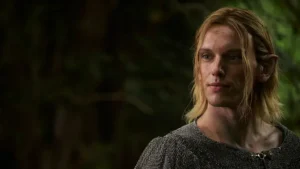

William Ransom has 3 mother’s. Geneva, Geneva’s sister, and Mother Claire.
William Ransom has 3 mothers. Geneva, Geneva’s sister, and Mother Claire.