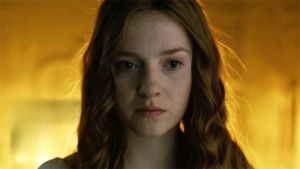
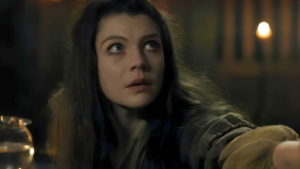
Loki Episode 1 begins with Loki declaring that he is “burdened with glorious purpose.” By the end of the hour, the TVA has forced him to watch that purpose collapse in front of him.
That is why “Glorious Purpose” remains such an effective premiere. The episode introduces the TVA, variants, reset charges, the Sacred Timeline and an entirely new level of MCU mythology, but none of those things are actually its most important job. The premiere exists to take a character we think we already understand and force him to confront the difference between the story he tells about himself and the person underneath it.
Quick answer: Loki Episode 1 works because every piece of exposition also attacks Loki’s identity. The TVA strips away his status, his magic, his Infinity Stone and eventually his belief that power gives his life meaning. Mobius then forces Loki to watch the future he escaped, turning information the audience already knows into evidence Loki has never seen. By the time Loki admits that hurting people is part of a desperate attempt to inspire fear and maintain control, the episode has transformed exposition into character revelation.
That is the story tool: The Identity Audit. Take the story a character believes about themselves, put it beside evidence that contradicts it and keep applying pressure until the character either changes the story or retreats further into the lie.
Spoiler note: This updated analysis contains spoilers for both seasons of Loki and discusses the character’s larger place in the MCU Multiverse Saga.
Why Loki’s First Episode Matters Again
This version of Loki only exists because the Avengers’ Time Heist creates an unexpected escape from his original 2012 fate. Instead of returning to Asgard after the Battle of New York and eventually living the life we watched through Thor: The Dark World, Ragnarok and Infinity War, this Loki gets another path.
That makes “Glorious Purpose” a useful old receipt for our current Doctor Doom “Stolen Lives” analysis. The episode is not about Avengers: Doomsday, but it does begin one of the MCU’s clearest stories about a person receiving a life that was never originally supposed to happen.
The Story Tool: The Identity Audit
The Identity Audit works when a story stops accepting a character’s self-description and begins testing it against evidence. Loki enters the episode with a very clear story about himself: he is Loki of Asgard, a god, a conqueror and a man destined for greatness. Power is not merely something he wants. It is how he defines his importance.
The premiere never defeats that belief with a lecture. Instead, it keeps placing Loki in situations where the identity stops working. His magic fails. His title means nothing. His threats do not frighten anybody. The Tesseract becomes office evidence. Infinity Stones become paperweights. Even the future he believed he controlled has already happened without him knowing it.
Every new fact therefore performs two jobs at once. It explains the TVA to us while dismantling Loki for him.
Loki Arrives In The Gobi Desert Still Performing Loki
The episode begins exactly where this version of the character should begin: with the Loki who has just lost the Battle of New York. He has not reconciled with Thor, mourned Frigga, fought beside his brother in Ragnarok or faced Thanos in Infinity War. Those experiences belong to another version of the life this Loki has not yet lived.
So when the Tesseract drops him into the Gobi Desert, his first instinct is beautifully predictable. He climbs onto higher ground and announces himself to the people around him as Loki of Asgard, burdened with glorious purpose. He reaches for the identity that has always protected him because he still believes the performance will control the room.
Then the TVA walks through a door and treats his grand cosmic escape like paperwork.
That contrast is the first movement of the Identity Audit. Loki believes he has escaped the Avengers and reclaimed control of his destiny. The TVA calls him a standard sequence violation.
The TVA Does Not Fight Loki’s Ego. It Makes It Irrelevant.
This is one of the smartest choices in the premiere. The TVA does not need a larger villain to beat Loki in an enormous action sequence. Agent B-15 simply demonstrates that the organization’s technology operates according to rules Loki does not understand, arrests him and removes him from the world where his usual status has meaning.
Once inside the TVA, the humiliation becomes systematic. His clothes are removed. He is put through bizarre bureaucratic processing. He signs for everything he has ever said, confronts the possibility that he might be a robot without knowing it and is threatened with incineration because he failed to understand a ticketing system.
The comedy works because it is specific to Loki. A character who desperately needs to be treated as exceptional has landed inside a bureaucracy designed to treat cosmic absurdity as routine.
The TVA does not tell Loki that he is unimportant.
It behaves as though that fact is obvious.
Good Exposition Creates Pressure, Not Homework
The original version of this article focused heavily on how well “Glorious Purpose” handles exposition, and that observation still matters. :contentReference[oaicite:1]{index=1} The episode has an enormous amount of information to deliver: variants, Nexus Events, reset charges, the Time-Keepers, the Sacred Timeline and an organization existing outside normal time all have to make enough sense for the story to continue.
But the best exposition in the premiere is rarely neutral information. Almost every rule Loki learns makes his situation worse. Learning that the TVA controls deviations means his escape was not liberation. Learning that his magic does not work means his usual power cannot save him. Learning that the organization exists outside the normal timeline means the hierarchy he understands no longer applies.
That is why the information remains dramatically active. The audience is not studying a rulebook alongside Loki. Loki is discovering rules that keep invalidating the person he believes himself to be.
The Infinity Stones Break Loki’s Measurement System
The Infinity Stone drawer remains the cleanest proof beat in the premiere because it requires almost no explanation. Loki escapes from Mobius long enough to recover the Tesseract, only to discover it sitting among several Infinity Stones that TVA employees casually keep around and sometimes use as paperweights.
That image destroys Loki’s existing measurement of power.
The Tesseract has shaped enormous portions of his life. He invaded Earth with it. The Avengers formed because of the conflict surrounding it. Thanos was interested in the Infinity Stones because, within the reality Loki understands, they represent extraordinary power.
Inside the TVA, none of that matters.
Tom Hiddleston’s reaction is what makes the scene work. Loki looks around the office while everyone continues performing mundane tasks, completely uninterested in the objects he once considered almost divine. There is nothing he can threaten, steal or conquer to restore the hierarchy he understands.
For the first time, Loki has to ask whether the thing he spent his life pursuing was ever the same thing as purpose.
Mobius Does Not Want Loki’s Biography. He Wants His Motive.
This is where Mobius becomes essential. He already knows what Loki has done. He does not need Loki to explain New York, Thor, Odin or the various betrayals that define his history. What Mobius wants to know is why Loki keeps doing the same things.
That distinction turns what could have been a recap episode into something closer to an interrogation of character. Mobius asks the question nobody in the films really had time to ask: does Loki actually enjoy hurting people?
Loki responds the way Loki normally responds. He performs. He deflects. He argues that freedom is humanity’s great lie and insists that people secretly crave domination. He tries to convert the conversation into another demonstration of his superior understanding of everyone else.
Mobius keeps returning to the evidence.
The Time Theater Turns MCU Continuity Into Character Evidence
The Time Theater is another smart use of material the audience already knows. We have seen Loki’s future. We watched Frigga die, watched Loki reconcile with Odin and Thor, watched him stand beside his brother during the destruction of Asgard and watched Thanos kill him at the beginning of Infinity War.
This Loki has not.
That makes the footage function completely differently for him. The scenes stop being franchise recap and become evidence in the Identity Audit. Mobius can show Loki that the future version of the person sitting in front of him eventually developed relationships, made sacrifices and experienced consequences the 2012 Loki cannot imagine yet.
Frigga’s death is particularly brutal because Loki initially tries to distance himself from responsibility. Mobius refuses to let him hide behind intention. Loki may not physically kill his mother, but the chain of choices he makes helps create the circumstances that lead to her death.
The exercise forces Loki to confront something power cannot solve: consequence.
The Most Important Future Loki Sees Is His Own Death
The ultimate blow comes when Loki watches the life he escaped continue without him. He sees reconciliation with Thor and Odin, the destruction of Asgard and eventually the moment Thanos kills him after Loki tries to save his brother.
That moment does more than tell Loki that he dies.
It shows him where his original “glorious purpose” actually ends.
The man who believed destiny had selected him for greatness watches himself become somebody capable of caring about other people and then die attempting to protect one of them. The future does not validate the conqueror standing in the TVA. It reveals another version of Loki whose life gained meaning precisely as domination stopped being its central goal.
That possibility becomes enormously important for everything the series does afterward.
The Variant Has Something The Original Loki Never Had
This is also where the premiere becomes stranger when viewed from the future of the MCU. The Loki watching the Time Theater has just been shown a complete version of the life he was supposed to live, but he no longer has to live it.
He knows about Frigga’s death before experiencing it. He knows he reconciles with Thor. He knows Asgard falls. He knows Thanos eventually kills him. The future has essentially become memory without experience.
That gives this Loki something the original version never possessed: foreknowledge of the man he could become.
The TVA initially treats that difference as a bureaucratic problem to correct. Dramatically, however, it is an opportunity. If Loki knows the path that supposedly defines him, can he make different choices and still remain Loki?
That is the question Episode 2 begins turning into free will versus determinism.
The Premiere’s Best Payoff Is A Repeated Line
The strongest writing move in the episode comes from taking something Loki says early in the interrogation and returning it to him with a different meaning. While resisting Mobius, Loki dismisses the TVA as an illusion created by weak people to inspire fear and maintain control.
At first, the line is another Loki performance. He is describing the institution because he needs to believe its power is fraudulent.
By the end of the episode, he uses almost the same language to describe himself.
After seeing the Infinity Stones, confronting the consequences of his choices and watching the life he was supposed to live, Loki finally admits that he does not enjoy hurting people. He says he does it because he has felt he had to, describing the cruelty as an elaborate trick used by the weak to inspire fear and make a desperate play for control.
The accusation has turned inward.
That is the Identity Audit reaching its payoff.
Loki’s Villainy Becomes A Defense Mechanism
This does not absolve Loki of anything he has done. Understanding why a character hurts people is not the same as excusing the harm. What the confession accomplishes is something more useful: it transforms Loki’s behavior from generic villain ambition into a strategy.
He uses fear because fear creates distance. He uses superiority because superiority prevents vulnerability. He reaches for control because being controlled terrifies him. The throne, the army and the glorious-purpose rhetoric are all external expressions of an internal need to make sure nobody else gets to define him first.
Now the rest of the series has somewhere to go.
If control is the defense mechanism, then connection becomes the threat to that mechanism. Mobius begins that process by seeing through him, and Sylvie eventually makes the possibility of genuine connection impossible for Loki to ignore.
That Makes The Premiere The Beginning Of Loki’s Entire Two-Season Arc
Viewed by itself, “Glorious Purpose” deconstructs the arrogant Loki who escaped from New York. Viewed after Season 2, the episode becomes the first movement in a much larger reversal.
The man who begins by proclaiming that he is burdened with glorious purpose eventually accepts an actual burden so other people can retain their lives and choices. The man who seeks a throne because he wants control eventually sits on something resembling the greatest throne imaginable because he is willing to sacrifice his own freedom.
The visual similarity makes the character difference even sharper.
Episode 1 Loki wants power because he believes power will make his life matter.
Season 2 Loki accepts power because he has learned that other lives matter too.
Why This Loki Is A Perfect “Stolen Life” Example
This is where the old premiere becomes useful to the MCU’s current multiverse argument. Variant Loki is not resurrected in the conventional sense, but the Avengers’ Time Heist allows a version of him to escape the future that originally led to his death.
From the TVA’s perspective, that second path is initially illegitimate. Loki’s escape is a deviation, the branch is reset and Loki himself is taken into custody because his continued existence outside the approved sequence is treated as a problem requiring correction.
That makes his story an unusually clean precursor to the question behind Doom’s “stolen lives” accusation. What happens when a life exists because reality did not follow the outcome it was supposedly meant to follow?
Loki gives us a deeply human answer.
The deviation becomes a person.
The TVA Sees An Error. The Story Sees A Life.
That distinction is crucial. To the TVA, the escaped Loki can initially be understood as a variant created by an unauthorized branch. His life is something to process, judge and potentially prune in order to protect the system.
But once we spend time with him, the abstraction becomes impossible to maintain. This Loki develops relationships with Mobius and Sylvie, fights for the TVA workers to understand their histories and eventually accepts an enormous personal burden to preserve branching realities.
The person the system identifies as an error becomes the person trying to save everyone else.
That is why multiverse stories work best when they resist reducing alternate lives to mechanics. A branch is not emotionally meaningful because a diagram says it exists. It becomes meaningful when somebody lives there.
That Is The Limit Of Doom’s Cosmic Accounting
This is why Loki could become such useful evidence against a simplistic version of Doom’s “stolen lives” argument. Doom may be able to identify lives and realities that exist because somebody interfered with an expected outcome, but identifying an irregularity does not automatically establish the moral right to erase it.
Loki’s second life was not supposed to happen according to the TVA’s system. It still became a life full of relationships, choices, sacrifice and consequence.
That does not prove every alteration to reality is morally acceptable. WandaVision gives us the opposite warning: preserving the life Wanda wants becomes wrong when an entire town is forced to pay for it.
Together, those old stories give Marvel a much more interesting argument than simply deciding whether altered realities are good or bad.
The question is who pays for them.
Quick FAQ
Why Is Loki A Variant In Episode 1?
This Loki becomes a variant after escaping with the Tesseract during the Avengers’ 2012 Time Heist in Avengers: Endgame. The TVA considers that escape a deviation from the Sacred Timeline and arrests him after resetting the branch created by the event.
Why Do The Infinity Stones Not Work In The TVA?
The episode establishes that Infinity Stones have no functional power inside the TVA. Dramatically, their uselessness matters because the Stones represent the highest level of power Loki understands, so seeing them treated like paperweights destroys his existing measurement of cosmic importance.
What Does Mobius Show Loki In The Time Theater?
Mobius shows Loki events from the life he was originally supposed to live after the Battle of New York, including Frigga’s death. Loki later watches more of that future himself, including his reconciliation with his family and his eventual death at Thanos’ hands.
What Does Loki Mean When He Says He Does Not Enjoy Hurting People?
Loki admits that cruelty is part of the persona he uses to create fear and maintain control. The confession reframes his pursuit of power as a defense against vulnerability rather than simply an appetite for conquest.
How Does Loki Episode 1 Connect To The MCU Multiverse Story?
The premiere introduces variants, branching timelines and the TVA, but its most useful long-term contribution is Loki himself. His existence demonstrates that a life created by a timeline deviation can develop its own relationships, choices and moral value rather than remaining merely an error in a cosmic system.
Continue Loki’s Journey
- Loki 1.02 — The Variant — where Loki’s identity problem becomes a fight over free will.
- Loki 1.06 — For All Time. Always. — where freedom and order finally become an impossible choice.
- Marvel’s Multiverse Has One Weak Spot — what Loki’s final solution costs in Season 2.
- Secret Wars Explained Through Loki Season 1 — how Loki’s multiverse choices become part of Marvel’s larger story engine.
From Loki’s Second Life To Doomsday
Loki is one of the MCU’s clearest examples of a character receiving a life outside the outcome reality originally gave him. Continue with our Doctor Doom “Stolen Lives” analysis or follow the larger Road to Avengers: Doomsday.
What Loki’s Glorious Purpose Really Was
Loki enters the premiere standing above strangers in the Gobi Desert and declaring that he is burdened with glorious purpose. The Identity Audit then strips away every piece of evidence he uses to support that belief: his title means nothing to the TVA, his magic cannot save him, the Tesseract is a paperweight and the future reveals that conquest was never where his life found meaning.
The crisis arrives when the accusation Loki originally throws at the TVA turns back on himself. The cruelty, fear and desperate need for control are not proof of his glorious purpose; they are the performance he built to protect himself from vulnerability. For the first time, Loki can see the difference between who he claims to be and why he behaves that way.
That is the larger craft lesson: character change starts when the story stops accepting a character’s self-image as fact. Put the identity beside evidence, apply enough pressure and make the character decide whether the old story can still survive.
Loki thought his purpose was to rule. His second life begins when he realizes he never knew himself at all.