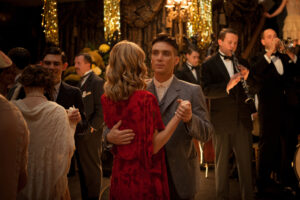
In our Bridgerton Season 1 Episode 8 review, we break down “After The Rain,” the finale where Daphne and Simon finally decide what kind of marriage they want, Penelope is revealed as Lady Whistledown, Marina accepts a new future, Anthony gives up on love, and the season closes with a birth that deliberately reverses Simon’s own beginning.
The finale is not perfect. Daphne and Simon have spent two episodes dealing with deception, violated trust, childhood trauma, and completely different visions of their future, so one rainstorm cannot realistically repair everything. But “After The Rain” mostly works because it gives Season 1 something it desperately needs: catharsis.
The rain matters. The painting matters. Violet’s speech matters. Simon choosing to stay matters. And by the time Daphne gives birth and a bee appears outside the window, Bridgerton has closed the emotional story of Season 1 while opening several doors for what comes next.
The short answer: Bridgerton Season 1 Episode 8, “After The Rain,” ends with Daphne and Simon choosing to remain together after finally confronting Simon’s childhood trauma and his vow not to have children. The episode later jumps forward to Daphne giving birth to their son. Penelope Featherington is revealed to the audience as Lady Whistledown, Marina leaves with Sir Philip Crane after learning George has died, Lord Featherington dies after his gambling scheme catches up with him, and Anthony decides he will eventually marry without allowing love to complicate the arrangement.
Full spoilers for Bridgerton Season 1 Episode 8, “After The Rain,” follow.
Listen To Our Bridgerton Season 1 Episode 8 Recap And Reaction
Mary & Blake break down the Season 1 finale, including Daphne and Simon’s rain reconciliation, whether the show earns Simon’s emotional turn, Violet’s speech to Daphne, the painting scene, the mirrored birth scenes, Penelope being revealed as Lady Whistledown, Marina leaving with Sir Philip Crane, Lord Featherington’s death, Anthony and Siena, the bee, and everything “After The Rain” sets up for Season 2.
Listen right here
Cups of Tea Ratings: Mary 5.0 ☕ | Blake 4.7 ☕
Subscribe To Receive The Latest Bridgerton Episodes
APPLE PODCASTS SPOTIFY YOUTUBE
Related Coverage
Want the complete Season 1 story? Visit our Bridgerton Season 1 Episode Guide for every recap and reaction, or read our Bridgerton Season 1 Ending Explained for the larger season-wide resolution.
Bridgerton Season 1 Episode 8 Recap: What Happens In “After The Rain”?
Daphne and Simon enter the Season 1 finale still emotionally separated after the collapse of their marriage in “Swish” and “Oceans Apart.” Daphne eventually discovers letters Simon wrote as a child and gains a deeper understanding of the rejection and cruelty he experienced from his father.
Violet encourages Daphne not to surrender the future she wants, reminding her daughter that love does not require perfection. At the Hastings ball, a rainstorm clears away the guests and finally leaves Daphne and Simon alone with the problem they have spent much of the episode avoiding.
Daphne tells Simon that she knows he is imperfect and loves him anyway. She argues that love is a choice they can continue making even after everything that has happened between them. Simon ultimately chooses to stay and try to build a life with her rather than continuing to organize his future around the vow he made to his father.
Elsewhere, Marina learns that George has died and agrees to leave with his brother, Sir Philip Crane. Anthony’s relationship with Siena ends, leading Anthony to decide that when he marries, he will remove love from the equation. Eloise attempts to protect Lady Whistledown from Queen Charlotte’s trap, only for the audience to discover at the end of the episode that Penelope Featherington has been Lady Whistledown all along.
Lord Featherington’s gambling scheme also catches up with him, leaving the Featherington family facing an uncertain future. The episode then jumps forward to Daphne giving birth to a son with Simon beside her. A bee lands outside the window before flying away, closing Season 1 on an image that echoes the bee from the premiere.
Bridgerton Season 1 Episode 8 Review: The Finale Mostly Earns Its Catharsis
The biggest strength of “After The Rain” is that it actually feels like an ending.
That sounds simple, but plenty of television finales resolve plot without resolving feeling. Bridgerton understands that the audience has spent eight episodes carrying Daphne’s romantic expectations, Simon’s childhood wound, Marina’s desperation, Penelope’s heartbreak, Anthony’s anger, and the mystery of Lady Whistledown. The finale needs release.
So the episode gives itself room to breathe.
Violet wakes and reaches toward the empty side of her bed. Anthony stands alone after Siena rejects him. Daphne walks through the Hastings home carrying the weight of a marriage that may be ending. Daphne and Simon sit together for their portrait while barely knowing how to speak to each other.
Those quiet moments matter because the show usually moves quickly. The finale allows the emotional bill to come due.
Then the rain finally breaks.
Why Is Bridgerton Season 1 Episode 8 Called “After The Rain”?
“After The Rain” refers literally to the rainstorm that interrupts the Hastings ball, but the title also describes the emotional purpose of the entire finale.
Season 1 has spent eight episodes building pressure. Daphne has been shaped by an impossible marriage market. Simon has organized his adulthood around a vow made to the father who abused him. Marina has hidden her pregnancy because society gives her almost no safe alternative. Penelope has hidden both her feelings and her power. Anthony has tried to control everyone around him rather than confronting his own pain.
The storm is the release.
For Daphne and Simon, the important part is not the rain itself. It is what happens afterward. The fantasy of their honeymoon is gone. The deception has been exposed. The damage cannot be undone.
They can only decide whether something new can grow after the storm.
That is why “After The Rain” is the right title for the finale. It is not about returning to what existed before.
It is about what survives.
Do Daphne And Simon Stay Together At The End Of Bridgerton Season 1?
Yes. Daphne and Simon choose to remain together at the end of Season 1.
The important word is choose.
Their marriage does not survive because the problems suddenly disappear. Simon still carries the trauma created by his father. Daphne and Simon have both damaged the trust between them. Their conflict over children has exposed completely different assumptions about what their future was supposed to look like.
But Daphne no longer asks Simon to pretend the wound does not exist. She tells him that he does not have to be perfect in order to be loved.
That is the emotional pressure point of the finale.
Simon was raised by a father who treated love as conditional. Simon could be worthy only if he became the perfect Hastings heir his father demanded.
Daphne offers him the opposite.
She knows who he is and asks him to stay anyway.
Follow their whole Season 1 relationship: Read our Daphne and Simon relationship guide for how their courtship, marriage, betrayal, and reconciliation fit together.
Why Does Simon Choose Daphne Over His Vow?
Simon’s vow began as an act of revenge against his father. The old Duke of Hastings cared obsessively about continuing the family line, so Simon promised that the line would die with him.
For years, Simon interpreted that decision as freedom.
The finale forces him to recognize that the vow has become another form of captivity.
His father is dead, yet Simon is still allowing that relationship to determine whether he will have children, what kind of marriage he can build, and how much happiness he believes he deserves.
Daphne cannot erase Simon’s trauma with one speech, and this is where Blake’s reservation about the finale is legitimate. The emotional change happens quickly considering how deeply the wound has shaped Simon’s life.
But the direction of the choice makes sense.
Simon does not defeat his father by keeping the vow forever. He defeats his father by finally building a life that is no longer organized around him.
For more on Simon’s childhood and his vow: Read our Duke of Hastings and Simon Basset explainer.
Does Bridgerton Rush Daphne And Simon’s Reconciliation?
A little.
That is probably the biggest weakness of an otherwise satisfying finale.
Simon’s childhood trauma is enormous. His vow has shaped his entire adult identity. Daphne and Simon have also just survived two separate betrayals inside their marriage. Simon withheld the truth about why he would not have children, while Daphne violated Simon’s trust during sex after discovering that deception.
Those problems require more than a good speech.
The rain scene therefore works better emotionally than it does mechanically. Daphne’s argument lands because the season has spent eight episodes establishing how much these people love and desire one another. We are not being asked to believe love appears suddenly.
We are being asked to believe that Simon finally chooses to stop running from it.
That is enough to make the scene cathartic, even if the actual repair of their marriage feels compressed.
Why Violet Telling Daphne “You Are Bridgerton” Matters
Violet’s conversation with Daphne gives her daughter the emotional push she needs before the rain reconciliation.
Violet has not been a perfect guide for Daphne. In fact, one of the season’s central problems is that Violet prepared Daphne brilliantly for the marriage market while teaching her almost nothing useful about sex or the realities of marriage.
But Violet can still give Daphne something important: agency.
She reminds Daphne that being a Bridgerton means refusing to believe that pain has already decided the ending. Daphne does not have to passively accept the marriage she currently has if she still wants to fight for something different.
The scene works because Violet is not suddenly solving Daphne’s marriage for her.
She is reminding Daphne that the next choice belongs to Daphne.
What Does The Painting Scene Mean?
The portrait scene quietly dramatizes Daphne and Simon’s entire marriage.
From the outside, they look exactly like the fantasy society expects: a beautiful duke and duchess standing together inside an enormous estate.
Inside that image, however, they are emotionally separated.
The painter keeps adjusting them, pushing their bodies closer together and asking them to perform the appearance of intimacy before they have figured out how to restore the real thing.
Then Simon places his hand on Daphne’s shoulder.
The gesture is small, but it matters because the pose briefly becomes something more than performance. They look at each other, and the painter identifies what he sees as devotion.
The scene captures the question the finale still has to answer: can the image of their marriage become real again?
Why Does The Rain Scene Between Daphne And Simon Work?
The Hastings ball gives Daphne and Simon one final version of the public performance that has defined their relationship from the beginning.
Then it rains.
The guests leave. Lady Danbury wisely encourages everyone to give the couple some space. The elaborate social machinery disappears, and Daphne and Simon are finally left alone.
That matters because so much of Bridgerton is about the gap between public identity and private desire. Daphne and Simon began their relationship by pretending to court each other in public while hiding their actual feelings.
Now there is nothing left to perform.
Daphne tells Simon that she knows who he is. She knows he is wounded. She knows he is imperfect. She knows their marriage is damaged.
And she still wants him.
The scene is romantic because the fantasy has finally been stripped away.
Do Daphne And Simon Have A Baby?
Yes. The final sequence of Season 1 jumps forward and shows Daphne giving birth to a son with Simon beside her.
The baby confirms that Simon ultimately releases the vow that once defined his entire future.
But the scene matters for more than simply answering whether Daphne and Simon eventually have children.
The birth deliberately echoes Simon’s own birth at the beginning of his story.
Simon’s mother dies giving birth to him. His father treats the infant primarily as the heir who will continue the Hastings line and later rejects Simon when the child does not meet his expectations.
Daphne’s birth reverses that pattern.
Daphne survives. Simon stays beside her. Their child is not treated as proof of dynasty or legacy before he is treated as a person.
Simon was born into rejection.
His son is born into presence.
Why The Final Birth Scene Is The Season’s Best Bookend
The birth scene works because it does not merely repeat an image from Simon’s childhood. It changes the meaning of that image.
Simon’s original family story taught him that inheritance, lineage, and perfection mattered more than love. His father valued the Hastings name so much that he made his own child feel worthless.
Simon ends Season 1 by making a different choice.
He stays.
That is the actual victory.
The finale does not need Simon to become a perfect father in five minutes. It only needs him to break the first link in the chain.
His father abandoned love in service of legacy.
Simon chooses love and creates a new legacy because of it.
Is Penelope Lady Whistledown?
Yes. The Season 1 finale reveals that Penelope Featherington is Lady Whistledown.
Eloise spends the episode attempting to protect Whistledown from Queen Charlotte’s trap, still unaware that the person she is trying to save is her own best friend.
The audience, however, finally gets the answer.
Penelope removes her hood and is revealed as the writer behind the gossip sheet that has shaped nearly every major social conflict of the season.
The reveal completely changes the way Season 1 looks in retrospect.
Penelope was not merely standing beside the Marina and Colin story. She possessed the power to intervene in it. She was not simply listening to Eloise speculate about Whistledown. She was listening to Eloise investigate her.
And the painfully overlooked Featherington daughter was secretly one of the most powerful people in the Ton.
Why Penelope Being Lady Whistledown Changes Season 1
The reveal works because Lady Whistledown gives Penelope something her public identity does not: control.
Penelope is ignored, underestimated, dismissed by potential suitors, and treated as socially insignificant beside women like Daphne and Marina.
Whistledown is the opposite.
Everyone reads her. Queen Charlotte cares about what she writes. Families panic when she publishes. Private information becomes public reality because Whistledown decides to print it.
That makes Penelope’s secret identity more than a mystery-box answer.
It is a character answer.
The girl nobody sees has secretly been controlling what everyone sees.
What Happens To Marina At The End Of Bridgerton Season 1?
Marina learns that George Crane has died and eventually agrees to leave with his brother, Sir Philip Crane.
Sir Philip arrives because George had intended to take responsibility for Marina and the child. With George gone, Philip offers Marina another path forward.
It is not the future Marina wanted.
That is why her conversation with Lady Featherington matters. Marina asks Portia how she survived years inside a loveless marriage because Marina is beginning to consider whether survival may require accepting exactly that kind of life herself.
The editing initially allows the conversation to feel like a general reflection on marriage. Only afterward do we fully understand what Marina is preparing herself to do.
That delayed understanding makes the scene stronger.
The destination may feel somewhat tidy considering the damage Marina caused while trying to marry Colin, but emotionally the outcome is still a loss. The man Marina loved is dead, and the future she accepts is one built around survival rather than romance.
What Happens To Lord Featherington?
Lord Featherington dies after the gambling scheme involving Will Mondrich catches up with him.
Featherington manipulates a boxing match in order to make money, but the people involved are considerably more dangerous than he is prepared to handle.
The finale makes the consequence explicit, including a poison bottle that Mary & Blake both find a little obvious as a visual clue.
But the larger story works.
Lord Featherington has spent the season gambling with more than money. His choices threaten his daughters’ futures, the family estate, Will’s honor, and the security of everyone living under the Featherington name.
Eventually the bill comes due.
His death leaves an immediate question behind: what happens to the Featherington estate now?
Who Inherits The Featherington Estate?
“After The Rain” deliberately does not give the audience the full answer.
Lady Featherington receives information about the new heir, and her reaction suggests that the identity is significant and potentially unwelcome.
The finale therefore turns Lord Featherington’s death into one of the major open questions heading into the future of the Featherington family.
Portia may have survived her husband’s gambling disasters, but she does not automatically gain control of the house he leaves behind.
The uncertainty keeps the Featherington story alive beyond Marina’s departure and Penelope’s Whistledown reveal.
What Happens To Anthony And Siena?
Anthony and Siena end their relationship in the Season 1 finale.
Anthony arrives believing he may finally be ready to make Siena part of his life, but Siena refuses to continue living inside Anthony’s cycle of wanting her privately while struggling to accept what choosing her publicly would require.
She tells Anthony to let her go.
For the first time in a while, the episode gives Anthony enough silence for the loss to actually land.
That matters because Anthony has spent much of Season 1 being controlling, hypocritical, angry, and emotionally exhausting. Siena forces him into a moment he cannot solve by managing somebody else.
He loses her.
And he feels it.
Why Does Anthony Decide To Marry Without Love?
After losing Siena, Anthony decides that his eventual marriage should not involve love.
From Anthony’s perspective, love has created pain, vulnerability, jealousy, and chaos. Removing love from marriage appears to offer control.
That is exactly why the decision is such an effective setup for his future.
Anthony leaves Season 1 believing the solution to heartbreak is not becoming better at love.
It is eliminating love from the equation.
Which is, of course, a spectacular plan for a character living inside Bridgerton.
Continue with Anthony’s story: Head to our Bridgerton Season 2 Episode Guide for Anthony, Kate Sharma, every Season 2 recap, and our complete Kanthony coverage.
What Does The Bee Mean At The End Of Bridgerton Season 1?
A bee appears outside the window during the final scene after Daphne gives birth.
The image also echoes the beginning of Season 1, which featured a bee near the Bridgerton home. That makes the bee an intentional visual bookend even before the series explains whether it carries a more specific meaning.
Within the finale itself, the image fits the episode’s language of renewal, family, birth, and transition. One generation has confronted an inherited wound, and another has just begun.
Mary & Blake also discuss broader symbolic associations surrounding bees, including possible connections to family, birth, death, wisdom, and the soul. But even without assigning one definitive symbolic meaning, the dramatic function is clear.
The bee watches the ending.
Then it moves us forward.
What Music Is Used In Bridgerton Season 1 Episode 8?
One of the finale’s most important musical choices is Max Richter’s recomposed Vivaldi, particularly music associated with “Spring.”
The choice fits “After The Rain” perfectly because spring carries the language of renewal.
Daphne and Simon are not returning to the untouched marriage they had before “Swish.” That version is gone. Their dance after the rain represents a second beginning after damage.
That makes the music more than another elegant classical cue.
The storm breaks.
The dance begins again.
The relationship enters another season.
Bridgerton Season 1 Episode 8 Ending Explained
The ending of “After The Rain” resolves Daphne and Simon’s central Season 1 story while deliberately launching several new ones.
Daphne and Simon choose their marriage and eventually have a child, demonstrating that Simon has abandoned the vow he once allowed to define his future. The mirrored birth scene shows that Simon is beginning to break the family pattern created by his father.
Penelope is revealed as Lady Whistledown, transforming one of the season’s biggest mysteries into a much larger character problem. Eloise still does not know the truth.
Marina leaves with Sir Philip Crane after learning George is dead, accepting a future built around survival rather than the romance she originally wanted. Lord Featherington dies, leaving his family and estate in uncertainty.
Anthony loses Siena and responds by deciding that love has no place in his eventual marriage.
Those choices make the finale satisfying without making the world feel finished.
Daphne and Simon have reached an ending.
Everybody else just acquired a new problem.
What Does The Bridgerton Season 1 Finale Set Up For Season 2?
The most important Season 2 setup belongs to Anthony.
He ends Season 1 convinced that love is the problem. His solution is to find a wife without allowing emotion to interfere, giving the next chapter of his story an immediate internal contradiction.
Penelope’s Lady Whistledown reveal also completely changes the audience’s relationship with her. We now know the truth while Eloise, Colin, the Featheringtons, Queen Charlotte, and the rest of the Ton remain in the dark.
The Featherington family has lost its patriarch and may lose control of its home. Marina has entered an entirely different family situation with Sir Philip Crane. Will Mondrich has profited from the boxing scheme, but the finale leaves open whether that decision will eventually create consequences of its own.
Season 1 therefore ends exactly where a strong first season should.
Its primary romance has reached emotional closure.
The larger world has become more complicated.
Related Bridgerton Season 1 Coverage
- Bridgerton Season 1 Episode Guide: every recap, podcast reaction, relationship guide, character explainer, and major Season 1 story beat
- Bridgerton Season 1 Ending Explained: the complete season-wide ending, including Daphne and Simon, Marina, Whistledown, Anthony, and the Featheringtons
- Daphne And Simon Explained: their complete Season 1 relationship from fake courtship through marriage and reconciliation
- Simon Basset Explained: his father, his vow, his stutter, and the wound driving his Season 1 story
- Previous Episode: Bridgerton Season 1 Episode 7, “Oceans Apart”
- Continue To Season 2: Anthony, Kate Sharma, Kanthony, and every Season 2 episode
- Bridgerton With Mary & Blake: explore every season, episode guide, relationship explainer, ending breakdown, and podcast
S1 E1
S1 E2
S1 E3
S1 E4
S1 E5
S1 E6
S1 E7
S1 E8
More From Mary & Blake
Subscribe to Bridgerton With Mary & Blake for full-spoiler recaps and reactions, watch the video version on YouTube, and join the Nerd Clan for bonus episodes, early access, deeper analysis, and more of the conversation after the credits roll.
APPLE PODCASTS SPOTIFY YOUTUBE
Why “After The Rain” Works
“After The Rain” works because Bridgerton understands that a satisfying ending is not the same thing as pretending everything is fixed.
Daphne and Simon still carry what happened to them. Penelope now has to live with the power and consequences of being Lady Whistledown. Anthony leaves the season with exactly the wrong lesson about love. Marina survives by accepting a future she never wanted. The Featherington family faces another crisis almost immediately.
But the pressure finally breaks.
Simon was born into a family where legacy mattered more than love. He ends the season beside Daphne and their child, choosing to stay instead of allowing that old wound to make the choice for him.
The rain does not erase what happened.
It gives them somewhere new to begin.
Slàinte Mhath.
Our Producers
These NerdClan members help make Mary & Blake possible.
Associate Producers
- Aimee Suiter
- Alicia Singer
- Alison Cole
- Alison Kitching
- Allison Indaburu
- Amanda
- Amanda Allen
- Amanda Brockett
- Amanda Chappell
- Amanda Kertz
- Amanda Letendre
- Amanda M.
- Amber Bryant
- Amber Kemmerling
- Amber Walker
- Amy Clark
- Angela Burgess
- Angie Phillips
- Anita Fangmeier
- Anna Deyle
- Anna N
- Anna Spain
- Anne Fox
- Anniem24
- April Pittendreigh
- Arne Croell
- Ashley Crawley
- Ashley Matthews
- ASHLEY Miller
- Audra Hoynacki
- Bec
- Bekah
- Beth Bartkowiak
- Beth Farias
- Beth Kleinschmidt
- Blair Weber
- Bonnie Bryden
- Brenda Spangler
- Bridges Adams
- Brittany LaFountain
- Bunny Arszman
- BustamoveR
- Cam
- Candace Burns
- Candace Combs
- Cara Doyle
- Cara Verity
- Carla Pena-Gaiser
- carol a lewis
- Carol Filbeck
- Carol Renna
- CarrieAllison
- Casey Carmolli
- Catherine Soprano
- Catherine Steib
- Catie Halfmann
- Chelsea lucas
- Cheryl Lee-Collins
- Cheryl Murphy
- Chris Holifield
- Chris Lombardi
- Christen Beltz
- Christine
- Christine Romeo
- Cindy Lassen
- Claire McCarthy Gul
- Clelia Keen
- Corbie Sinclair
- Cori Whelan
- Cyndi Merrill
- Cynthia Kline
- Cynthia Poch
- Daniel
- Dara Lovitz
- Darinda Noah
- Dawn-Marie Young
- Dawne Moffatt-Fairbanks
- Dawn McSwain
- Dawn Rogers
- Debbie McCrary
- Debbie Soderlund
- Deb Srulevich
- Deirdre Hosking
- Denise Aitchison
- Denise Franklin
- Denise Stewart
- Diana Smirl
- Donna Peek
- dorothy clorite
- E Finlay
- Ekua Walker
- Elizabeth
- Elizabeth Janney
- Elizabeth Kangro
- Ellen Dreyer Pedersen
- Ellen Mostoller
- Emily Gill
- Emily Narkis
- Emma Dzamko
- Erika Menzies
- Erin Mays
- Erin M McKenney
- Fiona Tobin
- Franca Montevago
- Franli Newman
- Fran Williams
- Gaynor Pilbeam
- Gillian Nelson
- Gina Dabney
- Ginny Pickel
- Gloria Costa
- Gloria Hernon
- Grethe Strand
- H
- Hanley
- Heather Staible
- Heike Tichatzky
- Hillary
- iloveclarkk kent
- Jacki James
- Jamie
- Janelle Spedding
- Janet Joy
- Janine Jones
- Jan Valdez
- Jeanne Tucker
- Jen
- Jen Davis
- Jenna Bach
- Jennifer
- Jennifer Barrett
- Jennifer Bernth
- Jennifer Farmer
- Jennifer Furman
- Jennifer Hyatt
- Jennifer Maus
- Jennifer Swanson
- Jennifer Wittke
- Jerri Grebeck
- Jessica Thomas
- Jess Lee
- Jess Lyne
- Jill Guinther
- Jillian Harig
- Jo-Anne Lewis
- Joanne
- Joanne Brophy
- Jolene Johnston
- Jordan Cook
- Jordan Pitts
- J O Thacker
- Joy Welday
- Juanita Nesbitt
- Julia
- Julie Gautreau
- Julie Jorgenson
- Julie McAllister
- Julie Tharp
- Kaitlyn spencer
- Karen Cyr
- Karen Guittar
- Karen Morley
- Karen Rutledge
- Katherine Haff
- Kathy Jancic
- Kathy Luecke
- Kathy Sullivan
- Katie Gomes
- Kay Cook
- Keelin Dawe
- Kellie
- Kelly Castro
- Kenit Golabi
- Kimberly Charles
- Kimberly Downing
- Kimberly Zagar
- Kim Graf
- Kim Halloran
- Kim K
- Kirsten McDaniel
- Kjersta Swanson
- KO
- Krista Thomas
- Kristen Frederickson
- Kristi
- kristie o
- Kristin Bacchiocchi-Stewart The Flute Academy
- Kristine Wilcox
- Kristin Solander
- Laura Feldman
- Laura Larsen
- Laura Robertson
- laurel gallucci
- Lauren 8376
- Lauren Biddle
- Lauren Fitts
- Leah Christenson
- Leah P
- Leah Prengaman
- LeeAnn Hart
- Lesley Spray
- Leslie Deiss
- Leslie Kish
- Lillian Carey
- Linda Little
- Lindsay Maki
- lindsay thompson
- Linh Tran
- Lisa DiGiorgio-Haag
- Lisa Enfinger
- Liz Armstrong
- Liz Lossin
- LK
- Loretta
- Lotte Andersen
- Lynda Burgoine
- LYNDA TURNER
- Lynne Freeman
- Lynne Kopchains
- Lynn Freeman
- Lyn Robinette
- M. Elizabeth
- Majda
- Mandy Lake
- Mandy Taylor
- Marcia Beckwith
- Marcie Schweitzer
- Marci Finegood
- Margie McLeod
- Maria Da Silva
- Maria G.
- Marie Ivey
- Marielouise
- Marine Perot
- Martina Prior
- Mary Ann Calderone
- Mary Iversen
- Mary Joiner
- Mary Klein
- mary lovett
- Matt
- Megan Flaherty
- Megan Reed
- Meghan Oats
- MegLikesSleep
- Mel
- Melanie Brown
- Melissa Carolan
- Melissa Gillespie
- Melissa Grinnell
- Melissa Hart
- Melissa Osborne
- Melissa van de Putte
- Meredith Bustillo
- Michelle Chandler
- Michelle Kirksey
- Mikayla Wagner
- Missy Willey
- Monica
- Monica Buchanan
- Monica Williams
- Monique Willshire
- Mo Whitman
- Nadine Singh
- Najwa Mohamed
- Nancy Lazarus
- nancy taverna
- NicoleAndrus
- Noa
- Opalessence
- Patricia Arena
- Patricia Rickard
- Patti
- patti wilson
- Paula Cartagena
- Phyllis Smith
- Queen Bee's Hive by Angela Hickey
- Rachael Janoso
- Rachael Janoso
- Rachel Brantley
- Rebecca Curlett
- Renee Vallely
- Rhonda Martin
- Rita Ryan
- Robyn Garrett
- Rosemary Riess
- R Weigel
- Ryleigh Groat
- Sandra Costa
- Sarah Lizotte
- Sarah Smith
- Sarah Stanage
- Sarah Wennell
- SaraPeterson
- Sara Sanders
- Sara Wisser
- Shani McNair
- Sharon Levere
- Sharon Neilson
- Shirley Carlisle
- Shonna Chapman
- Sofie Sunde
- Solange Ducrocq
- Stefanie Preston
- SteffiL
- Stephanie Hamby
- Stephanie L Jones
- Stephanie Morris
- Stephanie Rickmeier
- SuAn
- Sue Doran
- Susahn
- Susan & the Kitty Cats
- Susan Farley
- Susan Goodrich
- Susan Hurst
- Susan L Price
- Susanna Kaartinen
- Susan Parker
- Tama Poncar
- Tam Davis
- Tammy Spencer
- Tara Ross
- Taylor Cantwell
- Terri
- Terri Miller Majcher
- Terri Smith
- The Gouldmans
- Theresa Brown
- Theresa Strange
- Tiffany
- Tina Marcucci
- Tinera Brown
- Toni Tubb
- Tonya Serda
- Torie T
- Trish Arbetman
- Valerie B
- Vanita Mountain
- VIckie Applegate
- Vickie Looney
- Vicki Johnston
- Vickums
- Wendy Runnion
- Wendy Watson
- Will Spence
- Wynn Bailey
- Yolanda Hawkins
Co-Producers
- Agnieszka Widlaszewska
- Allyssa Sullivan
- Andrea
- Angie L
- ANNE
- Bonnie Ricci
- Brenda Lowrie
- Brrrrenda-ha
- Caitlin Harmon
- Candy Hartsock
- Carolyn Needham
- Cathy
- Charlene Horn
- Charlotte Tait
- Cheetoberry
- Chris Holifield
- Christina Peters
- Christina Tomazinis
- Christine Milleker
- Cindy Sessions
- Coreen Starr
- Cynthia
- Daniela Spencer
- Dawn Ruminski
- Debbie Flatla
- Debbie Stelluto
- Donna Walsh
- Dorian Kunkel
- Elaine Cherry
- Elaine Southern
- Ellen Mostoller
- Erica Connor
- Gail B Smith
- Hannah McCreary
- Hannah Sage
- Heather Jackson
- I Smoke and I Know Things
- Jackie
- Jana Gibson
- Jennifer Dolan
- Jennifer Richie
- Jennifer Shikany
- Jenny Rogers
- Jessica Berry
- Jessica Guevara
- Julia M
- Julie Glick
- Karen
- Karen Snelling
- Karen Swinehart
- Katelyn Cassidy
- Katharine Wagner
- Kathy M
- Kerry Shasteen
- Kimberly lehman
- Lara Weber
- Laura Forni
- Laura Roche
- Linda H
- Linda Hide
- Lisa K
- Lisa Kincaid
- Liz Wothe
- Lois Scozzari
- Loretta Bailey
- Lori Groinus
- Lori Rickman
- Lynne
- Lynne Ehrman
- Lynn Rankinen
- Maggie Gallagher-Mondak
- Marilyn L Neenan
- Marissa Howard
- Marla
- Mary Felix
- Mary King
- Mary Zielinski
- Megan
- Melanie Brown
- Melissa Paul-Perez
- Michelle
- Midge Foley
- Mo (Maureen) Edwards
- Monica
- Nicole Walsh
- Nikki
- Nikki Packee
- Nina Wohl
- Pamela Phelps Smith
- PStern85
- Rachel Shira
- Rachel Shira
- Roberta R
- Rosie Santavenere
- Roxanne Ruden
- Ryleigh Groat
- Sandy Ritchey
- Sharon Garrard
- Susan Deacon
- Suzanne Markwood
- Suzanne Moss
- Tammy Flowers
- Terri Anderman
- Victoria Anderson
- Wendy Thompson
- Zman_NYC
Executive Producers
- Amy Russo
- April
- Brooke
- Carol Filbeck
- ConstanceTsouvalos
- Cynthia Young
- Dana Mott-Bronson
- Deana King
- Deanne Dekle
- Emily Clinton
- Erica Johnstone
- Erika Garcia
- Heidi
- Jean Akesson
- Jessica Lanzillotti
- KarynT
- Kathleen
- Linda F Crafts
- Marcia Cronin
- Marcia Olson
- Marie S. Reilly
- Martha
- Michael McGarry
- Michelle Miller
- Nichole Baier
- Patty Hurlock
- Richard Mallory
- Siobhan M. O'Connor
- Susan Bruno
- Susan Stillman
- SuzyQ
- Tamarina
- Tiffany Grygus
- Vanessa Herbert
- Vicki Adams