
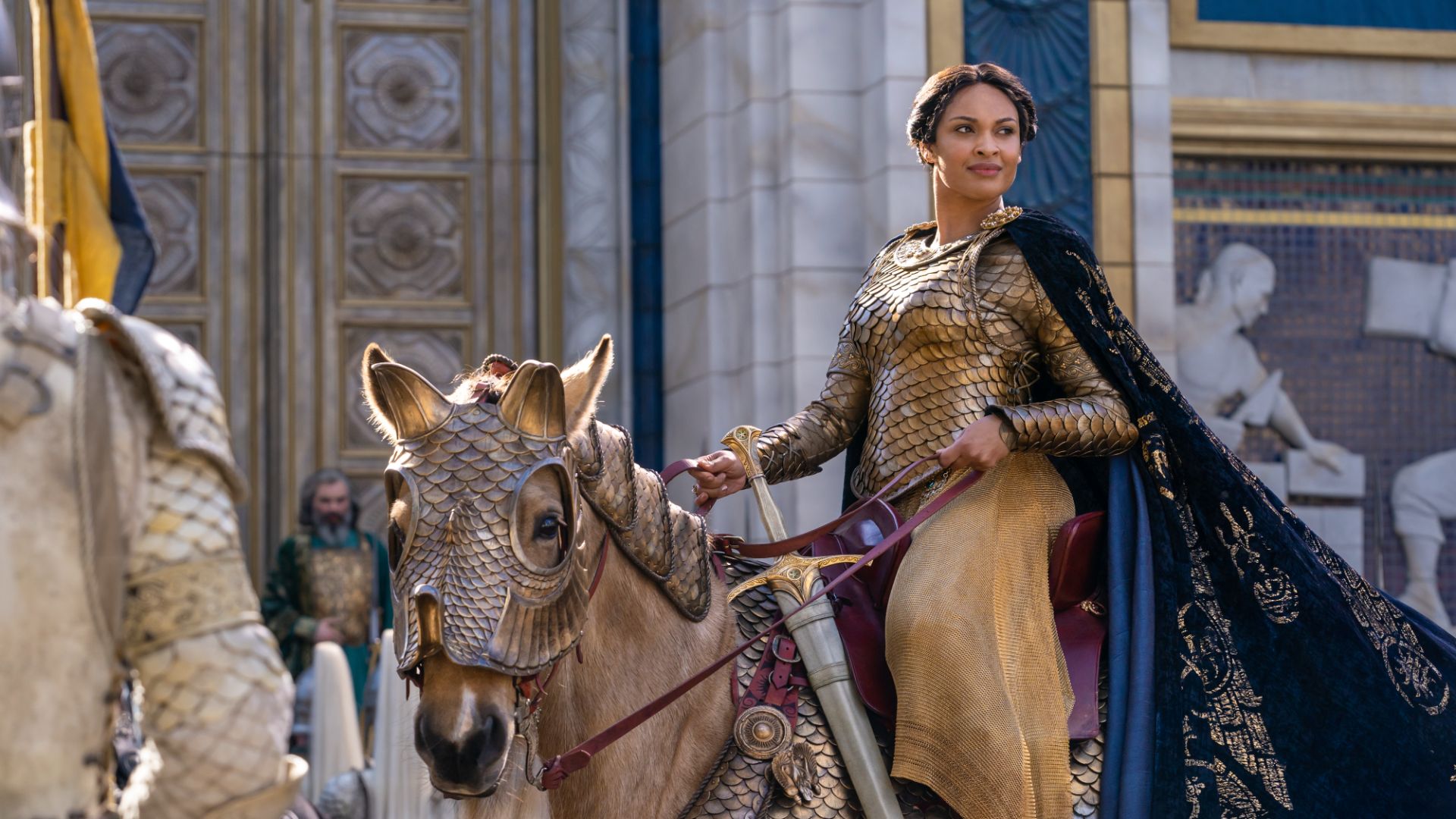
Why does Pharazôn want to marry Míriel in The Rings of Power Season 3 Episode 6? The proposed marriage offers a way to unite Númenor’s rival political factions and prevent civil war while the kingdom prepares to confront Sauron. But the arrangement would also place Míriel in a deeply compromised relationship with the man whose supporters have persecuted the Faithful. It is a peace offer wrapped around an enormous struggle for power.
And this is exactly why I’ve been enjoying Númenor more this season. At its best, the political story stops behaving like a collection of speeches about armies and succession and starts asking what these particular people are prepared to sacrifice. Here, a choice that could save lives immediately threatens to determine the kingdom’s entire future.
Full spoilers for Season 3 Episode 6, “From Valinor,” with discussion of Tolkien’s broader Númenor history.
What Happens Between Míriel and Pharazôn in Episode 6?
Elrond and Gil-galad work to prevent open war between Pharazôn’s King’s Men and the Faithful who support Míriel. Their objective is practical as well as moral: a divided Númenor is ill equipped to confront the threat of Sauron. Míriel agrees to negotiate, and she proposes terms that would protect the Faithful and direct Númenor’s military strength toward the larger conflict.
Pharazôn recognizes a problem beyond any signed agreement. His supporters and Míriel’s have grievances they cannot simply forget because two leaders shake hands. He responds with a proposal of marriage, which would join their competing claims to power in a more visible and enduring political settlement. News of the agreement sends Elendil racing toward the city, determined to stop it.
Are Pharazôn and Míriel Related?
Yes, Pharazôn and Míriel are cousins. Their family relationship is part of the discomfort surrounding the proposal. The marriage is also a significant element of Tolkien’s Númenorean history, although the circumstances and sequencing of events in the series are adapted for television.
In Tolkien’s account, Ar-Pharazôn takes Míriel as his wife and thereby secures the kingship. The books present the marriage as a coercive political act associated with his usurpation of the throne. The television series is using a different immediate dramatic context: a kingdom already on the brink of civil war, a desire to mobilize against Sauron, and a proposed settlement whose full consequences are not yet known.
Related Coverage
- Explainer: How Did Gil-galad Heal Míriel’s Blindness in The Rings of Power? Vilya Explained
- Explainer: What Is the Secret of the Three Elven Rings? Valinor and the One Ring Explained
- Explainer: Why Celeborn Challenges Sauron in The Rings of Power: Love, Power and Galadriel
- Explainer: Why Does Sauron Kiss Celeborn in The Rings of Power? Episode 6 Explained
Why Would Míriel Agree to Marry Pharazôn?
Míriel has repeatedly demonstrated that she values Númenor’s survival and the protection of the Faithful more than the comfort of her own position. The proposal confronts her with two imperfect possibilities. Rejecting the arrangement could push the island toward bloodshed; accepting it risks tying the fate of her followers to a ruler whose ambitions are deeply troubling.
This is a genuinely strong dramatic dilemma because the benefits of peace are real. The Faithful could gain protection, and Númenor could stop consuming its own strength. At the same time, Míriel would surrender enormous personal and political freedom to someone who has already shown a willingness to use power ruthlessly. The consequences are uncertain enough to create suspense rather than a simple moral quiz with an obvious answer.
Does Pharazôn Actually Want Peace?
The episode gives Pharazôn reasons to avoid a civil war. He wants Númenor strong, and he wants to confront Sauron. An internal bloodbath would weaken his position before that campaign begins. We should take those practical motivations seriously, even while recognizing that he could also benefit personally from a marriage that consolidates authority.
This dual motivation is what makes him compelling. A political decision can be defensible in one respect and self-serving in another. The writers create a more interesting opponent when we understand the logic behind his proposal, rather than treating every move as random villainy. The disturbing question is how much freedom Míriel will still possess once his solution is accepted.
Why Are Elrond, Isildur and Elendil So Divided?
Elrond believes negotiation can prevent destruction. Isildur has endured enough loss that placing trust in Pharazôn’s faction feels intolerable. Elendil tries to model restraint and mercy toward his enemies, yet the prospect of Míriel’s marriage provokes an immediate, deeply personal reaction. These positions have more weight because their characters bring accumulated wounds into the same political crisis.
One of the best lines in this storyline comes when Elendil challenges Anárion to live according to the values for which he is prepared to die. It takes a lofty ideal and turns it into a demand governing the next choice. That’s great television writing: the political and moral argument changes how a father speaks to his son, and the family relationship keeps the principle human.
What Does Tolkien’s History Suggest Could Happen Next?
Readers who know Tolkien will recognize the marriage as a crucial part of the story of Númenor’s eventual downfall. But book history should be used as context for the show, not as proof that every subsequent event must happen identically or in the same order. The adaptation has compressed and rearranged its Second Age history, creating different immediate motivations for characters we recognize.
The relevant question for this episode is what the choice costs. If the marriage prevents bloodshed, can it preserve Míriel’s political and moral independence? If it strengthens Pharazôn, what might he demand next? The scene turns the island’s future into a personal decision, and that is why the proposal lands.
Our Númenor guide covers the history of the kingdom, the Faithful and the fall of the island. For Elrond and Elros, read why Elros chose mortality. The Episode 6 KJR examines why the relationship-driven scenes are finally giving the season momentum.
A choice, not a settled outcome: the proposal in Episode 6 creates a dilemma; it does not establish that Míriel can secure meaningful freedom for the Faithful or retain authority once the bargain is enacted. The emotional power of the scene depends on the danger that political peace may require a deeply personal surrender.
Our Take: A Marriage Proposal That Makes Politics Personal
I love this because the story finally makes the institutions of Númenor feel dependent on individual relationships and choices. Míriel’s decision may protect her people, empower her rival, or do both at once. The tension comes from knowing why she might accept the bargain while fearing what the bargain will ultimately demand.
Númenor’s possible peace has a price. Episode 6 makes that price painfully personal.