Spoiler warning: This House Of The Dragon Season 3 Episode 4 review discusses major events from “Tumbleton,” including Ormund Hightower’s plans for Daeron and Rhaenyra’s treatment of the dragonseeds.
In this House Of The Dragon 3.04 review, one line reveals the entire moral argument of “Tumbleton.” Rhaenyra tells Ulf that his belly no longer belongs to him. He belongs to the crown now. His life, body, freedom, and connection to Silverwing have become royal property.
Rhaenyra makes a rational argument about protecting one of her most valuable military assets. Across the realm, Ormund Hightower uses the same language of ownership to explain why Kat’s brother must die. A Hightower soldier represents the crown, so striking that soldier means striking Daeron, House Hightower, and the order Ormund intends to build.
Rhaenyra and Ormund possess very different moral centers, though their governing logic has begun to rhyme. Once someone belongs to the crown, the crown gets to decide what that person’s body, loyalty, freedom, and life are worth.
Keep following the Dance: Visit our House Of The Dragon Season 3 episode guide for the latest reviews, recaps, explainers, and major questions, or explore the House Of The Dragon With Mary & Blake podcast hub.
Looking for every episode? Start with our complete House Of The Dragon episode guide for every season, episode title, release date, recap, review, and podcast reaction.
Get The Dragon Brief
One smart House Of The Dragon catch-up before the next episode — theories, explainers, podcast drops, and the character threads worth remembering.
After a terrific three-episode run, House Of The Dragon takes a breath. The Battle of the Gullet, the fall of King’s Landing, and the psychological intensity of Episode 3 created a pace the season could hardly sustain forever. “Tumbleton” pauses to establish the next stage of the war.
Season 3 has almost inverted the traditional Game Of Thrones rhythm. These seasons often gather speed before exploding near the end. This year began at a sprint and has reached its positioning episode at the midpoint.
I generally believe the midpoint needs a meaningful turn that carries the story into its second half while illuminating everything that came before it. “Tumbleton” reaches that turn through the full introduction of Ormund and Daeron. King’s Landing has fallen, Rhaenyra sits the Iron Throne, Aegon is presumed dead, Aemond has disappeared, and the old structure of Team Green has collapsed. The war needs a new source of momentum.
Ormund Hightower provides it.
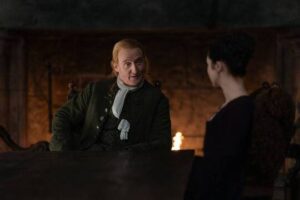
James Norton is immediately fantastic because Ormund carries himself like the only adult in the room. He considers himself educated, disciplined, refined, religious, and culturally superior. He reads histories, collects tapestries, writes ballads, despises unpleasant smells, and lectures Daeron about fairness while bathing in another family’s bedchamber.
His sensitivity to odor becomes a physical expression of his worldview. Ormund experiences the realm through divisions of purity and contamination, faith and profanity, civilization and savagery. My mind immediately went to Agent Smith in The Matrix, recoiling from humanity as though proximity alone might infect him.
Anything that repulses Ormund becomes something requiring control, correction, or removal. That philosophy drives his judgment involving Kat’s family. When Garrick assaults Kat and injures her sister-in-law, Ormund surprises the people of Tumbleton by ruling against his own soldier. He orders Garrick gelded and has his arm broken.
The punishment appears to support the lesson he keeps teaching Daeron: a ruler must remain fair and firm. The second judgment reveals what fairness actually means inside Ormund’s system.
Kat’s brother is arrested and brought before Daeron for execution. His defense of his sister carries no weight. Kat’s assault carries no weight. Her sister-in-law’s broken arm carries no weight. Ormund recognizes one fact above everything else: someone beneath House Hightower struck a man wearing its colors.
The act threatens the hierarchy, and that hierarchy serves as Ormund’s true moral code. He may punish the soldier because the soldier belongs to him. He must execute the civilian because the civilian forgot that he belongs to Ormund as well. Justice becomes whatever preserves the proper arrangement of power.
Daeron becomes the tragedy at the center of that arrangement. Ormund has spent years constructing an identity around him. Daeron has been taught that he is kind, prayerful, honorable, and more Hightower than Targaryen. Ormund repeatedly praises him as a good boy, and that goodness depends entirely upon Ormund retaining the authority to define it.
Daeron’s appeal for mercy becomes an attempt to preserve the moral education Ormund supposedly gave him. Mercy belongs within justice according to the young man Ormund raised. Ormund responds by connecting that compassion to Viserys.
“That sounds like something your father would say.”
Wowza. That is devastating manipulation. Ormund transforms Daeron’s compassion into evidence of corrupted Targaryen blood. Mercy becomes weakness. Hesitation becomes disloyalty. His bond with Tessarion becomes another piece of his identity requiring correction.
Ormund then places a sword in Daeron’s hand and forces him to kill an innocent man. The scene carries the ceremonial weight of a coronation. Daeron enters the future kingship Ormund has designed for him by learning that authority becomes real when another person dies at his command.
The visual storytelling afterward is outstanding. The execution occurs in a sacred space surrounded by the symbols of the Seven while Ormund preaches about dragons as profane abominations born from darkness and pride. Tessarion then burns and consumes the body.
Ormund’s supposedly pure Hightower king begins his journey toward the throne by using a Targaryen dragon to desecrate a house of worship and destroy the evidence of an unjust killing. His ideology collapses within the act designed to prove it.
“And now we begin,” Ormund says.
He means the campaign for Daeron’s crown. Daeron’s corruption begins in the same instant, and I am unconvinced that Ormund cares which outcome matters more.
The public version gives you the map. The full KJR gives you the argument.
The complete Knee-Jerk Reaction goes deeper into Rhaenyra turning Ulf and Hugh into royal property, Daemon choosing Rhaena over the truth, Aegon being forced to live inside the social order he created, Criston’s fantasy of a “pure” war, and the latest changes to the opening tapestry.
That larger pattern makes “Tumbleton” more dramatically active than its positioning structure initially suggests. Almost every character decides what another person is worth. Rhaenyra turns dragonriders into military assets. Mysaria turns Torrhen Manderly into a future scapegoat. Daemon turns a dead stranger into evidence. The Gold Cloaks turn frightened citizens into suspected traitors. Larys turns Aegon’s suffering into the beginning of a resurrection legend.
Power takes somebody’s child, spouse, parent, friend, or neighbor and gives them a new identity. They become a soldier, dragonrider, scapegoat, suspect, corpse, symbol, or song. Their usefulness replaces their humanity.
That is the real movement of “Tumbleton.” The episode clarifies what everyone believes the war is for and what they are willing to make other people become in order to win it.
Provisional flame rating: 4.59 flames, with a big helping of Ormund. I LOVE this character. 🔥🔥🔥🔥
Ormund says a soldier is an extension of the crown. Rhaenyra says Ulf belongs to the crown. Daeron learns that becoming king means proving another person’s life is worth less than his authority.
Own the body.
Rewrite the meaning.
Call it justice.