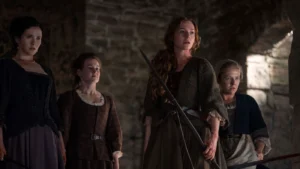
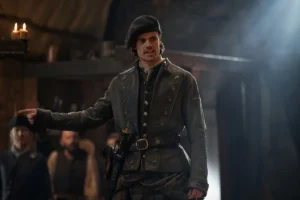
Spoiler note: This House of the Dragon Season 1 Episode 3 review discusses “Second Of His Name” in full. Mary & Blake cover the show as TV-first viewers and avoid future Fire & Blood spoilers.
In our House of the Dragon Season 1 Episode 3 review, we break down “Second Of His Name,” an episode about legacy, inheritance, doubt, and the awful realization that naming Rhaenyra heir did not actually settle anything.
This is the sneaky-good episode. “Second Of His Name” does not have the cleanest villain payoff, and the Crabfeeder’s death may feel anticlimactic after two episodes of setup. But the episode works because it finally starts putting meat on the bone. Viserys becomes more than the nice king with a wound. Daemon becomes a myth without saying a word. Rhaenyra’s position becomes more painful now that Aegon exists. Alicent is no longer just Rhaenyra’s friend or Viserys’ new wife. And the court starts to feel like a place where gossip, marriage, prophecy, and legacy are all weapons.
Quick answer: House of the Dragon Season 1 Episode 3, “Second Of His Name,” takes place three years after Episode 2. Viserys and Alicent now have a son, Aegon, whose second name day creates new pressure on Rhaenyra’s claim. Rhaenyra rejects Jason Lannister’s marriage pitch, kills a boar with Criston Cole, and sees the white hart that the king’s hunting party fails to find. Meanwhile, Daemon refuses to let Viserys save him in the Stepstones, charges into battle without speaking, and kills the Crabfeeder. The episode is about legacy becoming a trap: Viserys wants to fix his family, but every choice makes the succession crisis worse.
Watch Or Listen To Our House Of The Dragon Season 1 Episode 3 Review
Watch our full House of the Dragon Season 1 Episode 3 review for “Second Of His Name,” or use the podcast player on this page to listen to the full recap and reaction.
In this episode, Mary & Blake discuss the theme of legacy for Daemon and Viserys, why the visual language of the opening felt like vintage Game of Thrones, why the Crabfeeder’s death may have been too anticlimactic, how the white hart frames Rhaenyra’s claim, and who might be the Lady Whistledown of the Targaryen court.
Watch the House Of The Dragon Season 1 Episode 3 review on YouTube
Prefer audio? Use the podcast player on this page to listen to the full episode.
House Of The Dragon Season 1 Episode 3 Coverage
Use these links to move through Mary & Blake’s House of the Dragon coverage in order.
- Season 1 Hub: Full recap, episode guide, podcast coverage, and war setup
- Previous Episode: Season 1 Episode 2, “The Rogue Prince”
- Next Episode: Season 1 Episode 4, “King Of The Narrow Sea”
- Season 2 Guide: Recaps, reviews, podcast reactions, and fallout from the war
- Season 3 Guide: Teasers, explainers, and the next stage of the Dance
House Of The Dragon Season 1 Episode 3 Recap: What Happens In “Second Of His Name”?
“Second Of His Name” jumps forward three years. The Stepstones war has dragged on with Daemon, Corlys, and the Velaryons fighting the Crabfeeder, while King’s Landing has moved into a new political reality: Viserys and Alicent are married, they have a son named Aegon, and Alicent is pregnant again.
Aegon’s second name day becomes the center of the episode’s royal hunt. On the surface, this is a celebration for a child too young to understand what is happening. In reality, it is a courtwide referendum on Rhaenyra’s future. The lords keep treating Aegon like the obvious heir, even though Viserys has already named Rhaenyra. Every toast, every marriage conversation, and every sideways comment reminds her that the realm may have bent the knee, but it has not accepted her.
Rhaenyra spends much of the episode furious, isolated, and suffocated by expectation. Jason Lannister tries to court her with Casterly Rock confidence and absolutely no emotional read of the room. Viserys talks about her future children as if she is supposed to be excited by the very system that killed her mother. And Alicent, now queen, keeps trying to reach Rhaenyra from a position that makes their old friendship almost impossible to recover.
After clashing with her father, Rhaenyra rides away with Criston Cole. Their time in the woods gives the episode one of its most important emotional pairings. Criston reminds her that she does have power because she chose him for the Kingsguard and changed his life. Later, after they are attacked by a boar, Rhaenyra kills it in a burst of blood, anger, fear, and release.
Meanwhile, Daemon receives word that Viserys is finally sending help to the Stepstones. Instead of accepting rescue from the brother whose approval he both resents and craves, Daemon beats the messenger, rows toward the Crabfeeder under false surrender, draws the enemy out, and becomes a one-man battlefield myth. He kills the Crabfeeder off-screen and drags half of him out of the cave.
By the end of the episode, Viserys tells Rhaenyra that he will not replace her as heir and that she may choose her own husband. But the damage has already been done. Aegon exists. Alicent has power. Daemon has glory. The court is watching. And legacy has become the trap everyone is standing inside.
Why “Second Of His Name” Is Really About Legacy
The title “Second Of His Name” refers most directly to Aegon, Viserys and Alicent’s son. He is the second Aegon in the royal line being celebrated, and the court clearly sees him as a future king in waiting. But the title is not only about the baby. It is about what names, bloodlines, heirs, and expectations do to everyone around him.
Viserys is haunted by legacy. He admits that he once dreamed of a male child wearing the Conqueror’s crown, and that obsession helped destroy Aemma. He named Rhaenyra heir partly out of grief, partly out of love, and partly because he thought it might help repair what he had broken. But now he has the son he once wanted, and the very existence of that son makes him question whether he was wrong.
That is what makes Viserys tragic. He is not cruel in the obvious way. He is not Joffrey. He is not Ramsay. He is not a monster laughing while the realm burns. He is a soft-hearted king who wants everyone to be okay, and that softness keeps producing harder consequences. He wants Rhaenyra to feel secure, Aegon to be celebrated, Alicent to be cared for, Daemon to be handled, and the realm to remain stable. But this is Westeros. Wanting peace is not the same thing as building it.
Daemon’s legacy runs parallel to Viserys’ in the Stepstones. He cannot let his brother save him because that would make Viserys the author of his victory. Daemon needs glory that belongs to him. That is why his silent charge matters. He turns himself into the story before anyone else can write it for him.
Why Is Rhaenyra Still Heir After Aegon?
Rhaenyra is still heir after Aegon because Viserys refuses to undo the promise he made in Episode 1. He named her publicly, had the lords swear to her, and tied that decision to both his grief over Aemma and his belief that Rhaenyra could carry the burden of the throne.
But Episode 3 shows why that promise is not enough. The realm keeps treating Aegon as the inevitable answer because he is male. Nobody has to say the coup out loud for Rhaenyra to feel it forming around her. Jason Lannister assumes her future can be redirected through marriage. The hunt is staged around Aegon’s symbolic importance. Even well-meaning conversations keep reducing Rhaenyra to the question of whom she will marry and what sons she might produce.
Viserys eventually tells Rhaenyra that he will not replace her and that she can choose her own husband. It is a meaningful promise, but the episode frames it as emotionally fragile. When Rhaenyra walks away, Viserys looks less like a man who has solved the problem and more like a man who knows the problem is bigger than his word.
That is the central danger. Viserys can keep saying Rhaenyra is heir. He cannot force the realm to stop imagining Aegon as king.
The White Hart And White Stag Meaning In House Of The Dragon
The white hart, or white stag, is one of the most important symbols in Episode 3. The hunting party spends the episode looking for it because it would be read as a sign of royal blessing for Aegon’s name day. If the king finds and kills the white hart, the court can treat it as confirmation that Aegon is the natural future of the realm.
But Viserys does not find the white hart. Instead, his hunting party captures and restrains a normal stag for him to kill. The moment is awkward, ugly, and revealing. Viserys has to be guided into the act, and even then he does not kill cleanly. The animal cries out while everyone around him stands in silence. It is hard not to read the scene as the realm itself suffering under a king who keeps trying to do the expected thing and still cannot make it work.
Rhaenyra is the one who sees the white hart. She does not capture it. She does not kill it. She simply sees it, and then lets it go. That matters because the episode quietly gives her the sign everyone else was trying to manufacture for Aegon. The court wants legitimacy to be something men can stage, trap, and stab. The white hart suggests legitimacy has already appeared somewhere else.
That does not mean the realm will accept Rhaenyra. It means the story is telling us where the symbolic weight belongs, even if the political world refuses to see it.
Daemon Kills The Crabfeeder — But The Fight Is Not Really The Point
The Crabfeeder’s death is intentionally frustrating for some viewers because the show spends two episodes making him look like a nightmare and then refuses to give him a proper final duel. Mary wanted more backstory and more payoff. Gloria wanted more Crabfeeder too. That reaction makes sense. He is visually memorable: grayscale-looking skin, Phantom of the Opera mask, pirate-monster energy, and a horrifying method of killing people with crabs.
But Blake’s counterargument is important: the Crabfeeder may not matter as a character as much as he matters as an obstacle. He exists to create pressure between Viserys, Daemon, Corlys, and the Velaryon war effort. The Stepstones conflict is less about who the Crabfeeder is and more about what the war gives Daemon the chance to become.
That is why Daemon’s silence works. He says nothing in the episode. His actions define him. He reads Viserys’ letter, realizes his brother’s help would steal his glory, beats the messenger, and chooses a near-suicidal act rather than become the little brother who needed saving. Whether the final fight is satisfying as action is almost beside the point. As character mythology, it is huge.
Daemon walks into the caves as a reckless prince. He walks out dragging half the Crabfeeder and carrying the story of his own legend.
Rhaenyra And Criston Cole In Episode 3
Rhaenyra and Criston Cole are one of the episode’s strongest emotional pairings because they are both living inside roles the court did not naturally choose for them. Rhaenyra is heir, but the realm keeps treating her like a temporary inconvenience before Aegon. Criston is Kingsguard, but he was not the obvious highborn choice. Rhaenyra elevated him, and he knows it.
That is why Criston’s reminder matters. When Rhaenyra says she has no power, he points out that his entire new life exists because of her decision. She may feel trapped, dismissed, and powerless, but she has already changed someone else’s fate.
The boar scene pushes that tension into blood. Rhaenyra kills the animal with rage and fear pouring through her. She returns to camp covered in blood, and the image deliberately echoes Daemon’s bloody victory in the Stepstones. Two Targaryens, two acts of violence, two different kinds of release.
Mary is shipping the princess and the knight. Blake is more cautious, but the dynamic clearly matters. Criston makes Rhaenyra feel seen in a court that keeps reducing her to a symbol, a marriage piece, or a succession problem.
Jason Lannister And Rhaenyra’s Marriage Pressure
Jason Lannister arrives in Episode 3 as a reminder that marriage is not romance in this world. It is power negotiation with nicer clothes. His pitch to Rhaenyra is smug, entitled, and politically revealing. He assumes Casterly Rock should impress her. He assumes the match makes sense because he can offer wealth and status. He does not understand that Rhaenyra hears the entire proposal as another attempt to move her away from the Iron Throne.
The Lannister material also matters because the show knows the audience already has feelings about that lion sigil. We do not need a long explanation to understand the family’s future importance. Seeing the sigil is enough. It is one of the episode’s smartest uses of franchise memory: the Lannisters are not the dominant family yet, but the show lets us feel the shadow of what they will become.
For now, Jason Lannister is mostly a clown show with confidence. But his presence helps sharpen Rhaenyra’s position. Every man who courts her is not just asking for her hand. He is asking what happens to her claim when marriage enters the picture.
Larys Strong, Lionel Strong, And The Lady Whistledown Of The Targaryen Court
Episode 3 also introduces more of House Strong, and the podcast’s funniest theory may also be one of the smartest reads: Larys Strong is the Lady Whistledown of the Targaryen court.
He is not physically centered in the hunt the way the other men are. Instead, he watches. He listens. He sits at the edges of conversation while everyone else reveals themselves. In a court like this, that may be the most dangerous position of all. The people who cannot dominate the room often learn how to own the information moving through it.
Lionel Strong, meanwhile, continues to look like one of the more trustworthy advisors in the room. He gives Viserys the same politically sensible advice he gave years earlier: bind Rhaenyra to House Velaryon. That makes Blake suspicious. Maybe Lionel is exactly what he appears to be. Or maybe the show is making him look too solid because the Strong family has a larger role to play.
Either way, Episode 3 makes the court feel more alive. We are no longer just learning names. We are watching people collect leverage.
Mary & Blake’s Flame Ratings For “Second Of His Name”
Mary gave “Second Of His Name” 4.5 flames. Her good was the Rhaenyra and Criston dynamic, her bad was the Crabfeeder’s anticlimactic death, and her great was the scene where Viserys promises Rhaenyra he will not replace her and allows her to choose her own husband.
Blake gave the episode 4.1 flames, calling it a sneaky-good episode and the place where the season starts to jump off. His good was Daemon not saying a single word and letting his actions define him. His bad was another reconciliation beat between Viserys and Rhaenyra that felt somewhat repetitive. His great was the fire pit scene between Alicent and Viserys, because it reveals the doubts, guilt, and legacy anxiety sitting underneath the king’s choices.
So the Mary & Blake read is that Episode 3 is the strongest episode so far because it finally gives the characters more texture. The show still has not fully solved the “who do we love?” problem, but it is getting closer to the place where every future wound has roots.
How “Second Of His Name” Sets Up Episode 4
“Second Of His Name” sets up Episode 4 by tightening every major pressure point. Rhaenyra is still heir, but Aegon’s existence makes her claim more fragile. Viserys says he will not replace her, but the realm is already acting as if his son is the future. Alicent is queen, pregnant again, and positioned between her husband, her father, and her former best friend. Daemon has won glory in the Stepstones and will return with a stronger myth around him.
The episode also makes clear that Rhaenyra’s marriage will become one of the next major battlegrounds. If she marries for politics, she may protect her claim while losing herself. If she resists, the court will keep treating her as unstable, difficult, or unserious. If she follows desire, the consequences could be even worse.
That is why this episode matters. The first two episodes built the world. Episode 3 starts showing us the machine. From here, the family wound gets harder to hide.
Where To Go Next
- Next Episode: House Of The Dragon Season 1 Episode 4, “King Of The Narrow Sea”
- Previous Episode: House Of The Dragon Season 1 Episode 2, “The Rogue Prince”
- Season 1 Hub: Recap, episode guide, podcast coverage, and war setup
- Season 2 Guide: Continue into the war fallout
- Season 2 Recap Before Season 3: What to remember before the next chapter
- Season 3 Guide: Teasers, explainers, and the next stage of the Dance
Join The Nerd Clan
Want bonus podcasts, extended reactions, community conversation, and deeper dives into House of the Dragon, Outlander, The Rings of Power, Harry Potter, and everything else Mary & Blake are covering?
Join the Nerd Clan at JoinTheNerdClan.com and pull up a chair at the Mary & Blake kitchen table.
Mary & Blake Media is not affiliated with HBO, Max, Warner Bros. Discovery, George R. R. Martin, or the House of the Dragon production.
Our Producers
These NerdClan members help make Mary & Blake possible.
Associate Producers
- Aimee Suiter
- Alicia Singer
- Alison Cole
- Alison Kitching
- Allison Indaburu
- Amanda
- Amanda Allen
- Amanda Brockett
- Amanda Chappell
- Amanda Kertz
- Amanda Letendre
- Amanda M.
- Amber Bryant
- Amber Kemmerling
- Amber Walker
- Amy Clark
- Angela Burgess
- Angie Phillips
- Anita Fangmeier
- Anna Deyle
- Anna N
- Anna Spain
- Anne Fox
- Anniem24
- April Pittendreigh
- Arne Croell
- Ashley Crawley
- Ashley Matthews
- ASHLEY Miller
- Audra Hoynacki
- Bec
- Bekah
- Beth Bartkowiak
- Beth Farias
- Beth Kleinschmidt
- Blair Weber
- Bonnie Bryden
- Brenda Spangler
- Bridges Adams
- Brittany LaFountain
- Bunny Arszman
- BustamoveR
- Cam
- Candace Burns
- Candace Combs
- Cara Doyle
- Cara Verity
- Carla Pena-Gaiser
- carol a lewis
- Carol Filbeck
- Carol Renna
- CarrieAllison
- Casey Carmolli
- Catherine Soprano
- Catherine Steib
- Catie Halfmann
- Chelsea lucas
- Cheryl Lee-Collins
- Cheryl Murphy
- Chris Holifield
- Chris Lombardi
- Christen Beltz
- Christine
- Christine Romeo
- Cindy Lassen
- Claire McCarthy Gul
- Clelia Keen
- Corbie Sinclair
- Cori Whelan
- Cyndi Merrill
- Cynthia Kline
- Cynthia Poch
- Daniel
- Dara Lovitz
- Darinda Noah
- Dawn-Marie Young
- Dawne Moffatt-Fairbanks
- Dawn McSwain
- Dawn Rogers
- Debbie McCrary
- Debbie Soderlund
- Deb Srulevich
- Deirdre Hosking
- Denise Aitchison
- Denise Franklin
- Denise Stewart
- Diana Smirl
- Donna Peek
- dorothy clorite
- E Finlay
- Ekua Walker
- Elizabeth
- Elizabeth Janney
- Elizabeth Kangro
- Ellen Dreyer Pedersen
- Ellen Mostoller
- Emily Gill
- Emily Narkis
- Emma Dzamko
- Erika Menzies
- Erin Mays
- Erin M McKenney
- Fiona Tobin
- Franca Montevago
- Franli Newman
- Fran Williams
- Gaynor Pilbeam
- Gillian Nelson
- Gina Dabney
- Ginny Pickel
- Gloria Costa
- Gloria Hernon
- Grethe Strand
- H
- Hanley
- Heather Staible
- Heike Tichatzky
- Hillary
- iloveclarkk kent
- Jacki James
- Jamie
- Janelle Spedding
- Janet Joy
- Janine Jones
- Jan Valdez
- Jeanne Tucker
- Jen
- Jen Davis
- Jenna Bach
- Jennifer
- Jennifer Barrett
- Jennifer Bernth
- Jennifer Farmer
- Jennifer Furman
- Jennifer Hyatt
- Jennifer Maus
- Jennifer Swanson
- Jennifer Wittke
- Jerri Grebeck
- Jessica Thomas
- Jess Lee
- Jess Lyne
- Jill Guinther
- Jillian Harig
- Jo-Anne Lewis
- Joanne
- Joanne Brophy
- Jolene Johnston
- Jordan Cook
- Jordan Pitts
- J O Thacker
- Joy Welday
- Juanita Nesbitt
- Julia
- Julie Gautreau
- Julie Jorgenson
- Julie McAllister
- Julie Tharp
- Kaitlyn spencer
- Karen Cyr
- Karen Guittar
- Karen Morley
- Karen Rutledge
- Katherine Haff
- Kathy Jancic
- Kathy Luecke
- Kathy Sullivan
- Katie Gomes
- Kay Cook
- Keelin Dawe
- Kellie
- Kelly Castro
- Kenit Golabi
- Kimberly Charles
- Kimberly Downing
- Kimberly Zagar
- Kim Graf
- Kim Halloran
- Kim K
- Kirsten McDaniel
- Kjersta Swanson
- KO
- Krista Thomas
- Kristen Frederickson
- Kristi
- kristie o
- Kristin Bacchiocchi-Stewart The Flute Academy
- Kristine Wilcox
- Kristin Solander
- Laura Feldman
- Laura Larsen
- Laura Robertson
- laurel gallucci
- Lauren 8376
- Lauren Biddle
- Lauren Fitts
- Leah Christenson
- Leah P
- Leah Prengaman
- LeeAnn Hart
- Lesley Spray
- Leslie Deiss
- Leslie Kish
- Lillian Carey
- Linda Little
- Lindsay Maki
- lindsay thompson
- Linh Tran
- Lisa DiGiorgio-Haag
- Lisa Enfinger
- Liz Armstrong
- Liz Lossin
- LK
- Loretta
- Lotte Andersen
- Lynda Burgoine
- LYNDA TURNER
- Lynne Freeman
- Lynne Kopchains
- Lynn Freeman
- Lyn Robinette
- M. Elizabeth
- Majda
- Mandy Lake
- Mandy Taylor
- Marcia Beckwith
- Marcie Schweitzer
- Marci Finegood
- Margie McLeod
- Maria Da Silva
- Maria G.
- Marie Ivey
- Marielouise
- Marine Perot
- Martina Prior
- Mary Ann Calderone
- Mary Iversen
- Mary Joiner
- Mary Klein
- mary lovett
- Matt
- Megan Flaherty
- Megan Reed
- Meghan Oats
- MegLikesSleep
- Mel
- Melanie Brown
- Melissa Carolan
- Melissa Gillespie
- Melissa Grinnell
- Melissa Hart
- Melissa Osborne
- Melissa van de Putte
- Meredith Bustillo
- Michelle Chandler
- Michelle Kirksey
- Mikayla Wagner
- Missy Willey
- Monica
- Monica Buchanan
- Monica Williams
- Monique Willshire
- Mo Whitman
- Nadine Singh
- Najwa Mohamed
- Nancy Lazarus
- nancy taverna
- NicoleAndrus
- Noa
- Opalessence
- Patricia Arena
- Patricia Rickard
- Patti
- patti wilson
- Paula Cartagena
- Phyllis Smith
- Queen Bee's Hive by Angela Hickey
- Rachael Janoso
- Rachael Janoso
- Rachel Brantley
- Rebecca Curlett
- Renee Vallely
- Rhonda Martin
- Rita Ryan
- Robyn Garrett
- Rosemary Riess
- R Weigel
- Ryleigh Groat
- Sandra Costa
- Sarah Lizotte
- Sarah Smith
- Sarah Stanage
- Sarah Wennell
- SaraPeterson
- Sara Sanders
- Sara Wisser
- Shani McNair
- Sharon Levere
- Sharon Neilson
- Shirley Carlisle
- Shonna Chapman
- Sofie Sunde
- Solange Ducrocq
- Stefanie Preston
- SteffiL
- Stephanie Hamby
- Stephanie L Jones
- Stephanie Morris
- Stephanie Rickmeier
- SuAn
- Sue Doran
- Susahn
- Susan & the Kitty Cats
- Susan Farley
- Susan Goodrich
- Susan Hurst
- Susan L Price
- Susanna Kaartinen
- Susan Parker
- Tama Poncar
- Tam Davis
- Tammy Spencer
- Tara Ross
- Taylor Cantwell
- Terri
- Terri Miller Majcher
- Terri Smith
- The Gouldmans
- Theresa Brown
- Theresa Strange
- Tiffany
- Tina Marcucci
- Tinera Brown
- Toni Tubb
- Tonya Serda
- Torie T
- Trish Arbetman
- Valerie B
- Vanita Mountain
- VIckie Applegate
- Vickie Looney
- Vicki Johnston
- Vickums
- Wendy Runnion
- Wendy Watson
- Will Spence
- Wynn Bailey
- Yolanda Hawkins
Co-Producers
- Agnieszka Widlaszewska
- Allyssa Sullivan
- Andrea
- Angie L
- ANNE
- Bonnie Ricci
- Brenda Lowrie
- Brrrrenda-ha
- Caitlin Harmon
- Candy Hartsock
- Carolyn Needham
- Cathy
- Charlene Horn
- Charlotte Tait
- Cheetoberry
- Chris Holifield
- Christina Peters
- Christina Tomazinis
- Christine Milleker
- Cindy Sessions
- Coreen Starr
- Cynthia
- Daniela Spencer
- Dawn Ruminski
- Debbie Flatla
- Debbie Stelluto
- Donna Walsh
- Dorian Kunkel
- Elaine Cherry
- Elaine Southern
- Ellen Mostoller
- Erica Connor
- Gail B Smith
- Hannah McCreary
- Hannah Sage
- Heather Jackson
- I Smoke and I Know Things
- Jackie
- Jana Gibson
- Jennifer Dolan
- Jennifer Richie
- Jennifer Shikany
- Jenny Rogers
- Jessica Berry
- Jessica Guevara
- Julia M
- Julie Glick
- Karen
- Karen Snelling
- Karen Swinehart
- Katelyn Cassidy
- Katharine Wagner
- Kathy M
- Kerry Shasteen
- Kimberly lehman
- Lara Weber
- Laura Forni
- Laura Roche
- Linda H
- Linda Hide
- Lisa K
- Lisa Kincaid
- Liz Wothe
- Lois Scozzari
- Loretta Bailey
- Lori Groinus
- Lori Rickman
- Lynne
- Lynne Ehrman
- Lynn Rankinen
- Maggie Gallagher-Mondak
- Marilyn L Neenan
- Marissa Howard
- Marla
- Mary Felix
- Mary King
- Mary Zielinski
- Megan
- Melanie Brown
- Melissa Paul-Perez
- Michelle
- Midge Foley
- Mo (Maureen) Edwards
- Monica
- Nicole Walsh
- Nikki
- Nikki Packee
- Nina Wohl
- Pamela Phelps Smith
- PStern85
- Rachel Shira
- Rachel Shira
- Roberta R
- Rosie Santavenere
- Roxanne Ruden
- Ryleigh Groat
- Sandy Ritchey
- Sharon Garrard
- Susan Deacon
- Suzanne Markwood
- Suzanne Moss
- Tammy Flowers
- Terri Anderman
- Victoria Anderson
- Wendy Thompson
- Zman_NYC
Executive Producers
- Amy Russo
- April
- Brooke
- Carol Filbeck
- ConstanceTsouvalos
- Cynthia Young
- Dana Mott-Bronson
- Deana King
- Deanne Dekle
- Emily Clinton
- Erica Johnstone
- Erika Garcia
- Heidi
- Jean Akesson
- Jessica Lanzillotti
- KarynT
- Kathleen
- Linda F Crafts
- Marcia Cronin
- Marcia Olson
- Marie S. Reilly
- Martha
- Michael McGarry
- Michelle Miller
- Nichole Baier
- Patty Hurlock
- Richard Mallory
- Siobhan M. O'Connor
- Susan Bruno
- Susan Stillman
- SuzyQ
- Tamarina
- Tiffany Grygus
- Vanessa Herbert
- Vicki Adams