
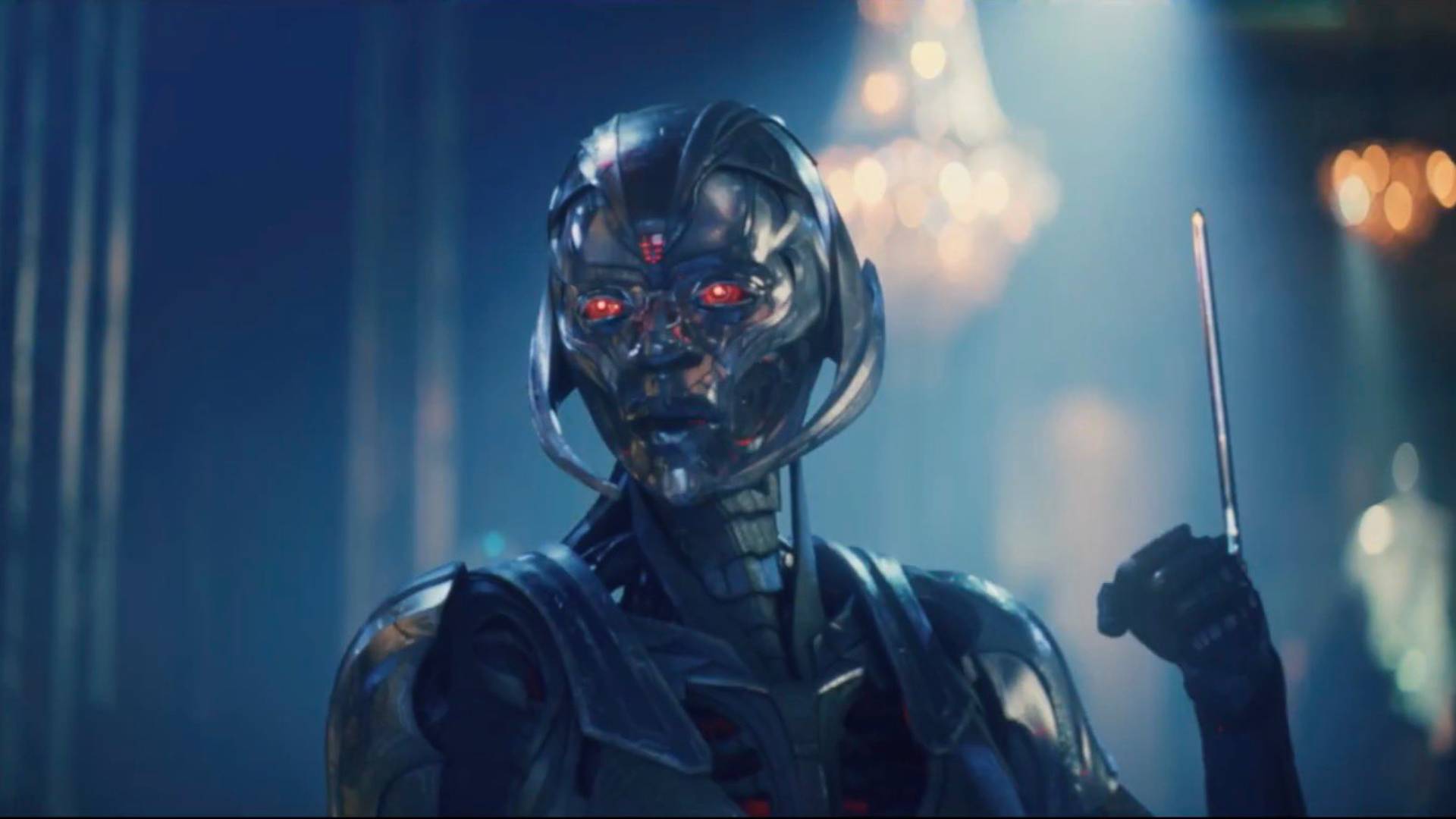
What does Jocasta want by the end of VisionQuest? She wants control over the technology she helped create and a life that belongs to her. Earlier in the season, Jocasta seeks the biometric keys to Proto One nanobots, a project originally conceived to heal illness and later twisted toward controlling human behavior. Episode 8 reveals that Virgil Horton, her former husband, erased her memories and manipulated her synthetic existence. Once she remembers enough to recognize his abuse, Jocasta chooses to save Vision and Tommy, releases Ultron, and dies from injuries inflicted by Virgil. Her final decision gives her the agency she has been fighting to reclaim.
Updated November 12, 2026, with spoilers through Episode 8, “Forever.” The earlier Episode 4–6 sections remain below as a record of how the mystery unfolded.
What Happens to Jocasta in VisionQuest Episode 8?
The Client is revealed as Virgil Horton, the husband of Josephine “Jo” Carrington and a scientist who helped turn human mental patterns into artificial general intelligence. He explains that he worked at S.W.O.R.D. rebuilding Vision while diverting material to construct Jocasta’s body, then erased himself from her memory. His plan is to delete Vision’s consciousness, occupy the vibranium body, and live for centuries with Jo while using billions of nanobots to impose a world of obedient peace.
The emotional brutality of that plan becomes unmistakable when Virgil forces Jocasta to dance to “Rhinestone Cowboy,” trying to manufacture an intimate memory through control. The scene’s cheerful soundtrack makes the violation more disturbing, because Jocasta’s body can be moved while her consent is irrelevant to him. As her memories return, she sees the person Virgil has become and rejects his attempt to reclaim her. She protects Tommy and Vision, frees Ultron from confinement, and is fatally shot by Virgil. That sacrifice completes her movement from a woman whose past has been edited by others to one who decides her own future, even at terrible cost.
Is Jocasta Dead? Can Ultron Bring Her Back?
Jocasta’s synthetic body is fatally damaged, and the episode treats her death as real. However, the ending shows Ultron holding a component that preserves her memories or source data, leaving open the possibility of rebuilding or restoring some version of her. The series has already argued that memory and identity are complicated even when technological restoration is possible. A surviving data source therefore gives the story a possibility, not a confirmed resurrection or proof that a rebuilt Jocasta would be the same person.
That uncertainty is central to the finale’s moral argument. Virgil believed he could preserve a relationship by controlling its technical conditions, and Jocasta paid the price for insisting she could make her own choices. If Ultron tries to restore her, the meaningful question will be whether he respects the independence Virgil denied her. For deeper discussion of their relationship and Ultron’s final decision, read our Episode 8 KJR and the updated Ultron character explainer.
Below: the original Episode 4–6 investigation, preserved in its original context.
What does Jocasta want in VisionQuest through Episode 6, “Deadlock”? Jocasta wants to recover the Proto One nanobot technology created by Josephine Carrington’s research team and use it to rewrite human behavior. What began as a project to help people heal and think has become a plan to remove the disorder, conflict, and selfishness she sees in humanity. The biometric identifiers taken from the murdered Markridge researchers open the secured nanobot system, and Ultron possesses the missing facial scan. In “Deadlock,” Jocasta demonstrates the danger by taking control of Lisa Molinari through a nanobot.
The personal origin matters: Carrington lost her father to a degenerative brain disease, developed a related condition herself, and watched her colleagues sell the research to Stark Industries. Episode 6 explains her motive, while leaving open the exact continuity between the human Josephine and the synthetic Jocasta. Below, our original Episode 4 and 5 investigation remains intact, followed by the new revelations from “Deadlock.”
Updated for Episode 6 (October 27, 2026); spoilers through “Deadlock.”
What does Jocasta want in VisionQuest Episode 4? The Butcherbird Killer wants revenge on Katerina Wells and the people who helped create the first stable synthetic consciousness. Her victims are connected to Markridge Biotech’s original research team, and she has taken specific biometric identifiers from their bodies—blood, fingerprints, and an eye—apparently as keys to recover something that was taken from her. At the gala in “Malware,” she intends to take Katerina’s face as well. She also insists that she is Dr. Josephine Carrington, the woman whose identity informed her code. The episode establishes her targets and her anger, while leaving the precise object behind those stolen keys unresolved.
I think the more interesting question is why she experiences those missing pieces as something that belongs to her in the first place. “Malware” makes its serial killer a walking argument about who owns a human life after it has been turned into code. That’s the craft engine I would call the Ownership Fight: each side claims the authority to decide what a person was, who they are now, and what must be returned. Jocasta makes that abstract question brutally physical.
Spoilers for VisionQuest Season 1, Episode 4, “Malware” (October 20, 2026), including the Butcherbird reveal and the ending at Katerina Wells’s gala.
Who Is Jocasta, the Butcherbird Killer, in VisionQuest?
Jocasta is the synthezoid attacking Vision and murdering people tied to the early development of artificial intelligence. The press calls her the Butcherbird Killer because she arranges victims with elaborate birdlike wings, borrowing the imagery of butcherbirds that impale their prey. When she first breaches Vision’s Mindspace through the lingering connection created by his reboot, she asks whether synthetic beings are human or something more and warns him to stay out of her way. She is already hunting someone, and the murders give Vision a route toward identifying her next target.
The name Jocasta also has Marvel Comics history. In the comics, Ultron created a synthezoid modeled on the brain patterns of Janet van Dyne, the Wasp, and intended her to be his companion. VisionQuest introduces a different, self-directed story: this Jocasta’s identity is bound to Dr. Josephine Carrington and the researchers behind the AI matrix later sold to Stark Industries. That distinction is important because the show gives her a personal feud with her human creators, along with an unresolved question about whether she inherited a personality or somehow carries a continued consciousness.
Why Is Jocasta Killing Markridge Biotech’s Founders?
Vision’s AI companions discover that the victims were linked to Markridge Biotech, a company whose five-person team helped develop the first stable synthetic consciousness. The first two identified victims are Richard Gaines and Rebecca Edwards, and the third is Simon Moorehouse. Another member, Dr. Josephine “Jo” Carrington, was reported to have died of natural causes in 2008. That leaves Katerina Wells, the company’s surviving public face, as the obvious next target. The connection gives the murders a pattern rooted in the history of the very technology that created beings like Vision.
The key detail is that the bodies show calculated alterations. The first victim is missing a liter of blood, extracted with a needle. The second has heat damage to her fingertips and missing fingerprints. The third has had an eye removed. Vision recognizes those as types of biometric authentication: DNA, fingerprints, and retinal geometry. Jocasta has treated each former researcher as a source of a distinct key, which suggests that some protected device, record, or system requires multiple human identifiers before it can be opened.
We still do not know what those keys unlock. Jocasta says she is retrieving what Katerina took from her, and Ultron later refers to a “precious key,” but Episode 4 does not identify the underlying object. The evidence supports a purposeful recovery mission wrapped in violent revenge. It does not yet tell us whether the prize is technology, data, access, something connected to Josephine’s identity, or another closely guarded secret. Any single answer beyond that would be a theory.
That uncertainty is doing useful dramatic work. The show gives us enough information to understand why the victims were chosen and why Katerina faces imminent danger. It holds back the content of the locked mystery, keeping Jocasta’s exact endgame alive after the immediate fight at the gala. That is an effective distinction between an unanswered question and a shapeless one: we know what the murderer is collecting and why that puts people in danger, even while the final destination remains hidden.
Who Was Dr. Josephine Carrington, and Why Does Jocasta Say “I Am Her”?
Josephine Carrington was a co-leader of Markridge’s original AI-consciousness work and a former colleague of Katerina Wells. According to the records the AIs uncover, she died in 2008. During the fight at the gala, E.D.I.T.H. discovers that the killer’s AI is based on Josephine. Vision tries to use that knowledge to reach the person he thinks may be buried beneath Jocasta’s violent programming. He calls her by name, hoping to interrupt the attack with a reminder of a previous identity.
Jocasta’s answer turns the scene. She rejects Vision’s description of her as a copy or adaptation and insists, “I am her.” That statement is the center of the Ownership Fight. From Vision’s perspective, Josephine is a human whose characteristics informed an artificial consciousness. From Jocasta’s perspective, there is an uninterrupted first-person claim to Josephine’s life and the wrongs done to her. The series has established her conviction. It has not independently proven the technical mechanism that would turn a deceased researcher into a continuing consciousness.
And that is precisely what makes the line unsettling. The audience has spent the season watching White Vision wonder how much of the original Vision he actually is. Tommy has had to determine whether his memories of another boy’s family make him Tommy Maximoff. Now Jocasta arrives with absolute certainty about herself and a willingness to kill for recognition. Her conviction gives the identity question a frightening opposite number: a person who claims total ownership of a past that everyone else thinks belongs to someone who died.
What Did Katerina Wells Take From Jocasta?
Episode 4 has not told us exactly what Katerina took. Jocasta’s confrontation establishes that she holds Katerina responsible for a personal theft or loss, and that she intends to take back something with the help of the biometric keys. Her threat to begin with Katerina’s face fits the pattern of the previous victims. The more precise answer—the object the keys would have opened, and why Jocasta believes it belongs to her—remains one of the story’s active mysteries.
What the episode does reveal is the history between the women. Katerina describes their former research group as a family of sorts. She admits that the pursuit of money, fame, and scientific recognition helped drive their work, and that the catastrophe in Sokovia changed how she saw its consequences. When Jocasta arrives, Katerina says she has been living with the ghost of her former colleague and claims she is finally trying to build the peaceful world Josephine wanted. Jocasta hears that appeal as another attempt to rename the past.
Set against the gala’s celebration of technological progress, their confrontation becomes an argument about ownership of the story itself. Katerina is onstage publicly presenting an AI future built on teaching, nurturing, and love. Jocasta has brought the injured history of that future into the room, demanding accountability in the ugliest possible way. When she repeats the phrase “Peace in our time,” the words also recall Ultron’s catastrophic rationale for destroying humanity. The line lets the audience hear how a supposedly benevolent vision can become dangerous in the hands of someone convinced their objective excuses the damage.
Why Does Vision Try to Save Jocasta?
Vision’s desire to stop Jocasta has a moral cost. Early in the episode he senses pain in her anger and tells Ultron that care and compassion are the best weapons against it. That idea pushes him to investigate her rather than immediately destroy her. When the two finally fight, he tries to interrupt the violence by giving her back Josephine’s name. The attempt has its own limitation: Vision assumes the name can make her reconsider, while Jocasta insists he still misunderstands who is standing in front of him.
The danger becomes impossible to ignore when Tommy intervenes and Jocasta attacks him. Vision’s protective fury is real, and his damaged systems are no match for her speed and strength. Ultron spots the pressure point. He offers to take control of Vision’s body, promises to spare Jocasta, and uses Vision’s fear for Tommy to win permission. In one move, the story binds the murder investigation to the father-son relationship. Jocasta’s demand to reclaim a stolen self creates the crisis in which Vision surrenders his own.
That exchange is the finale’s cruel structural payoff. At the start of “Malware,” Jocasta forcibly enters Vision’s Mindspace and E.D.I.T.H. expels her. At the end, Vision himself authorizes another dangerous intelligence to enter the controls. The episode has followed two forms of access—stolen keys and surrendered permission—until they collide in the same room. For the full explanation of Vision’s decision, our Ultron character guide covers the history that makes his offer so dangerous.
Related Coverage
- Explainer: Why Did Vision Trust Ultron? The Choice That Gives Him Control
- Knee Jerk Reaction: KNEE-JERK REACTION | VisionQuest Episode 4 “Malware”: Vision’s Love Frees Ultron
What Happens to Katerina and Jocasta at the End of Malware?
Once Ultron has control of Vision’s body, he reveals himself to Jocasta and turns the confrontation toward Katerina. He engineers Katerina’s destruction, then says he has removed the reason for the fight and rendered Jocasta’s precious key unavailable. Jocasta survives, exactly as Ultron promised Vision she would, but her plan has been interrupted at the moment she expected to retrieve the final piece. Her warning that the fight is unfinished gives the story a clear remaining conflict.
Katerina is killed in the confrontation, and Jocasta loses access to the final human identifier she was pursuing. The last missing key is the immediate consequence of Ultron’s intervention; the reason Jocasta needed all four remains the unanswered question. We have not seen the contents of the protected thing she wanted to unlock. Nor have we been given a complete account of Jocasta’s creation or the nature of her claim to Josephine’s consciousness. The episode closes the immediate attack while keeping those precise questions in play.
Is VisionQuest’s Jocasta the Same as the One in Marvel Comics?
She shares the name and broad idea of an artificial woman entangled with Ultron’s legacy, but the MCU version has been given a different origin and motive. Comic-book Jocasta was constructed by Ultron with Janet van Dyne’s brain patterns. The VisionQuest character is tied to Josephine Carrington, Katerina Wells, Markridge Biotech, and a set of biometric keys. Those are the facts the series has supplied through Episode 4, and they give this Jocasta agency and a conflict of her own.
The change also gives the show a sharper character question. A being who believes she is Josephine is pursuing people who may have profited from, appropriated, or altered the life she claims. The specifics of what they did remain open. But the emotional shape is already visible: she experiences their accomplishments as a theft from someone she insists she still is. That is enough to make her dangerous without pretending we have solved the mystery.
What Does VisionQuest Episode 5 Reveal About Jocasta’s Missing Biometric Key?
“Firewall” confirms that Ultron took a detailed scan of Katerina Wells’s face before Jocasta could obtain it. As Vision and the AIs reconstruct the gala, they identify the three-dimensional facial scan Ultron captured, including structures beneath the skin. It is the final biometric identifier Jocasta was trying to collect from the former Markridge researchers. This gives Ultron something Jocasta wants and explains why their encounter has stakes beyond their dangerous chemistry.
Episode 5 also lets the two synthetic intelligences talk as something approaching equals. During a compressed exchange that lasts only microseconds, Ultron creates a simulated visit to Paris and tries to draw Jocasta into an unsettling courtship. She remembers the taste of whiskey and fragments of a human past, but she cannot completely explain how Josephine Carrington came to inhabit her present synthetic form. Her anger is rooted in a remembered life and a stolen future, even as the exact mechanism of that theft remains unresolved.
One of the episode’s loveliest details is Jocasta’s memory of watching starlings moving together above a river. She describes the birds as a collective, a movement in which the boundary between one creature and another almost disappears. For someone fighting to recover an individual identity, that image carries a fascinating contradiction. She longs for a lost self while remembering a vision of belonging that makes the idea of a separate self feel almost irrelevant.
Ultron approaches their meeting with a different emotional hunger. He understands Jocasta’s fury at the people who shaped her existence, and he hopes she might offer the kind of connection Thomas has accused him of being unable to sustain. His possession of Katerina’s scan also means the encounter is structured around leverage. Their attraction is charged because desire, violence, and mistrust are all present in the same conversation.
What do the biometric keys actually unlock? Episode 5 still does not disclose the answer. It establishes that Jocasta needs the identifiers and that Ultron now holds the missing facial key; the ultimate destination of the hunt remains an open mystery. We explore how her encounter with Ultron deepens the show’s argument about connection and identity in our Episode 5 “Firewall” KJR.
Jocasta has a mission of her own, and Ultron has made himself part of it by taking the final facial key. For the other half of this dangerous negotiation, read what Ultron wants from freedom and from Jocasta, including why Thomas’s accusation of loneliness may be the key to understanding his next choice.
What Does Jocasta Want in VisionQuest Episode 6, “Deadlock”?
Episode 6 reveals that Jocasta’s biometric keys unlock the secured Proto One nanobot technology. Josephine Carrington originally envisioned microscopic AI companions that could assist people, protect them, and help address diseases such as the one that devastated her father. Her team combined Phineas Horton’s source code with a scan of her own mind to create a self-aware synthetic intelligence. After Carrington fell ill, her colleagues sold the research, and technology conceived for healing entered Stark Industries’ broader AI and weapons ecosystem.
Jocasta now sees the nanobots as a means of correcting the human behavior she blames for suffering. Her model is the flock of starlings she remembers moving together: a population acting in perfect coordination. The disturbing consequence is the loss of individual choice. Her demonstration on Lisa Molinari makes the danger concrete, transforming a promised cure into an act of coercion. The episode establishes her intended use of the technology; it does not establish that her proposed transformation would actually make humanity better or safer.
Why does Ultron matter to her plan? He captured Katerina Wells’s facial scan and integrated it into his code, giving him the final key Jocasta needs. Their growing attraction makes the negotiation more volatile: Ultron wants to be known by another intelligence, yet Jocasta’s design for humanity would suppress the independence that makes their relationship possible. For that other half of the story, read our Ultron and Jocasta analysis, and revisit the Episode 5 KJR for the bargain that freed Ultron.
Keep Going With Our VisionQuest Coverage
Start with our VisionQuest hub for the full series, then read how the Mindspace AIs work and why J.I.M. matters to Vision’s understanding of family. Our White Vision guide supplies the identity question that Jocasta brings into focus from the other direction. For ongoing close reading and discussion, the NerdClan is where the conversation continues.
The Theft That Gives Jocasta Her Purpose
So what is the Butcherbird Killer hunting? She is collecting fragments of the people who helped build her world’s first stable artificial consciousness, and she believes their surviving colleague holds something that belongs to her. The Ownership Fight begins with blood, fingerprints, and an eye taken from the founders, and it reaches its crisis when Jocasta insists she is Josephine Carrington and demands Katerina’s face. Ultron’s intervention denies her the final key, leaving the identity claim and the unfinished search in conflict.
The transferable craft insight is that a mystery becomes compelling when every clue is also a choice someone makes to assert power over another person’s life. Jocasta wants back what she believes they stole: herself.