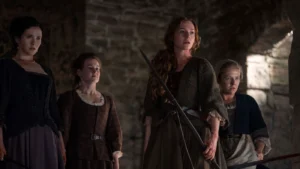
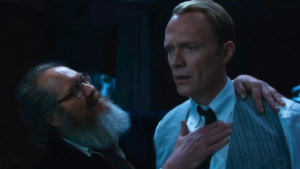
Spoiler warning: This House Of The Dragon Season 3 Episode 2 review discusses “Queen’s Landing” in full, including Jace’s death, Rhaenyra taking King’s Landing, Otto Hightower’s execution, Alicent’s gamble, and Aemond’s arrival at Harrenhal.
Content note: This review briefly discusses the attempted assault on Alicent Hightower.
In our House Of The Dragon Season 3 Episode 2 review, we break down “Queen’s Landing,” an episode that gives Rhaenyra Targaryen the thing she has been fighting for since the beginning of the series: King’s Landing, the Red Keep, and the Iron Throne.
But that might be the problem.
On paper, Team Black wins. The Battle of the Gullet is survived. The Triarchy’s threat is pushed back. Aemond and Vhagar are away from the capital. Alicent creates an opening. The Gold Cloaks remember Daemon. Rhaenyra lands in King’s Landing and finally sits the throne her father promised her.
And somehow, it feels less like a coronation than a contamination.
Listen To Our House Of The Dragon Season 3 Episode 2 Recap And Reaction
For the full conversation, listen to our House Of The Dragon Season 3 Episode 2 recap and review.
House Of The Dragon Season 3 Episode 2 Recap: What Happens In “Queen’s Landing”?
House Of The Dragon Season 3 Episode 2 begins in the aftermath of the Battle of the Gullet. The battle is technically won, but the victory has already curdled. Baela returns to Dragonstone with Jace’s body, and Rhaenyra is forced to confront the death of the son who defied her orders and rode into battle anyway.
Rhaenyra’s grief quickly becomes rage. She turns on Lorent Marbrand and the others who knew Jace had acted against her wishes and allowed it to happen. Their betrayal is not just emotional. It is political. The men around Rhaenyra decided that protecting the queen meant overruling the queen, and now her firstborn son is dead.
Elsewhere, Rhaena returns to the Vale with Sheepstealer and begs Jeyne Arryn for asylum. Jeyne wants nothing to do with the disaster Rhaena has brought to her door, but Rhaena turns guilt into leverage. The Vale wanted dragon protection. Now Sheepstealer is there. All Jeyne has to provide is blindness.
In the Riverlands, Daemon receives word of Jace’s death and prepares to return to Dragonstone. Before he leaves, Alys Rivers asks him for Harrenhal as payment for her help in delivering the Riverlords to Rhaenyra’s cause. Daemon refuses to take her seriously, which may prove to be a very expensive mistake.
Aegon and Larys escape captivity after remnants of the Triarchy attack their caravan. Rather than continue toward Dragonstone and Rhaenyra’s justice, Aegon insists on going to Rook’s Rest, where Criston Cole left a garrison and where Sunfyre may still be alive.
Looking for every episode? Start with our complete House Of The Dragon episode guide for every season, episode title, release date, recap, review, and podcast reaction.
Get The Dragon Brief
One smart House Of The Dragon catch-up before the next episode — theories, explainers, podcast drops, and the character threads worth remembering.
In King’s Landing, Alicent works to open the city to Rhaenyra. She approaches Luthor Largent, commander of the City Watch, and asks him to surrender the capital in the name of peace. When Jasper Wylde discovers her plan, he attempts to assault her, but Grand Maester Orwyle intervenes and has him arrested.
Aemond, meanwhile, arrives at Harrenhal on Vhagar and kills Simon Strong, but not before being wounded himself. That leaves him vulnerable and bleeding at the feet of Alys Rivers, the very person Daemon just dismissed.
With Vhagar gone from King’s Landing, Rhaenyra, Daemon, Hugh, and Ulf fly into the capital on their dragons. The city’s defenders stand down. Luthor Largent reveals his loyalty was always to Daemon and the Gold Cloaks turn against the remaining Greens. Rhaenyra demands Aegon, but Aegon has fled.
Instead, Larys gives Daemon a different prize: Otto Hightower, imprisoned and waiting in the Red Keep. Rhaenyra executes Otto, Daemon executes Jasper Wylde, and Rhaenyra finally ascends the Iron Throne. But as Alicent and Helaena are brought into the throne room and Alicent sees her father’s body, the victory already feels poisoned.
House Of The Dragon Season 3 Episode 2 Review: Rhaenyra Wins, But The Win Is Rotten
The smartest choice “Queen’s Landing” makes is beginning not with conquest, but with grief. The Battle of the Gullet may be a strategic victory for the Blacks, but the episode refuses to let us experience it as triumph. Instead, Baela returns to Dragonstone carrying Jace’s body, and the whole hour becomes defined by the emotional cost of getting one step closer to the throne.
Emma D’Arcy is devastating in this scene because Rhaenyra does not process Jace’s death as a queen receiving battlefield news. She processes it as a mother whose child has disobeyed her for the last time. “What have you done?” is not just grief. It is anger, disbelief, parenting, and helplessness collapsing into one terrible question.
That moment becomes the engine of the episode. Rhaenyra can punish Lorent. She can rage at the people who knew what Jace had done and stood by. She can call the betrayal what it is. But she cannot make her son answer, and she cannot make power do the one thing she needs it to do: wake the dead.
So when Daemon later tells her that Aemond has left King’s Landing, he is not merely offering military intelligence. He is offering her a way to turn grief into action. That is useful. It is also dangerous. Rhaenyra does not take King’s Landing because she has found peace. She takes it because sitting still inside Jace’s death is unbearable.
Need The Gullet Context First?
“Queen’s Landing” only works because the Battle of the Gullet has already broken the emotional board. If you want the setup for Jace’s death, Rhaenyra’s grief, and why this victory feels so poisoned, read our House Of The Dragon Season 3 premiere review and our full Battle Of The Gullet explained guide.
Why Is The Episode Called “Queen’s Landing”?
“Queen’s Landing” is a blunt title, but it works because the phrase itself feels disruptive. King’s Landing is not just a place. It is an assumption. It is the linguistic architecture of a world built around male conquest, male inheritance, and male authority.
So when the title becomes “Queen’s Landing,” the sound of it tells us what Rhaenyra is up against. Her claim is legal. Her father named her heir. The realm swore oaths. The Greens stole what was hers. But Westeros still has no clean language for a woman arriving not as consort, not as regent, not as bargaining chip, but as ruler.
That is why the episode’s final movement is so complicated. Rhaenyra taking the city is overdue and righteous. But the path she walks to the throne is covered in blood, and the show is not subtle about what that means. She may be the rightful queen, but she is now being shaped by the same machinery that made the throne poisonous in the first place.
Alicent’s Betrayal Is Also Her Clearest Act Of Motherhood
Alicent’s role in “Queen’s Landing” is fascinating because she is doing the right thing far too late, for reasons that are noble, desperate, self-protective, and maternal all at once. That is the Alicent Hightower sweet spot. She is not suddenly innocent because she finally sees the horror of what her family has made, but she does see it.
She knows Aegon is broken. She knows Aemond is terrifying. She knows Helaena was never built for this war. And if there is one thing Alicent can still try to salvage from the wreckage, it is her daughter’s life.
Her appeal to Luthor Largent and the Gold Cloaks gives Rhaenyra the opening she needs. But Alicent’s gamble is not clean, because nothing in this show is clean. She is asking people to call treason peace. She is asking Helaena to bless a transfer of power that will almost certainly cost the Greens dearly. She is also trying to outrun the consequences of a war she helped make possible.
The attempted assault by Jasper Wylde makes the point brutally. Alicent once believed proximity to power could protect her. But when the men around her no longer need her, that protection evaporates. Orwyle’s intervention matters because it is one of the few moments in the episode where someone inside the system chooses basic decency before calculation.
Daemon Understands The Throne Better Than Rhaenyra Does
Daemon is frighteningly useful in this episode. After all the haunted Harrenhal wandering of Season 2, he returns to the board with clarity. He commands soldiers. He reads the political weather. He understands the Gold Cloaks. He knows when the city is vulnerable, and he knows how to make a room understand that resistance is no longer a viable personality trait.
That does not make him safe. In fact, that is the point. Daemon understands that power in Westeros is theater, and he understands that the throne does not merely need a claimant. It needs a performance.
That is why Otto’s execution is the key scene of the episode. Rhaenyra wants Aegon, but Aegon has fled. She wants justice, but justice is slippery. She wants the throne, but the room is watching to see what kind of queen has arrived. Otto becomes the substitute offering — the architect of the Greens’ betrayal, delivered by Larys like the realm’s worst gift basket.
Daemon tells Rhaenyra that this is the moment she becomes queen, and the awful thing is that he is not wrong. In Westeros, power often becomes real only when it is witnessed through violence. Rhaenyra does not simply claim the Iron Throne; she is initiated into it.
Otto Hightower’s Death Is Not A Victory Lap
Otto Hightower absolutely has this coming. Let us be clear. He helped turn Viserys’ succession into a dynastic bloodbath, and his long game ends exactly where long games often end in Westeros: with someone else holding the sword.
But the episode wisely refuses to make his execution feel satisfying in a simple way. Rhaenyra is not delivering clean justice on behalf of the realm. She is grieving, cornered by expectation, and being pushed into a public act of violence that will define her reign before it has even begun.
The fact that the execution is not elegant matters. Violence in this world is not noble just because a noble person does it. It is ugly, bodily, and humiliating. By the time Rhaenyra walks toward the Iron Throne through Otto’s blood, the show has already told us that this victory comes with a stain she will not be able to wash away.
Then Alicent arrives with Helaena and sees her father’s body. That is the perfect final complication. Alicent tried to hand Rhaenyra the city to stop more bloodshed, only to find blood already on the floor. Rhaenyra finally sits the throne, only to be confronted by the face of the woman who made her victory possible and now has every reason to fear what that victory means.
Aemond At Harrenhal Is The Worst Possible Mirror Of Daemon
While Rhaenyra moves toward King’s Landing, Aemond arrives at Harrenhal with Vhagar, and the episode makes the Daemon comparison unavoidable. Daemon’s time at Harrenhal was strange, violent, self-important, and haunted, but he could still be negotiated with. Aemond arrives as a weapon that has learned how to speak.
Simon Strong’s death matters because he represents one of the last older political instincts still left in the show: bend, host, negotiate, survive. He is not a great warrior or a grand schemer. He is a man who understands that sometimes the smartest way to keep a castle standing is not to make the worst possible person prove a point.
Aemond proves it anyway.
That makes Alys Rivers’ reappearance especially ominous. Daemon refused to give Alys what she wanted: Harrenhal. Now Aemond, wounded and vulnerable, lands at her feet. If Daemon’s arrogance has opened the door for Alys to align with the most dangerous man in the war, then one dismissed request may end up becoming a major strategic disaster.
Rhaena And Sheepstealer Turn Guilt Into Leverage
Rhaena’s return to the Vale is quietly one of the episode’s most important political scenes. She has made an enormous mistake. She abandoned the princes she was meant to protect, claimed Sheepstealer, entered the Battle of the Gullet, and now Jace is dead. Whatever her intention was, the result is catastrophic.
But Rhaena also learns the language of power very quickly. She begins by asking Jeyne Arryn for asylum, but the scene turns when she stops begging and starts bargaining. Jeyne wanted protection for the Vale. Rhaena now has a dragon large enough to provide it.
“All we need from you is blindness” may be the episode’s secret thesis. Rhaena needs Jeyne to look away from her guilt. Alicent needs Helaena to look away from the cost of her betrayal. Daemon needs Rhaenyra to look away from the difference between justice and performance. Rhaenyra needs herself to look away from the fact that the throne will not make Jace’s death mean anything.
The question is how much blindness the audience is willing to offer, too.
The Velaryons Get The Episode’s Quietest Grace Note
For all the fire, blood, and throne-room spectacle, the Velaryon material gives “Queen’s Landing” a quieter emotional register. Corlys survives, but the world he built is burning. High Tide is damaged. The fleet is wounded. The idea of House Velaryon as untouchable has taken a serious hit.
That is why Corlys offering Alyn his name lands. It is too late, and it is not enough, but it is also not meaningless. After all the ships, titles, wealth, and legacy talk, the thing Alyn and Addam needed most from Corlys was recognition.
A name does not undo abandonment. It does not rebuild Driftmark. It does not restore the fleet. But it does tell us that even in an episode about political conquest, some of the most meaningful victories are painfully intimate.
Related House Of The Dragon Coverage From Mary & Blake
“Queen’s Landing” pulls together almost every major thread Season 2 left hanging: Alicent’s broken bargain, Daemon’s Harrenhal transformation, Aegon’s escape, Rhaena and Sheepstealer, Aemond’s unchecked power, and Rhaenyra’s collapsing control. Keep going with these related Mary & Blake pieces:
- House Of The Dragon Season 3 Episode Guide: dates, recaps, reviews, biggest questions, podcast coverage, and weekly updates.
- House Of The Dragon Season 3 Premiere Review: why the Battle of the Gullet proves dragons are summarily terrible at solving human problems.
- Battle Of The Gullet Explained: what happens, who dies, who wins, and why Jace’s death changes the war.
- House Of The Dragon Season 2 Ending Explained: Alicent’s offer, Aegon’s escape, Daemon’s vision, and the setup for Rhaenyra taking King’s Landing.
- Aemond And Vhagar Explained: why power does not mean control.
- House Of The Dragon Season 2 Recap Before Season 3: the fastest refresher before Season 3.
- House Of The Dragon Season 2 Episode Guide: every Season 2 recap, review, podcast reaction, and major story thread.
- House Of The Dragon Season 1 Recap And Episode Guide: the full foundation for Rhaenyra’s claim, Alicent’s turn, and the family wound that becomes civil war.
- House Of The Dragon With Mary & Blake: our full podcast hub for TV-first recaps, reactions, and deeper Targaryen civil war discussion.
What “Queen’s Landing” Sets Up Next
By the end of Episode 2, Rhaenyra has the capital, but she does not have the war. Aegon is alive and moving toward Rook’s Rest. Aemond is wounded but not defeated. Vhagar is still the largest weapon in the realm. Larys has proven that he is not loyal to a side so much as he is loyal to leverage.
Alicent and Helaena are now in Rhaenyra’s custody, which means Alicent’s bargain has become much more complicated than she intended. She offered Rhaenyra the city to prevent more bloodshed, but Rhaenyra’s first great public act inside the Red Keep is the execution of Otto Hightower. That does not end the cycle. It gives the next grievance a body.
The Alys Rivers and Aemond pairing may be the most dangerous setup of the hour. Daemon dismissed Alys’ request for Harrenhal because she lacked the acceptable social shape of power: name, title, husband, house. Aemond arrives with the thing Daemon denied her access to — Targaryen force. If Alys decides Aemond is a better path to Harrenhal than Daemon, then the haunted castle may have just changed sides without anyone realizing it.
And then there is Rhaenyra herself. The question is no longer whether she has the rightful claim. The question is what the throne will require from her now that she finally has it.
Keep Going With Mary & Blake
For the full House Of The Dragon Season 3 runway, start with our Season 3 Episode Guide, then listen through the House Of The Dragon With Mary & Blake podcast hub.
Want the deeper room? Join us inside The Nerd Clan for bonus reactions, community discussion, and the bigger story conversation around House Of The Dragon, Outlander, Bridgerton, Harry Potter, Marvel, Middle-earth, and everything else we’re watching at the Kitchen Table.
The KJR: Rhaenyra Is Still Right, But Being Right Is No Longer Enough
The real achievement of “Queen’s Landing” is that it lets Rhaenyra be right without letting righteousness protect her from consequence. That has always been the best version of House Of The Dragon. The show begins with a clean moral premise: Viserys named Rhaenyra heir, the realm swore to her, and the Greens stole her crown. But then it forces that truth through grief, patriarchy, ego, vengeance, motherhood, prophecy, and public violence until the clean thing comes out covered in blood.
That is where Rhaenyra stands by the end of Episode 2. She has the city. She has the throne. She has Daemon beside her, dragons above her, and enough public power to make the room kneel. But she does not have Jace. She does not have Aegon in chains. She does not have Vhagar contained. She does not have Alicent’s trust. She does not even have the comfort of believing that her first act as queen was clean.
So, yes, Rhaenyra finally sits the Iron Throne.
But the episode does not ask us to celebrate that as the end of the struggle. It asks us to understand it as the beginning of a new corruption. The throne was never the reward. The throne is the machine that turns pain into policy.
And now Rhaenyra is sitting inside it.