Full spoilers for Outlander Season 3 Episode 11, “Uncharted.” This podcast page is spoiler-free for future book events beyond this episode.
In this episode of Outlander Cast, hosts Mary and Blake recap and react to Outlander Season 3 Episode 11, “Uncharted.” We discuss why this will always be remembered as the turtle soup episode, why the scene works because it lets Jamie and Claire be ridiculous best friends again, why Claire going full Cast Away is one of the most visually arresting sequences the show has attempted, why the coincidences are absolutely bananas, why Father Fogden and Mamacita somehow belong in this fever dream, and why Fergus finally becoming a Fraser gives the whole episode its heart.
Quick answer: “Uncharted” is the turtle soup episode, but the reason it works is not just because Jamie and Claire are sexy again. It works because they are ridiculous together again. After twenty years apart, the print shop, Laoghaire, the Porpoise, sickness, shipwreck, and Claire nearly dying in the jungle, the turtle soup scene lets Jamie and Claire be something they have not had enough time to be since reuniting: married best friends.
That is the emotional spine of the episode. “Uncharted” is messy, funny, romantic, wildly convenient, and completely unhinged in places. But underneath all the island survival, Father Fogden weirdness, Mamacita suspicion, wedding chaos, and coconut conversations, the episode remembers something essential about Jamie and Claire. Their love is not only epic. It is playful. They laugh. They tease. They get weird. They make each other feel safe enough to be absurd.
Start With Our Outlander Season 3 Guide
This episode moves Season 3 from the sea survival arc into the Jamaica endgame, while giving Jamie and Claire one of their strangest fan-favorite intimacy scenes and Fergus one of his most important emotional moments. For every Season 3 podcast, recap, listener feedback episode, article, and explainer, start with our Outlander Season 3 Episode Guide.
Listen And Watch: Outlander Season 3 Episode 11 Recap & Reaction
Watch our full Outlander Season 3 Episode 11 recap and reaction for “Uncharted” below.
This episode of Outlander Cast covers Claire’s island survival, Father Fogden, Mamacita, Abandawe, the turtle soup scene, Fergus and Marsali’s wedding, Jamie naming Fergus Claudel Fraser, the offscreen shipwreck, and why this episode is both one of the funniest and most frustrating entries of Season 3.
More Coverage For Uncharted
Want to keep going with this episode? These are the most directly related Outlander Cast pieces from our archive.
- Minute-By-Minute Recap: Uncharted: the full beat-by-beat breakdown of Episode 3.11.
- Uncharted Listener Feedback: the community reaction to Claire, turtle soup, Fergus, Marsali, Father Fogden, and the island chaos.
- Fergus Claudel Fraser Explained: the full character guide for Fergus, from Paris pickpocket to Fraser son.
- Dear Outlander Crew: Thank You Lauren Lyle: why Marsali becomes one of Season 3’s best new sparks.
Outlander Season 3 Episode 11 Recap: What Happens In Uncharted?
“Uncharted” begins with Claire washing up alone after jumping from the Porpoise. She survives the island using every bit of knowledge she has: finding water, moving through the jungle, tracking her direction, trying to stay alive, and eventually collapsing from injury, exhaustion, heat, and dehydration. It is full Crisis Claire mode.
Claire is found by Father Fogden, a strange and lonely priest living with Mamacita and talking to a coconut named Coco. While recovering, Claire hears more about Abandawe, a sacred cave in Jamaica that has already been connected to Margaret Campbell’s warning and the larger time-travel mythology of the season.
Meanwhile, Jamie and the Artemis somehow arrive at the same island after an offscreen shipwreck. Fergus and Marsali ask to be married. Father Fogden performs the ceremony. Jamie gives Fergus the name Fergus Claudel Fraser. Claire and Jamie reunite, share turtle soup, and reconnect in one of the most memorable scenes of the season. By the end, the story is ready to move toward Jamaica, Young Ian, and whatever is waiting at Abandawe.
Why The Turtle Soup Scene Works
The turtle soup scene works because it lets Jamie and Claire be ridiculous together.
That sounds small, but it is not. Since Claire returned, their relationship has been buried under shock, grief, secrets, Laoghaire, danger, sickness, shipwreck, and constant separation. They have had passion. They have had pain. They have had big romantic reunion energy. But they have not had nearly enough time to just be weird with each other.
Turtle soup gives them that back.
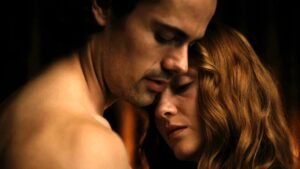
Claire is feverish, drunk, starving, overheated, and completely unfiltered. Jamie is worried, amused, turned on, and clearly willing to follow her wherever this absurd little moment is going. The scene is sexy, yes, but the sexiness is not the main reason it lands. It lands because Jamie and Claire are laughing again. They are playing again. They are married again in the way that goes beyond vows, bodies, and destiny.
They are friends.
That is the piece that makes the scene more than fan-service. Jamie and Claire’s love has always worked best when the show remembers that they do not only ache for each other. They enjoy each other. They are two people who can survive impossible things and still find a way to be stupid, horny, tender, and alive in the same room.
Jamie And Claire Are Married Best Friends Again
The real romance of the turtle soup scene is not the soup. It is not even the sex. It is the safety.
Claire is in a completely ridiculous state. She is half-delirious, sunburned, injured, hungry, drunk on turtle soup, and acting like every filter in her brain has dissolved. Jamie could play the scene as only concerned. He could make it sentimental. He could make it purely erotic. Instead, he meets her where she is.
That is what makes it feel like marriage. Jamie is not simply admiring Claire from afar or declaring some grand destiny. He is dealing with the woman in front of him: messy, feverish, funny, horny, exhausted, and alive. And Claire, for once, is not performing competence. She is not Doctor Claire. She is not the woman who has to survive the jungle. She is not the woman who has to explain herself to priests, captains, sailors, or housekeepers.
She is just Claire with Jamie.
That is why the ridiculousness matters. After all the epic pain, the scene lets their love become domestic again. Not normal, exactly. Nothing about turtle soup and fever sex is normal. But emotionally, it is domestic. It is private. It is playful. It is two people who know each other well enough to be absurd without shame.
Why Turtle Soup Became A Fan-Favorite Moment
Turtle soup became a fan-favorite moment because it is balanced. The episode gives us danger, survival, grief, mystery, family, myth, and total island weirdness. Then it gives us Jamie and Claire being funny, sexy, and ridiculous together.
That balance is what Outlander needs at its best. The show cannot only be trauma, surgery, separation, and prophecy. It also has to be laughter. It has to be bodies. It has to be weird food. It has to be the kind of intimacy where your lover is also the person who can watch you be completely unhinged and still look at you like you are the center of the world.
Some of the dialogue is purple. Some of it probably reads smoother on the page than it sounds out loud. Some of it is objectively ridiculous. But that is part of the charm. The point is not perfect seduction. The point is that Jamie and Claire are having fun with each other.
And after everything Season 3 has put them through, that might be more romantic than another grand speech.
Claire’s Island Survival Shows The Cost Of Getting Back To Jamie
The turtle soup scene lands harder because the episode opens with Claire fighting to survive. She does not simply leap from the Porpoise and magically land in Jamie’s arms. She earns that reunion through water, heat, pain, thirst, ants, snakes, exhaustion, and sheer stubbornness.
The island survival sequence is one of the most visually interesting stretches of the season. Claire alone in the jungle is not standard Outlander mode, and that is why it works. It feels risky. It feels physical. It forces the show out of dialogue and into pure survival.
Caitriona Balfe is excellent here because so much of the sequence depends on her body: exhaustion, thirst, pain, panic, calculation, heat, and refusal to stop moving. Claire is not sitting around explaining what she feels. She is walking, stumbling, searching, falling, thinking, and trying not to die.
That is why the eventual comedy matters. The episode does not jump straight into silliness. It drags Claire through the wilderness first. By the time she gets to turtle soup, the absurdity feels like release.
The Island Sequence Should Have Trusted Silence Even More
The island section is so strong visually that it almost does not need voiceover. The camera already tells us what Claire is experiencing: the heat, the scale of the jungle, the distance of the beach, the dizziness, the water, the ants, the snake, the impossible size of the world around one exhausted woman.
That is why the voiceover can feel unnecessary. We do not need Claire to explain that she is thirsty when we see her licking moisture from plants. We do not need her to explain that she is lost when the camera pulls up and shows how tiny she is in the landscape.
Still, the sequence works because it is so visually committed. The handheld camera, first-person perspective, water shots, heat, blur, and physical difficulty all make the opening feel different from almost anything else in the series.
Charlotte Brändström Gives The Episode Its Best Images
Director Charlotte Brändström makes the island material feel cinematic. The camera moves in and out of Claire’s point of view, sometimes trapping us inside her body and sometimes pulling far enough away to show how alone she is.
The best images are the ones that make Claire small: the beach, the forest, the overhead scale, the endless green, the sun, the water. Those shots tell the real story. Claire has left the ship, left Jamie, left certainty, and entered a world with no map.
That visual idea is exactly what the title means. “Uncharted” is not only about geography. It is about Claire being in a kind of story space she cannot control.
The Coincidences Are Absolutely Out Of Control
Here is the maddening part: the episode asks us to swallow a lot.
Claire jumps from the Porpoise. She ends up on an island. Jamie’s ship just happens to wreck nearby. The dangerous captain problem conveniently disappears because the people who could expose Jamie are dead. Claire grabs a mirror from the Porpoise for reasons that mostly exist so the story can use it later. Father Fogden has exactly the right oddball energy. Mamacita knows exactly enough to raise questions. Everything bends toward getting Jamie and Claire separated, reunited, separated, and reunited again.
That is frustrating because the episode has so much good material. When Outlander relies too hard on coincidence, it can feel like the universe is carrying the plot instead of the characters. And yet, there is at least an argument to be made that fate is part of the point. Claire and Jamie are drawn together by something larger than logic. Maybe time, destiny, God, love, or story itself keeps throwing them back into each other’s path.
That argument does not fix every coincidence. But it does explain why the episode can feel ridiculous and emotionally satisfying at the same time.
Father Fogden Is Ridiculous, But He Works
Father Fogden should not work. A lonely priest with a coconut named Coco, a dead love, a suspicious housekeeper, beetles, goats, and a very loose grip on reality sounds like too much. But somehow, he fits the episode’s strange energy.
He is funny, sad, gentle, and just unsettling enough to make Claire’s island recovery feel unstable. He is also another mirror for Claire. He gave up a life for love, lost the person he loved, and now lives in a half-mad shrine to grief. That is not far from one possible version of Claire if she had come through time, lost Jamie again, and never found her way back.
Father Fogden is comic relief, but he is also a warning: love can save you, but grief can make you very strange.
Mamacita Knows More Than She Says
Mamacita brings another layer of unease. She is hostile, suspicious, protective, and clearly carrying grief of her own. Her reaction to Claire’s zipper is one of those moments that makes you wonder whether she recognizes more than she should.
That may be nothing. It may simply be suspicion toward a strange woman in strange clothes. But in a season increasingly obsessed with Jamaica, Abandawe, Geillis, caves, prophecy, and time travel, a character noticing a zipper cannot help but feel loaded.
Even if Mamacita is not part of the larger mythology, she functions as a threshold guardian. Claire has landed in a new world, and Mamacita is the first person telling her: you are not automatically welcome here.
Abandawe Finally Starts Feeling Important
The Abandawe material is where the episode starts pointing hard toward the endgame. Father Fogden describes the cave as a place of power, a place where people disappear, and suddenly Margaret Campbell’s earlier warning starts to matter in a much bigger way.
This is also where the Jamaica arc begins connecting to the season’s larger time-travel mythology. We have Claire’s knowledge from Joe Abernathy and the bones. We have Margaret Campbell. We have Geillis lingering in the theory space. We have a cave connected to disappearance and power.
That is the kind of setup that makes “Uncharted” more than a weird island detour. The episode is planting signposts for the finale, even while it is busy with goats, beetles, weddings, soup, and coincidence.
Fergus Finally Becoming A Fraser Gives The Episode Its Heart
As much as turtle soup gives the episode its most clickable, memorable scene, Fergus becoming a Fraser gives it its heart.
Fergus has belonged to the Frasers emotionally for years. Jamie and Claire rescued him, raised him, loved him, protected him, and carried him through the story as a son in every meaningful way. But in this scene, Jamie makes that truth official. When Father Fogden needs a full name, Jamie gives him one: Fergus Claudel Fraser.
That moment lands because César Domboy plays it with such restraint. Fergus does not collapse into tears or overplay the gratitude. He simply receives the gift, and you can see how much it means. It is a quiet adoption. A blessing. A homecoming. A father finally saying, in front of everyone, “You are mine.”
The Wedding Gives The Chaos A Soul
“Uncharted” is full of wild tonal swings, but the wedding gives the episode emotional shape. Father Fogden is funny. Marsali is impatient and sharp. Fergus is nervous and moved. Jamie and Claire stand to the side like proud parents, watching the next generation of their family step forward.
That staging matters. The wedding is not really about Jamie and Claire, but it would not exist without them. Their gravitational pull has gathered this strange family around them: Fergus, Marsali, Mr. Willoughby, the Artemis crew, and everyone else orbiting their impossible love story.
There is also something beautiful about Jamie and Claire standing outside the center of the frame. They are still the title couple, but this moment lets someone else carry the emotional spotlight. It feels like a passing of the torch without actually replacing them.
Claire And Marsali Finally Start Becoming Something
The pre-wedding conversation between Claire and Marsali is small, but important. Marsali has every reason to distrust Claire. Claire is the woman her mother hates, the woman who upended Jamie’s life, and the person suddenly occupying space Marsali does not understand.
But the scene lets Claire become something other than a rival or obstacle. Marsali asks her about marriage, sex, children, and what comes next. Claire becomes, briefly, the kind of woman Marsali can ask because she needs a wiser woman in the room.
That is how their relationship should begin: not with instant warmth, but with practical intimacy. Marsali does not need Claire to be her mother. She needs Claire to be honest, useful, and steady. That is something Claire can give.
Fergus And Marsali Feel Like The Next Fraser Generation
Fergus and Marsali’s wedding matters because it expands the emotional world of the show. Claire and Jamie are still the center, but they are no longer the only romantic engine worth watching.
Fergus and Marsali bring youthful stubbornness, sass, sincerity, and heat. They are not simply a copy of Jamie and Claire, but they echo them in useful ways. Fergus has Jamie’s loyalty and charm. Marsali has a sharpness that feels like Laoghaire, Jenny, and her own entirely new thing all at once.
The wedding says: this family is growing. The Frasers are no longer only a couple separated by time. They are a messy, expanding, chosen family, and Fergus is officially part of the name now.
Claire And Jamie As Proud Parents Is A Beautiful Shift
One of the sweetest parts of the wedding is watching Claire and Jamie stand to the side. They are not the focus. They are the proud parents watching the younger generation step forward.
That is a major shift for the show. Jamie and Claire have spent so long trying to find each other, survive each other, reunite, and recover from the lives they lived apart. Here, they are able to simply witness someone else’s joy.
It gives the episode warmth. Whatever else is messy, the wedding shows that Jamie and Claire’s love creates a family around it. Fergus gets a name. Marsali gets a place. The group gets a future.
Why The Episode Is So M&B
“Uncharted” is the kind of episode that almost demands an Outlander Cast conversation because it is both lovable and ridiculous.
You can absolutely criticize the structure. The shipwreck happening offscreen is awkward. The mirror is wildly convenient. Jamie landing on Claire’s island is a lot. Father Fogden talking to a coconut is a lot. The pacing is strange. The season still has major story to cover, and the episode spends a lot of time wandering through the jungle and getting everyone fed, married, and soup-drunk.
But the episode also has exactly the kind of tonal weirdness that makes Outlander worth talking about. It is romantic. It is horny. It is funny. It is mystical. It is visually bold. It is absurd. It is heartfelt. It can make you roll your eyes and then completely melt your heart five minutes later.
That is why centering turtle soup is not cheap. Turtle soup is the episode in miniature: messy, funny, overheated, oddly beautiful, and somehow deeply revealing about Jamie and Claire.
Mary & Blake’s Kilt Ratings For Uncharted
Blake originally gave “Uncharted” a hot-take 4.3 kilts, then revised closer to 4.5 after realizing how much he loved the island survival sequence, Fergus, the wedding, the turtle soup, and the visual language. His main frustration was the coincidence pileup: the offscreen shipwreck, Jamie landing on Claire’s island, the captain problem disappearing, and Claire grabbing the mirror for reasons that felt too plot-convenient.
Mary gave the episode 5 kilts because she had a blast. She loved the wedding, Marsali’s sass, Claire’s survival mode, Father Fogden, the turtle soup, and the way the episode gave her every feeling from laughter to panic to romance.
That split captures “Uncharted” perfectly. It is an episode that can drive you crazy if you need clean logic, but it is also very easy to love if you let the weirdness wash over you.
Outlander Season 3 Episode 11: The Craft Verdict
“Uncharted” works because it lets Outlander be strange without losing the emotional thread. The episode has major craft problems, especially around coincidence and pacing, but it also has images, scenes, and emotional beats that feel genuinely memorable.
Claire’s island survival gives Caitriona Balfe a physical showcase. Father Fogden turns grief into eccentric comedy. Mamacita adds suspicion and mystery. Abandawe points the season toward the time-travel endgame. Fergus finally becoming Fergus Claudel Fraser gives the episode its heart.
But turtle soup gives the episode its soul.
After all the suffering, Jamie and Claire get to be playful. They get to be silly. They get to be safe with each other. They get to be married best friends again. And for this couple, after everything, that might be even more romantic than the sex.
Related Outlander Coverage
- Outlander Season 3 Episode Guide: every Season 3 podcast, recap, listener feedback episode, and explainer.
- Minute-By-Minute Recap: Uncharted: the full beat-by-beat breakdown of Episode 3.11.
- Uncharted Listener Feedback: more reaction to Claire, Jamie, Fergus, Marsali, Father Fogden, and turtle soup.
- Fergus Claudel Fraser Explained: the full character guide for Fergus, from Paris pickpocket to Fraser son.
- Dear Outlander Crew: Thank You Lauren Lyle: why Marsali becomes one of Season 3’s best new sparks.
- Heaven And Earth Recap & Reaction: the episode that sends Claire overboard and into this survival story.
- Minute-By-Minute Recap: Heaven And Earth: Claire on the Porpoise, Elias Pound, and the leap into the sea.
- Theory: Why Claire And Geillis Can Travel Through The Stones: more context for the time-travel mythology pushing toward Abandawe.
- Minute-By-Minute Recap: The Bakra: continue into Jamaica, Geillis, and the next major endgame reveal.
- Outlander Cast Podcast Hub: browse all of our Outlander recaps, reactions, interviews, and listener feedback episodes.
Go Deeper With Mary & Blake
Love the craft, character, and emotional analysis behind Outlander? We go deeper on the show in Outlander Cast and inside The Nerd Clan, where members get bonus episodes, Blake’s Book Club, extra analysis, community discussion, and more.
What did you think of “Uncharted”? Is turtle soup secretly one of Jamie and Claire’s most romantic scenes?
Our Producers
These NerdClan members help make Mary & Blake possible.
Associate Producers
- Aimee Suiter
- Alicia Singer
- Alison Cole
- Alison Kitching
- Allison Indaburu
- Amanda
- Amanda Allen
- Amanda Brockett
- Amanda Chappell
- Amanda Kertz
- Amanda Letendre
- Amanda M.
- Amber Bryant
- Amber Kemmerling
- Amber Walker
- Amy Clark
- Angela Burgess
- Angie Phillips
- Anita Fangmeier
- Anna Deyle
- Anna N
- Anna Spain
- Anne Fox
- Anniem24
- April Pittendreigh
- Arne Croell
- Ashley Crawley
- Ashley Matthews
- ASHLEY Miller
- Audra Hoynacki
- Bec
- Bekah
- Beth Bartkowiak
- Beth Farias
- Beth Kleinschmidt
- Blair Weber
- Bonnie Bryden
- Brenda Spangler
- Bridges Adams
- Brittany LaFountain
- Bunny Arszman
- BustamoveR
- Cam
- Candace Burns
- Candace Combs
- Cara Doyle
- Cara Verity
- Carla Pena-Gaiser
- carol a lewis
- Carol Filbeck
- Carol Renna
- CarrieAllison
- Casey Carmolli
- Catherine Soprano
- Catherine Steib
- Catie Halfmann
- Chelsea lucas
- Cheryl Lee-Collins
- Cheryl Murphy
- Chris Holifield
- Chris Lombardi
- Christen Beltz
- Christine
- Christine Romeo
- Cindy Lassen
- Claire McCarthy Gul
- Clelia Keen
- Corbie Sinclair
- Cori Whelan
- Cyndi Merrill
- Cynthia Kline
- Cynthia Poch
- Daniel
- Dara Lovitz
- Darinda Noah
- Dawn-Marie Young
- Dawne Moffatt-Fairbanks
- Dawn McSwain
- Dawn Rogers
- Debbie McCrary
- Debbie Soderlund
- Deb Srulevich
- Deirdre Hosking
- Denise Aitchison
- Denise Franklin
- Denise Stewart
- Diana Smirl
- Donna Peek
- dorothy clorite
- E Finlay
- Ekua Walker
- Elizabeth
- Elizabeth Janney
- Elizabeth Kangro
- Ellen Dreyer Pedersen
- Ellen Mostoller
- Emily Gill
- Emily Narkis
- Emma Dzamko
- Erika Menzies
- Erin Mays
- Erin M McKenney
- Fiona Tobin
- Franca Montevago
- Franli Newman
- Fran Williams
- Gaynor Pilbeam
- Gillian Nelson
- Gina Dabney
- Ginny Pickel
- Gloria Costa
- Gloria Hernon
- Grethe Strand
- H
- Hanley
- Heather Staible
- Heike Tichatzky
- Hillary
- iloveclarkk kent
- Jacki James
- Jamie
- Janelle Spedding
- Janet Joy
- Janine Jones
- Jan Valdez
- Jeanne Tucker
- Jen
- Jen Davis
- Jenna Bach
- Jennifer
- Jennifer Barrett
- Jennifer Bernth
- Jennifer Farmer
- Jennifer Furman
- Jennifer Hyatt
- Jennifer Maus
- Jennifer Swanson
- Jennifer Wittke
- Jerri Grebeck
- Jessica Thomas
- Jess Lee
- Jess Lyne
- Jill Guinther
- Jillian Harig
- Jo-Anne Lewis
- Joanne
- Joanne Brophy
- Jolene Johnston
- Jordan Cook
- Jordan Pitts
- J O Thacker
- Joy Welday
- Juanita Nesbitt
- Julia
- Julie Gautreau
- Julie Jorgenson
- Julie McAllister
- Julie Tharp
- Kaitlyn spencer
- Karen Cyr
- Karen Guittar
- Karen Morley
- Karen Rutledge
- Katherine Haff
- Kathy Jancic
- Kathy Luecke
- Kathy Sullivan
- Katie Gomes
- Kay Cook
- Keelin Dawe
- Kellie
- Kelly Castro
- Kenit Golabi
- Kimberly Charles
- Kimberly Downing
- Kimberly Zagar
- Kim Graf
- Kim Halloran
- Kim K
- Kirsten McDaniel
- Kjersta Swanson
- KO
- Krista Thomas
- Kristen Frederickson
- Kristi
- kristie o
- Kristin Bacchiocchi-Stewart The Flute Academy
- Kristine Wilcox
- Kristin Solander
- Laura Feldman
- Laura Larsen
- Laura Robertson
- laurel gallucci
- Lauren 8376
- Lauren Biddle
- Lauren Fitts
- Leah Christenson
- Leah P
- Leah Prengaman
- LeeAnn Hart
- Lesley Spray
- Leslie Deiss
- Leslie Kish
- Lillian Carey
- Linda Little
- Lindsay Maki
- lindsay thompson
- Linh Tran
- Lisa DiGiorgio-Haag
- Lisa Enfinger
- Liz Armstrong
- Liz Lossin
- LK
- Loretta
- Lotte Andersen
- Lynda Burgoine
- LYNDA TURNER
- Lynne Freeman
- Lynne Kopchains
- Lynn Freeman
- Lyn Robinette
- M. Elizabeth
- Majda
- Mandy Lake
- Mandy Taylor
- Marcia Beckwith
- Marcie Schweitzer
- Marci Finegood
- Margie McLeod
- Maria Da Silva
- Maria G.
- Marie Ivey
- Marielouise
- Marine Perot
- Martina Prior
- Mary Ann Calderone
- Mary Iversen
- Mary Joiner
- Mary Klein
- mary lovett
- Matt
- Megan Flaherty
- Megan Reed
- Meghan Oats
- MegLikesSleep
- Mel
- Melanie Brown
- Melissa Carolan
- Melissa Gillespie
- Melissa Grinnell
- Melissa Hart
- Melissa Osborne
- Melissa van de Putte
- Meredith Bustillo
- Michelle Chandler
- Michelle Kirksey
- Mikayla Wagner
- Missy Willey
- Monica
- Monica Buchanan
- Monica Williams
- Monique Willshire
- Mo Whitman
- Nadine Singh
- Najwa Mohamed
- Nancy Lazarus
- nancy taverna
- NicoleAndrus
- Noa
- Opalessence
- Patricia Arena
- Patricia Rickard
- Patti
- patti wilson
- Paula Cartagena
- Phyllis Smith
- Queen Bee's Hive by Angela Hickey
- Rachael Janoso
- Rachael Janoso
- Rachel Brantley
- Rebecca Curlett
- Renee Vallely
- Rhonda Martin
- Rita Ryan
- Robyn Garrett
- Rosemary Riess
- R Weigel
- Ryleigh Groat
- Sandra Costa
- Sarah Lizotte
- Sarah Smith
- Sarah Stanage
- Sarah Wennell
- SaraPeterson
- Sara Sanders
- Sara Wisser
- Shani McNair
- Sharon Levere
- Sharon Neilson
- Shirley Carlisle
- Shonna Chapman
- Sofie Sunde
- Solange Ducrocq
- Stefanie Preston
- SteffiL
- Stephanie Hamby
- Stephanie L Jones
- Stephanie Morris
- Stephanie Rickmeier
- SuAn
- Sue Doran
- Susahn
- Susan & the Kitty Cats
- Susan Farley
- Susan Goodrich
- Susan Hurst
- Susan L Price
- Susanna Kaartinen
- Susan Parker
- Tama Poncar
- Tam Davis
- Tammy Spencer
- Tara Ross
- Taylor Cantwell
- Terri
- Terri Miller Majcher
- Terri Smith
- The Gouldmans
- Theresa Brown
- Theresa Strange
- Tiffany
- Tina Marcucci
- Tinera Brown
- Toni Tubb
- Tonya Serda
- Torie T
- Trish Arbetman
- Valerie B
- Vanita Mountain
- VIckie Applegate
- Vickie Looney
- Vicki Johnston
- Vickums
- Wendy Runnion
- Wendy Watson
- Will Spence
- Wynn Bailey
- Yolanda Hawkins
Co-Producers
- Agnieszka Widlaszewska
- Allyssa Sullivan
- Andrea
- Angie L
- ANNE
- Bonnie Ricci
- Brenda Lowrie
- Brrrrenda-ha
- Caitlin Harmon
- Candy Hartsock
- Carolyn Needham
- Cathy
- Charlene Horn
- Charlotte Tait
- Cheetoberry
- Chris Holifield
- Christina Peters
- Christina Tomazinis
- Christine Milleker
- Cindy Sessions
- Coreen Starr
- Cynthia
- Daniela Spencer
- Dawn Ruminski
- Debbie Flatla
- Debbie Stelluto
- Donna Walsh
- Dorian Kunkel
- Elaine Cherry
- Elaine Southern
- Ellen Mostoller
- Erica Connor
- Gail B Smith
- Hannah McCreary
- Hannah Sage
- Heather Jackson
- I Smoke and I Know Things
- Jackie
- Jana Gibson
- Jennifer Dolan
- Jennifer Richie
- Jennifer Shikany
- Jenny Rogers
- Jessica Berry
- Jessica Guevara
- Julia M
- Julie Glick
- Karen
- Karen Snelling
- Karen Swinehart
- Katelyn Cassidy
- Katharine Wagner
- Kathy M
- Kerry Shasteen
- Kimberly lehman
- Lara Weber
- Laura Forni
- Laura Roche
- Linda H
- Linda Hide
- Lisa K
- Lisa Kincaid
- Liz Wothe
- Lois Scozzari
- Loretta Bailey
- Lori Groinus
- Lori Rickman
- Lynne
- Lynne Ehrman
- Lynn Rankinen
- Maggie Gallagher-Mondak
- Marilyn L Neenan
- Marissa Howard
- Marla
- Mary Felix
- Mary King
- Mary Zielinski
- Megan
- Melanie Brown
- Melissa Paul-Perez
- Michelle
- Midge Foley
- Mo (Maureen) Edwards
- Monica
- Nicole Walsh
- Nikki
- Nikki Packee
- Nina Wohl
- Pamela Phelps Smith
- PStern85
- Rachel Shira
- Rachel Shira
- Roberta R
- Rosie Santavenere
- Roxanne Ruden
- Ryleigh Groat
- Sandy Ritchey
- Sharon Garrard
- Susan Deacon
- Suzanne Markwood
- Suzanne Moss
- Tammy Flowers
- Terri Anderman
- Victoria Anderson
- Wendy Thompson
- Zman_NYC
Executive Producers
- Amy Russo
- April
- Brooke
- Carol Filbeck
- ConstanceTsouvalos
- Cynthia Young
- Dana Mott-Bronson
- Deana King
- Deanne Dekle
- Emily Clinton
- Erica Johnstone
- Erika Garcia
- Heidi
- Jean Akesson
- Jessica Lanzillotti
- KarynT
- Kathleen
- Linda F Crafts
- Marcia Cronin
- Marcia Olson
- Marie S. Reilly
- Martha
- Michael McGarry
- Michelle Miller
- Nichole Baier
- Patty Hurlock
- Richard Mallory
- Siobhan M. O'Connor
- Susan Bruno
- Susan Stillman
- SuzyQ
- Tamarina
- Tiffany Grygus
- Vanessa Herbert
- Vicki Adams