More Outlander History Coverage
- Listen to our Kings Mountain history lesson on Outlander Cast
- Why The Battle Of Kings Mountain Matters To Jamie Fraser
- Outlander Season 8 Episode Guide
- Outlander Cast podcast episodes
- Join The Nerd Clan for bonus Outlander coverage
If you want to understand the Overmountain Men, start with where they lived.
These were settlers from west of the Appalachian Mountains, especially the Watauga, Holston, and Nolichucky settlements in what we would now connect with eastern Tennessee, western North Carolina, and southwestern Virginia. From the coastal point of view, they lived “over” the mountains. That is where the name comes from.
That sounds simple. The reality is much more interesting.
The Overmountain Men were living beyond the older colonial comfort zone. They were separated from the coast by rough mountain terrain, bad roads, slow communication, and a very different sense of authority. Charleston, Philadelphia, Williamsburg, and Boston had newspapers, merchants, formal politics, port economies, and the kind of civic life we usually associate with the Revolution.
The Overmountain settlements had rivers, cabins, rifles, cornfields, horses, church meetings, family networks, local militias, land arguments, and a daily relationship with danger.
So, yes, they were Patriot militia fighters. But that label alone does not explain them.
The better answer is this: the Overmountain Men were frontier settlers whose lives had already trained them to distrust distant power, move quickly under pressure, and treat a threat against home as a problem that had to be answered before it arrived at the front door.
They Were Settlers From A Border World
The Overmountain world did not appear out of nowhere in 1780.
Before permanent settlements took hold, long hunters, traders, and adventurers moved into the region looking for game, land, trade, and opportunity. These were the kind of men who could disappear into the woods for weeks or months, then come back east with stories about fertile land beyond the mountains.
Those stories mattered. They made the western country sound possible.
One of the early settlers, William Bean, arrived around 1769 and settled near Boone’s Creek, a tributary of the Watauga River. In 1771, James Robertson led a group of North Carolinians into the area. Other communities developed around Carter’s Valley, the Nolichucky, and the Holston.
This is where the Overmountain Men come from: not from a city, not from a formal army, but from a chain of settlements built by people who crossed the mountains and tried to make life work in a place that official power struggled to control.
That is the first real “why.”
These people had already crossed a boundary. The Proclamation of 1763 had tried to limit westward settlement beyond the Appalachians, partly to reduce conflict with Native nations and stabilize imperial control after the French and Indian War. The settlers who moved into the Watauga region were living inside a gray zone: geographically distant, politically awkward, and constantly forced to solve their own problems.
That creates a different kind of person.
If the nearest formal authority is too far away to matter in a crisis, you start building authority locally. You trust the man who knows the river crossing. You trust the neighbor who shows up with a rifle. You trust the leader whose reputation comes from action.
In the Overmountain settlements, power had to prove itself.
The Watauga Association Explains A Lot
Here is the detail that gives the whole thing meat: in 1772, settlers in the Watauga area formed the Watauga Association.
That matters because it shows how these communities thought. They were beyond the easy reach of colonial government, so they created a local system to handle property, courts, order, and militia needs. It was not a clean declaration of independence. It was more practical than that.
They needed a way to function.
That is the Overmountain mindset in one move. When formal authority was too far away, they built a local version that could actually do the job. Courts. Magistrates. A sheriff. A militia. Rules that people nearby could understand and enforce.
This is where the modern comparison helps.
Think about a rural town after a brutal storm. The state may eventually arrive. The county may have a plan. But in the first hours, the people who matter are the ones with chainsaws, trucks, generators, boats, spare fuel, and the trust of the neighborhood. Local competence becomes the real government until formal government catches up.
That is the world the Overmountain Men knew.
They were used to organizing from the ground up. They had already learned how to create order when distant power could not reach them fast enough. By the time Patrick Ferguson threatened them in 1780, he was not dealing with scattered nobodies. He was dealing with communities that had experience turning local fear into local action.
They Were Farmers, Hunters, Militia Men, And Neighbors
The phrase “Overmountain Men” can make them sound like one clean group with one clean identity.
Real life was messier.
They were farmers trying to hold land. They were hunters who knew how to move through rough country. They were fathers and sons with families exposed to danger. They were churchgoers who heard sermons before battle. They were militia fighters who brought their own rifles, their own horses, their own food, and their own knowledge of the land.
That last part is huge.
A Continental soldier belonged to a larger military machine. He could be trained, supplied, ordered, and moved by formal command. A backcountry militia fighter worked differently. He often served for short periods, fought near home or for a specific emergency, and entered the fight with local knowledge a professional army could rarely duplicate.
Your rifle was yours. Your horse was yours. Your food might be whatever you packed or found. Your leader was often someone you knew before the crisis began.
That made militia power unstable, but it also made it fast.
If a trusted local leader said trouble was coming, men could gather because the relationships were already there. They did not need to become a community before acting. They were acting because they were already a community.
The Leaders Were Local Power Brokers
The Overmountain Men were not just a mob with rifles. They moved under leaders whose names mattered in the backcountry.
John Sevier was tied to the Watauga settlements and later became one of the defining figures of Tennessee history. Isaac Shelby came from the Holston region and would later become the first governor of Kentucky. William Campbell brought Virginians into the campaign. Charles McDowell was connected to the North Carolina militia world. Benjamin Cleveland, from the Wilkes County region, had a hard reputation in the Patriot-Loyalist violence of the North Carolina backcountry.
This matters because local militia leadership was personal.
A man did not follow Benjamin Cleveland because Cleveland looked nice on a command chart. He followed him because Cleveland had a story attached to his name. He had already fought. He had already punished Tories. He had already shown people what kind of violence he was willing to answer with.
That is useful, scary, and very Outlander.
Jamie Fraser would understand this kind of authority instantly. A title matters, but a reputation gathers men faster. A governor can issue a proclamation. A colonel with local trust can make rifles appear at a riverbank.
That is the kind of power Patrick Ferguson underestimated.
Patrick Ferguson Thought Fear Would Work
Major Patrick Ferguson was not an idiot.
That is important. The more interesting version of history is rarely “smart Americans beat dumb British guy.” Ferguson was experienced, aggressive, and useful to Cornwallis because he could recruit loyalists, train militia, intimidate Patriot communities, and protect the vulnerable western side of the British campaign.
His job was to turn loyalist sympathy into loyalist manpower.
Private loyalty did not help Britain enough. A man quietly hoping the king would win did not secure a road, guard a supply line, pass intelligence, or frighten Patriot neighbors. Ferguson needed loyalists to act in public. He needed the backcountry to believe the crown had reach.
So he used a threat.
Ferguson warned the men beyond the mountains that if they resisted, he would cross the mountains, hang their leaders, and lay waste to their land.
From a British military perspective, the threat had a logic. Intimidation can freeze people when they believe resistance will bring disaster. Ferguson wanted the Overmountain settlements quiet so Cornwallis could keep moving through the Southern Campaign.
The problem was his audience.
The Overmountain Men were not hearing an abstract military warning. They heard a man say he might come for their homes.
That changed the calculation.
The Threat Turned Distance Into Urgency
Before Ferguson’s threat, the mountains created distance.
After the threat, the mountains became the line he promised to cross.
That is the whole article right there.
Ferguson thought the Appalachians gave him leverage. He could threaten from the other side and expect obedience. The Overmountain Men processed it differently. If Ferguson had the will to cross the mountains later, they had a reason to cross them first.
That is the “how.”
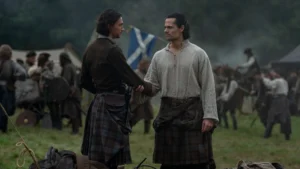
The threat moved through local networks. Men gathered at Sycamore Shoals on the Watauga River on September 25, 1780. More than 600 Patriots mustered there under leaders including John Sevier, Isaac Shelby, Charles McDowell, and others. William Campbell’s Virginians joined them, bringing the force to more than 1,000 militia members.
They camped along the river flats. The next morning, September 26, Reverend Samuel Doak preached to them and invoked the “sword of the Lord and of Gideon.” Then they marched.
That image is specific because it tells you what this movement really was.
Men with rifles. Horses. Food. Local leaders. A riverbank. A sermon. A threat behind them. A mountain road ahead.
This was not the Revolution as a marble statue.
This was the Revolution as a community deciding that waiting had become too dangerous.
They Crossed The Mountains Because Home Was Behind Them
The Overmountain march was not casual. These men moved through difficult country in late September and early October. They crossed the Blue Ridge and pushed toward Ferguson, gathering more Patriot militia as they went.
That kind of movement tells you something about motive.
People do not drag themselves across mountains for a vague political mood. They do it when the pressure becomes concrete. Ferguson’s threat supplied the emotional engine. Local leadership supplied the structure. Geography supplied the test.
Their world trained them for this exact kind of action.
They knew how to ride. They knew how to carry food. They knew how to move through terrain that looked like chaos to outsiders. They knew how to follow men whose reputations had been built before the march began.
That is why they were dangerous.
The British could defeat formal armies and still struggle with this kind of resistance. A militia force did not always need to stand still long enough to be destroyed. It could gather, move, strike, disperse, and leave the occupying army with the larger problem: how do you control a place where the land itself seems to keep producing enemies?
They Fought Like The Land Had Trained Them
At Kings Mountain, the Overmountain Men and other Patriot militia used the kind of fighting that made sense for their world.
Ferguson’s loyalist force took position on a ridge. High ground usually helps a defender. The attacker has to climb. The defender can shoot downward. In a clean, open-field fight, that position has obvious advantages.
Kings Mountain was not a clean, open-field fight.
The Patriot militia surrounded the ridge and attacked from several directions. Fighters used trees, rocks, smoke, slope, and cover. When loyalists charged with bayonets, riflemen could fall back, reload, and return. Pressure built from multiple sides instead of one neat line.
That was the nightmare for Ferguson.
His position became a trap because the terrain did not behave like a parade ground. The same woods and slopes that made the ridge feel defensible also gave the attackers cover. The Overmountain Men understood how to use that kind of world because many of them had lived in it for years.
That is the difference between information and understanding.
Ferguson could know the terrain was rough. The Overmountain Men knew what rough terrain allowed a man with a rifle to do.
For the larger battle context, listen to our Kings Mountain history coverage on Outlander Cast, where we break down how Patrick Ferguson, Cornwallis, the Southern Campaign, and Jamie Fraser all collide around this one terrifying piece of history.
They Were Important Because They Were Local
The Overmountain Men mattered because they reveal the real weakness in Britain’s Southern Strategy.
Britain needed loyalist support to become visible, organized, and useful. It needed local people to help rebuild royal authority. It needed roads guarded, intelligence passed, Patriot resistance intimidated, and Cornwallis’ campaign protected from the western side.
The Overmountain Men showed how fragile that plan could become when local people turned against it.
Ferguson’s defeat damaged loyalist confidence. It also proved that the backcountry could produce a mobile Patriot force without waiting for the Continental Army to solve the problem. Cornwallis lost a key officer and a key loyalist force. Patriot morale rose at a moment when the Southern Campaign had looked grim.
That is the historical meat.
The Overmountain Men were not important because they were perfect heroes. They were important because their local response disrupted an imperial plan.
Britain was thinking in campaigns.
They were thinking in homes.
Why This Matters To Outlander
For Outlander fans, the Overmountain Men matter because they explain the kind of Revolution Jamie Fraser is actually entering.
This is not just Washington, Congress, declarations, and famous battlefields. In the backcountry, the Revolution moves through local trust, local fear, and local violence. A man’s politics can threaten his neighbor. A militia summons can pull a farmer away from his family. A threat from an officer can turn a distant war into an immediate decision.
That is Fraser’s Ridge territory.
Jamie understands land as responsibility. He understands reputation as currency. He understands that leadership is not only about title; it is about whether people believe you can protect them when the world gets ugly.
The Overmountain Men lived inside that same pressure system.
They make Kings Mountain feel personal because they show the Revolution in its most intimate form. History arrives through a river crossing, a church sermon, a trusted local leader, a neighbor with a rifle, and a threat that turns private life into public action.
That is why this works so well for Outlander.
Jamie has spent his entire life navigating the brutal space between loyalty and violence. The Overmountain Men are another version of that same problem. They show what happens when men who value local freedom decide that the danger has come close enough to answer.
The Simple Version
So, who were the Overmountain Men?
They were frontier settlers from west of the Appalachian Mountains, especially the Watauga, Holston, and Nolichucky regions, who became a decisive Patriot militia force during the Kings Mountain campaign.
Their identity came from geography. Their strength came from local trust. Their urgency came from Ferguson’s threat. Their effectiveness came from the way frontier life had trained them to move, shoot, organize, and survive in rough country.
Patrick Ferguson looked at them and saw people he could scare into obedience.
He misread the room.
The Overmountain Men crossed the mountains because they believed the threat had crossed into their lives first. That is the why. They gathered through local leaders, brought their own rifles and supplies, moved across difficult terrain, and fought in the style their world had taught them. That is the how.
For Outlander, that is the point.
History is not powerful because it has a date attached to it. History becomes powerful when it shows how people behave under pressure. The Overmountain Men remind us that the American Revolution was not only built in famous rooms by famous men. It was also built on riverbanks, mountain trails, local grudges, hard choices, and communities deciding that home was worth crossing a mountain for.
Learn More About The Overmountain Men
- National Park Service overview of the Overmountain Men
- Sycamore Shoals muster site
- Overmountain Victory National Historic Trail
- Tennessee Encyclopedia entry on the Overmountain Men
- Kings Mountain National Military Park