Full spoilers for Outlander Season 8, Episode 6, “Blessed Are the Merciful.”
Major Ferguson is still a threat to Jamie Fraser because Captain Cunningham was only the local crisis. Ferguson represents the larger British campaign moving toward Fraser’s Ridge, Kings Mountain, and Jamie’s future.
The clean answer is this: Cunningham was the attack. Ferguson is the campaign.
Cunningham got close to Jamie’s home. Ferguson represents the wider war system that keeps moving even after Cunningham leaves. That is why Outlander Season 8, Episode 6 does not let Jamie relax when the immediate danger on the Ridge settles down. Cunningham may be leaving. Ferguson is still out there.
Start Here: Ferguson, Kings Mountain, And Jamie’s Bigger War
Major Ferguson is the bridge between the local crisis on Fraser’s Ridge and the larger historical threat moving toward Jamie.
Cunningham was the attack. Ferguson is the campaign.
Cunningham mattered because he got close. He lived on the Ridge, gathered support, and nearly helped turn Jamie’s own people against him. His threat was intimate because it came from inside the community Jamie was trying to hold together.
Ferguson brings a different kind of danger.
He represents organized authority, British strategy, Loyalist recruitment, and the wider machinery of the Southern Campaign. Cunningham was one man with a plan. Ferguson is part of the war system that makes men like Cunningham useful.
That is why Episode 6 refuses to treat Cunningham’s departure as victory. Sending Cunningham back to England removes the immediate headache. It does not remove the pressure behind him.
The larger threat survives the hour untouched.
Why Ferguson matters more than Cunningham
Jamie can expose one ambush. He can impose consequences on traitors inside his own community. He can outthink one local enemy when the fight stays close enough for his authority to matter.
Ferguson changes the scale.
He reminds us that Fraser’s Ridge now sits inside a broader military and political conflict. Jamie has taken sides. He has responsibilities. He has allies. He has enemies. That means every local dispute has the potential to become part of a much larger war.
Cunningham tried to betray Jamie. Ferguson represents the world where that betrayal has strategic value.
That is why our review of “Mercy Has Teeth” treats Episode 6 as more than a cleanup hour. The Ridge crisis may narrow by the end of the episode, but Jamie’s larger danger expands.
Why Jamie’s mercy does not buy safety
One of the smartest things Episode 6 does is show Jamie making measured choices while making clear that none of those choices guarantee peace.
He keeps Cunningham alive. He lets the traitors stay under new terms. He allows Elspeth to take Cunningham back to England. Those choices may be morally defensible. They may even be politically smart. They also leave the central danger intact.
That is the bitter part of the hour.
Jamie can manage the fallout on the Ridge. He cannot manage history. Just when he seems to stabilize his own community, the episode reminds us that the real fight is larger than one Loyalist plot. The real question is what happens when a man like Ferguson decides Jamie Fraser should be made an example of.
Why the ending matters so much
The ending works because it warns instead of explodes.
By ending with Ferguson still out there, the episode reframes everything that came before it. Jamie’s decisions on the Ridge are now about more than fairness, mercy, or leadership style. They are about readiness.
Can the Ridge hold together when bigger violence comes? Can Jamie preserve loyalty long enough to survive what is next? Can he keep Claire, his family, and his people safe when the enemy is no longer just the man in front of him?
That is why Ferguson matters. He expands the scale of the threat.
Kings Mountain is hanging over everything
The mention of Kings Mountain is not just historical seasoning. It is the shadow hanging over Jamie’s future.
The audience understands that Jamie is moving toward something bigger than another random battle. Kings Mountain already feels fated, or at least heavily haunted, because Outlander has spent years making history feel personal before it becomes unavoidable.
That pressure changes the meaning of every present-tense choice. Jamie’s leadership now is not just about surviving today. It is about whether he is building enough fragile strength to carry the Ridge into a much larger reckoning.
This is where Ferguson becomes the perfect pressure point. He is not only an enemy officer. He is the mechanism through which history threatens to become intimate.
For the larger historical and story context, read our breakdown of why Kings Mountain matters to Outlander.
A quick historical note on Patrick Ferguson
Patrick Ferguson was a real Scottish officer in the British army, a gifted marksman, and the inventor of the Ferguson rifle, an early breech-loading weapon that made him a notable figure in the American Revolution. By 1780, he was operating in the South, organizing Loyalist militia and trying to hold the Carolina backcountry for the Crown.
That matters because Ferguson becomes one of the key historical pressure points around Kings Mountain. His threats against the Overmountain settlers helped provoke the militia response that led to the Battle of Kings Mountain, where he was killed on October 7, 1780.
So when Outlander starts treating Ferguson’s name like a shadow on the horizon, the show is pointing toward a real historical fuse already burning. For the full battle context, listen to our Kings Mountain history lesson on Outlander Cast.
How Ferguson connects to the Overmountain Men
Ferguson’s importance comes from the way he misread the backcountry.
His job was to organize Loyalist militia, protect Cornwallis’ western flank, and help turn British victories into actual control. That meant more than winning battles. Britain needed Loyalists to act openly, guard roads, provide intelligence, intimidate Patriots, and make royal authority feel permanent.
Ferguson tried to make that happen through pressure.
Then he threatened the Overmountain settlers. He warned that if they resisted, he would cross the mountains, hang their leaders, and lay waste to their land. From his perspective, fear could create obedience. From their perspective, he had just made the war personal.
That is the real “why” behind Kings Mountain. Ferguson did not simply anger a few frontier fighters. He gave scattered militia communities a specific reason to gather, move, and strike before the threat reached their homes.
To understand why that militia response mattered so much, read our explainer on who the Overmountain Men were.
How Ferguson connects to Benjamin Cleveland
Ferguson also belongs in the same cluster as Benjamin Cleveland, because both men show how rough the backcountry war could become.
Ferguson represents organized British pressure in the Southern Campaign. Cleveland represents Patriot militia power in the North Carolina backcountry. One is trying to activate Loyalist manpower for the Crown. The other is tied to the harsh Patriot response against Loyalists and to the militia movement that leads toward Kings Mountain.
That matters for Jamie because these are not clean museum figures. Ferguson and Cleveland both bring the war closer to the Ridge in different ways. Ferguson is the enemy structure. Cleveland is the dangerous ally. Together, they show Jamie that the American Revolution in the backcountry will not be polite, distant, or easy to morally contain.
How Ferguson connects to Frank’s book
Ferguson also matters because he sits inside the same pressure system as Frank’s book.
Frank’s book makes Kings Mountain feel like Jamie’s possible fate. Ferguson makes Kings Mountain feel like a living military threat. One gives the season its warning. The other gives the warning a face.
That is why Ferguson is more than a historical name-drop. He helps turn Jamie’s future from something written in a book into something marching toward him through the backcountry.
For more on that fate-and-prophecy thread, read our explainer on Frank’s Book in Outlander.
What the episode is really saying
Episode 6 is telling us that Jamie is no longer choosing his fights. The fights are choosing him.
On the surface, “Blessed Are the Merciful” is about recovery after the Ridge attack. Underneath, it is about scale. Jamie settles one crisis and discovers he is already inside a larger one.
Cunningham is the man who failed. Ferguson is the danger that remains competent, organized, and pointed in Jamie’s direction.
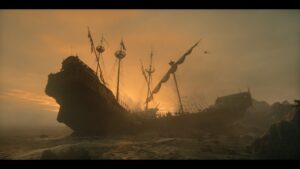
That is why the ending works. It lets the immediate storm pass, then shows us the larger one still building offshore.
The real answer
Major Ferguson is still a threat to Jamie because he represents the wider war pressing in on Fraser’s Ridge. Cunningham’s departure removes one local danger. It does not remove the military, political, and historical danger Jamie now represents to the British side.
Episode 6 makes the shape of the season clearer. Jamie’s local problems were only the beginning.
In other words: Cunningham may be gone, but the rope is still hanging there.
FAQ
Who was Patrick Ferguson?
Patrick Ferguson was a real Scottish officer in the British army, a skilled marksman, and the inventor of the Ferguson rifle. During the Southern Campaign, he organized Loyalist militia and became one of the key British figures connected to Kings Mountain.
Why is Ferguson more dangerous than Cunningham?
Ferguson represents organized power, not just personal betrayal. Cunningham was one man with a plan. Ferguson is part of the larger war machine Jamie cannot easily escape.
Does Cunningham leaving help Jamie?
Yes, in the short term. It removes an immediate threat from Fraser’s Ridge. The larger danger remains because Jamie is still exposed to enemies beyond his own land.
Why does the episode bring up Kings Mountain?
Kings Mountain increases the dread around Jamie’s future. It tells the audience that the coming danger is larger than one Ridge conflict and tied to a real turning point in the Southern Campaign.
How is Ferguson connected to the Overmountain Men?
Ferguson’s threat against the Overmountain settlers helped provoke the militia response that led to Kings Mountain. His attempt to intimidate them backfired because it turned a distant war into a direct threat against home.
How is Ferguson connected to Benjamin Cleveland?
Ferguson represents British pressure in the Southern Campaign, while Benjamin Cleveland represents Patriot militia power in the backcountry. Both men help show how brutal and morally complicated the war around Jamie is becoming.
Is the ending setting up the second half of the season?
Yes. The episode uses Ferguson to pivot from local fallout to larger historical and personal danger.
This Week’s Outlander Coverage
- Episode Review: Outlander Season 8 Episode 6 Review: “Blessed Are The Merciful” Is Jamie’s Best Episode Of Season 8
- Recap & Reaction Podcast: Outlander Season 8 Episode 6 “Blessed Are the Merciful” Recap & Reaction
- Listener Feedback: Outlander Season 8 Episode 6 Listener Feedback: “Blessed Are the Merciful”
- Fan Temperature Check: Where The Ridge Stands This Week: The Women Are Strong, The Men Are Just Sort of There
- Explainer: What Does Roger’s Vision of His Father Mean in Outlander Season 8 Episode 6?
- Explainer: Why Did Jamie Let the Traitors Stay on Fraser’s Ridge in Blessed Are The Merciful?
- Knee Jerk Reaction: KNEE-JERK REACTION | Outlander Season 8 Episode “Blessed Are The Merciful”: Mercy Has Teeth
- Outlander Season Guide: Outlander Season 8 Explained: Finale, Episode Guide, Ending & Biggest Questions
Get The Droughtlander Dispatch
One smart Outlander update in your inbox — episode guides, podcast drops, character threads, and the stories worth remembering while we wait for what comes next.
Keep Going With Our Kings Mountain Coverage
If Ferguson brought you here, these are the next pieces that explain Jamie’s larger historical threat and the road to Kings Mountain.
- Episode Review: Outlander Season 8 Episode 6 — “Mercy Has Teeth”
- Article: Why Kings Mountain Matters to Outlander
- Podcast: Battle of Kings Mountain History Lesson
- Explainer: Who Were The Overmountain Men?
- Explainer: Who Was Benjamin Cleveland in Outlander?
- Explainer: Frank’s Book in Outlander
- Season Hub: Outlander Season 8 Episode Guide
- Podcast Hub: Outlander Cast
Follow Mary & Blake
Subscribe to Outlander Cast on Apple Podcasts and Spotify.
Follow Mary & Blake on Facebook, join the Outlander Cast Facebook Group, and follow us on Instagram and X.
What do you think?
Is Ferguson the real danger now, or is the bigger threat still the instability inside Fraser’s Ridge itself? Let me know in the comments.
Want your thoughts featured on the listener feedback episode? Send us your take at SpeakPipe.
Slàinte Mhath.