The new Rings Of Power Season 3 full trailer makes me want to believe in this show again. The atmosphere finally has some weight. Mordor looks dangerous, armies seem to inhabit a world with actual history, the early Ring-servants are genuinely frightening, and Charlie Vickers walks through the footage with the confidence of a man who knows he is the most interesting person in Middle-earth. For the first time in a while, I watched a Rings Of Power trailer and felt the particular dread and wonder that I associate with The Lord Of The Rings.
My excitement comes with a condition: Sauron’s ambition, Galadriel’s fear, and Celeborn’s return all need consequences. And an adaptation deserves to be judged by whether its changes create good television, even when a familiar creature shows up centuries ahead of its date in the books.
What The New Rings Of Power Season 3 Trailer Actually Reveals
The full trailer, released October 21, 2026, picks up five years after the fall of Eregion. Sauron has consolidated power, his armies have spread across Middle-earth, and he is pursuing the creation of the One Ring inside the realm of Mordor. The remaining free peoples face a war that has already gone badly for them. Season 3 arrives November 11 on Prime Video, with four episodes dropping on premiere day.
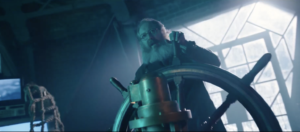
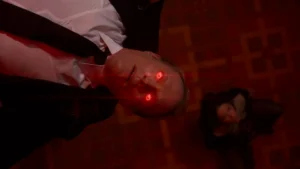
The images move quickly. We see the black-armored Nazgnagôl, mortal Ring-servants on the road toward becoming the wraiths familiar from The Lord Of The Rings. We get Galadriel fighting one of them and, in another shot, looking genuinely terrified as she shelters behind rock. We see Durin being crowned by Disa, Gandalf confronting enormous threats, Númenórean forces gathering, and the return of Galadriel’s long-absent husband Celeborn, played by Jamie Campbell Bower. Sauron even confronts a Balrog, and the trailer keeps returning to the fire and machinery surrounding the One Ring.
Middle-earth Finally Looks As Though It Has Lived Through Something
One of my problems with Season 1 was how polished everything felt. Costumes seemed newly unpacked, environments sometimes had the pristine smoothness of an expensive video-game cinematic, and the overall visual language struggled to connect the beauty of Middle-earth with its age. The writing had related problems. Characters often moved between plot requirements before their choices had enough emotional grounding. You could see the series reaching toward a mythic identity, but the finished scenes rarely carried all the weight the production was spending money to create.
Season 2 improved when Celebrimbor and Sauron gave us a sustained dramatic relationship: a proud creator with a need to matter, and a deceiver talented enough to exploit that need. Their exchanges shifted power and gave the scenes a purpose beyond exposition.
This trailer suggests another step forward, particularly in the production design. Lava becomes part of Sauron’s industrial system. Armor, smoke, ruined masonry, shadow, and scale establish a world being physically transformed by conquest. Rivendell offers the opposing visual idea: a fragile place of order and beauty trying to exist while darkness spreads around it. The camera and editing appear increasingly comfortable placing vulnerable figures inside enormous environments, allowing the scale to create pressure instead of simply providing pretty wallpaper.
GENERAL PRIME ROLLOUT
- Knee Jerk Reaction: Knee Jerk Reaction: The Rings Of Power Season 3 Trailer Finally Lets Sauron Cook
Charlie Vickers Is The Best Thing This Show Has Given Us
I have become convinced that Charlie Vickers is the best discovery The Rings Of Power has made. His Sauron can be charming, pathetic, calculating, wounded, seductive, and utterly convinced of his own righteousness, sometimes within the same conversation. That range gave Season 2 its strongest scenes, and the new trailer allows those qualities to operate on a much larger scale.
Consider the way Sauron describes himself as a conqueror, a sorcerer, and a king. He sounds like a man announcing a future he already considers inevitable. Later, when he talks about bringing order to a broken world, the line gives us the moral argument he has constructed to justify domination. He may see himself as the person with a workable solution to history’s chaos. The horror comes from what his solution demands of everybody else.
That is terrific material for an antagonist. In John Truby’s terms, an opponent becomes more powerful when his desire competes directly with the desires of the other characters. Sauron can promise security to a frightened ruler, purpose to a displaced warrior, or greatness to someone terrified of being forgotten. His victory advances whenever another person believes surrendering a little freedom will buy them the future they want.
The One Ring gives that worldview a concrete dramatic objective. Forging it should culminate in escalating choices, sacrifices, and resistance. The hammer descending near Mount Doom looks amazing. The scene will earn its place through what Sauron risks and what the Ring costs the world. Vickers can play that complicated interior life beneath a composed expression.
Galadriel Finally Looks Frightened, And I Love That For Her
I practically cheered when one of the Nazgnagôl sent Galadriel flying. Then the trailer gave us that close look at her hiding behind the rocks, wide-eyed and visibly afraid, and I became even more interested.
Galadriel has been one of the show’s most frustrating characters. I see the intended portrait of a warrior driven by grief, pride, and absolute certainty about the danger ahead. But the execution often flattens the people around her. The narrative has protected her from the humiliating self-discovery that could make her difficult personality rewarding, leaving her plastic and remarkably hard to like.
Fear could be the opening the character needs. When a figure as formidable as Galadriel realizes she may be outmatched, the story has a chance to expose the distance between what she believes about herself and what the world is teaching her. An actor can do astonishing work with that kind of pressure. Morfydd Clark’s face in this footage suddenly suggests calculation, dread, and the possibility of failure, all before we know the scene’s precise circumstances.
The important payoff will be behavioral. If Galadriel is frightened, what does that make her do? Does she ask for help, abandon a rigid assumption, place somebody else in danger, or confront how much of her life has been organized around Sauron? The best version of this story would let her make a difficult choice that grows out of what she has learned. That would give her strength texture and make her vulnerability meaningful.
Galadriel, Sauron, And Celeborn Could Become The Show’s Best Drama
For me, the relationship between Galadriel and Sauron is the heartbeat of The Rings Of Power. Elrond and Durin remain one of its most rewarding friendships, and their chemistry helped carry Season 1. The larger series, though, changes temperature whenever Galadriel and Sauron enter the same dramatic orbit. They have shared history, knowledge, betrayal, temptation, and a dangerous understanding of what the other person wants.
Now Celeborn is back, and this is where things get genuinely interesting. He may remember a Galadriel who existed before her obsession with Sauron became the central organizing force of her life. The woman standing before him has endured separation, war, and the humiliation of discovering how thoroughly she was manipulated. Reuniting with a spouse after that kind of experience raises questions that can be played in an actual scene: What do you admit? Which wounds can your partner recognize? How do you rebuild intimacy when one of you has become a stranger to the other?
The trailer is smart enough to provoke those questions through editing. Celeborn remarks that Galadriel fears telling him something, while adjacent footage evokes Sauron’s intimate presence and Galadriel awakening in distress. The association is powerful. The precise relationship between those images remains unconfirmed, because a trailer can manufacture implications simply by placing unrelated shots next to each other. This is the Kuleshov effect doing some very effective marketing work.
Tolkien Lore Is A Starting Point For Adaptation, And Storytelling Is The Test
I know the arguments already forming around this trailer. The Balrog belongs to a different stretch of Tolkien chronology. Gandalf’s presence changes the traditional timeline. The Nine become these armored Ring-servants much faster than readers expect. Certain battles, relationships, and events have been moved, compressed, or reinvented for television.
Television has to dramatize history a book can summarize, compress time to preserve character continuity, and create relationships with playable conflict. Peter Jackson made substantial adaptation choices too. Those films endure because of the emotional architecture supporting them: friendship, sacrifice, temptation, and costly decisions.
So I am open to Sauron confronting a Balrog. I want to know what each of them hopes to accomplish and how the encounter changes the story. I am open to the accelerated corruption of the Nazgnagôl if the series dramatizes a credible progression from human ambition into servitude. And I am especially open to inventing a psychologically complicated connection between Galadriel and Sauron when the writing uses it to explore power, intimacy, self-deception, and shame.
Adaptation gives writers permission to make choices. It also gives us the responsibility to judge those choices. A famous creature appearing five hundred or five thousand years early tells me very little about the emotional effectiveness of a scene. The important questions concern causality, pressure, character, payoff, and whether a change preserves the themes that made the source compelling in the first place. That standard is both more generous and considerably harder to satisfy.
The Trailer Plays Like A Tone Poem, With One Important Weakness
The trailer’s most interesting formal choice is how much it communicates through atmosphere. The opening establishes a dark world already under Sauron’s influence. A series of clashes and isolated character images expands the threat, and the sound, dialogue, and music drive us toward the enormous image of the One Ring being forged. It has the progression of a miniature epic, carrying us from dread through conflict to the promise of catastrophic power.
Trailer editors working with an entire television season have an unusual problem. They must reduce many hours of overlapping storylines into a few minutes that feel unified. The most useful images tend to serve several jobs at once: they grab attention, signal the genre, suggest conflict, create mystery, and give the audience an emotional reason to return. This cut is particularly good at using the arrangement of images to make the separate plots feel as though they are all moving toward the same collision.
My reservation is the vagueness of much of the dialogue. We hear impressive declarations about victory, acting together, and approaching ruin, yet we learn relatively little about the specific choices that will propel Galadriel, Celeborn, Númenor, or the Dwarves from one event to the next. Sauron’s goal is wonderfully legible because he wants the One Ring. Several other characters remain defined primarily by the danger gathering around them.
For the episode schedule, cast, and complete Mary & Blake coverage, see our Rings Of Power Season 3 guide. You can also revisit our July teaser KJR to see how the show’s evolving marketing has changed our expectations.
My Knee Jerk Verdict: The Show Has My Attention Again
Payne and McKay have ambitious material; I am waiting to see whether they can make it consistently dramatic. The Harfoots and Theo are absent from this cut, which keeps the marketing focused on the central war, though it tells us nothing conclusive about their screen time. The five-year jump and the forging of the One Ring offer real momentum. The season has to use it.
For members of The NerdClan, I have a deeper examination of how the trailer uses editing and scene construction to create its emotional promises. For the moment, I am genuinely eager to find out. I want the terror of a Ring-servant charging into frame, the thrill of Sauron at the height of his power, and the unease of seeing Galadriel confront the person who understands her most dangerously. I want this version of Middle-earth to make me care what happens to the people living inside it.
The trailer has finally made that future feel possible. Now I want the show to earn it.
Unlock the rest of this article.
Join the NerdClan — or sign in if you are already a member — and the rest of this article will unlock right here on this page. This entry requires Associate Producer or higher.