The first Rings Of Power Season 3 trailer feels like the moment this series finally decided to stop circling its story and start driving directly through it.
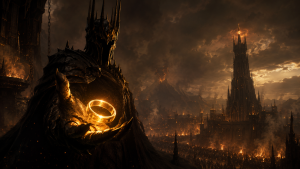
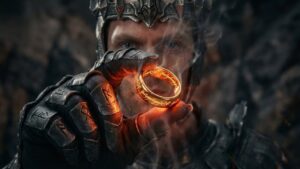
Sauron walks toward Mount Doom wearing the crown of Morgoth. Molten gold flows through the circular words of the Ring verse. Shadowy riders hunt through forests, fell beasts crawl across stone, armies gather for war, and Celeborn finally emerges from whatever undisclosed location has kept him away from his wife for two entire seasons.
The entire trailer feels heavier, darker, and more confident than The Rings Of Power has felt before.
Provisional Rings Rating: 4.79/5 💍💍💍💍
Quick answer: The Rings Of Power Season 3 trailer places Sauron at the center of the story as he moves toward forging the One Ring, expands his war against the Elves, begins corrupting the future Ringwraiths, and draws Galadriel, Celeborn, Númenor, and Khazad-dûm into the same gathering conflict. The footage suggests Season 3 may finally have the focused dramatic engine the series has spent two seasons trying to find.
Watch our Rings Of Power Season 3 trailer review and breakdown above, then continue below for what the footage reveals about Sauron, the One Ring, the Nazgûl, Celeborn, Galadriel, and the war ahead.
Rings Of Power Season 3 Trailer Breakdown: What The Trailer Reveals
My immediate reaction is that Sauron has entered his Thanos era. He spent two seasons changing faces, whispering into vulnerable ears, and helping people make the worst possible version of a choice they already wanted to make. Season 3 looks like his “Fine, I’ll do it myself” moment.
He is forging the One Ring, raising armies, creating servants, and reshaping Middle-earth around his own ambition.
That shift gives The Rings Of Power something it has spent two seasons searching for: one central character whose decisions can place pressure on every part of the story at the same time.
The series has always had enough mythology, spectacle, characters, and money to fill several shows. Its greatest struggle has been creating the feeling that Galadriel, Númenor, the Dwarves, the Harfoots, Sauron, and the larger history of Middle-earth all belong inside one dramatic movement.
This trailer suggests Season 3 may finally have an engine powerful enough to pull those pieces toward the same collision.
Several years have passed since the fall of Eregion, allowing the political and military consequences of Season 2 to spread throughout Middle-earth. Sauron has moved beyond the manipulation of one forge and appears ready to wage open war while creating the Ring that will place every other Ring of Power within his reach.
That time jump may be one of the smartest decisions the series has made. Our deeper look at why the Rings Of Power Season 3 time jump matters explains how the show can use those unseen years to create history, resentment, grief, and changed relationships before the season even begins.
The trailer shows the practical benefit immediately. The characters have lived through years the audience has not seen, and the world appears to have hardened around them.
Durin appears to have taken his father’s crown. Númenor has moved deeper into the conflict between Elendil and Pharazôn. The Elves are preparing to face Sauron’s armies, while figures resembling early Ringwraiths already move through the world. Galadriel’s search brings her into contact with Orcs, fell beasts, and a husband she believed she had lost.
These elements now appear connected through consequence. Sauron’s rise changes what Galadriel must do. The Elves’ response changes the choices available to Númenor. The rings offered to mortal men create servants who can carry Sauron’s power into places his armies cannot yet reach. A decision made in one corner of Middle-earth can generate a disaster several storylines away.
Season 3 appears to have found its central cause-and-effect pathway. Sauron wants control of Middle-earth. He plans to achieve it through the One Ring, the corruption of mortal rulers, and the destruction of every alliance capable of standing against him. Everyone else must decide what they are willing to sacrifice to stop him or survive him.
The War of the Elves and Sauron gives that conflict a public shape. Season 2 showed Sauron destroying a person privately. Season 3 can show the same appetite for domination reorganizing armies, kingdoms, borders, and the political order of Middle-earth.
That is a television season I understand. More importantly, it is a television season I want to watch.
Continue our Rings Of Power Season 3 coverage: Start with our complete Rings Of Power Season 3 guide, then read our Season 3 first-look analysis, explore why the War of the Elves and Sauron changes the series, see why the Season 3 time jump matters, and learn how the One Ring may finally give the show a clear spine.
Why Sauron Is The Center Of The Rings Of Power Season 3 Trailer
Sauron became the strongest character in The Rings Of Power during Season 2 because he became an active participant in the drama. His work with Celebrimbor gave the season its clearest desire, strongest conflict, and most effective progression of consequences.
Sauron understood what Celebrimbor wanted, identified the wound beneath that desire, and created a path that allowed Celebrimbor to destroy himself while believing he was saving his legacy.
Their scenes worked because both characters participated in every turn. Sauron applied pressure. Celebrimbor responded. Each response gave Sauron another opportunity to tighten the trap. The forge slowly transformed from a place of creation into a prison because the choices made inside it changed the emotional and physical reality of the characters.
Our recap and reaction for Season 2, Episode 7, “Doomed To Die” explored why the Celebrimbor tragedy became the show’s strongest material. The episode understood that Sauron’s real weapon was his ability to make another person participate in his own destruction.
Celebrimbor kept choosing the next compromise because Sauron made each one feel like the only remaining path toward the thing he wanted.
Season 3 looks ready to expand that relationship design across Middle-earth.
Sauron’s real strength comes from recognizing the thing another person wants and presenting himself as the shortest path toward it. A king wants to protect his kingdom, so Sauron offers greater power. A warrior wants to defeat evil, so Sauron provides a target that consumes her identity. A civilization fears death, so Sauron offers a form of immortality whose true cost arrives after the bargain has already been accepted.
He rarely needs to create the desire. He only needs to feed it.
That quality makes Sauron the ideal dramatic engine for this show because every culture in Middle-earth wants something different from the coming age. The Elves want to preserve their world. Númenor wants to defend its greatness and escape mortality. The Dwarves want security beneath the mountain. Mortal rulers want enough power to protect what belongs to them. Galadriel wants to defeat the evil that has shaped her life.
Sauron can enter each of those desires and turn it until the character begins serving his plan.
The trailer conveys that change through Sauron’s growing physical presence. Earlier versions of the character relied on beauty, charm, ambiguity, and disguise. The new footage shows a figure walking openly among Orcs, entering the place where the Ring will be forged, and standing beside servants created through his power.
His appearance feels more severe, his body more worn, and his relationship to the world more direct. He is becoming the Sauron people recognize while retaining the character the series has built.
The armor, crown, Ring, and larger iconography will satisfy the part of the audience waiting to see the Dark Lord emerge. Charlie Vickers’ performance remains most compelling when the human intelligence behind that image stays visible. His Sauron studies people. He listens, adjusts, flatters, provokes, and finds the exact emotional pressure point that will move someone where he needs them to go.
The armor becomes frightening because we understand the person inside it.
Our first look at Sauron in The Rings Of Power Season 3 argued that the show might finally become the version of itself it had always promised. The trailer strengthens that argument because Sauron has stopped functioning as one mystery among many. His choices now appear capable of determining the direction of the entire season.
The show has found its best character and placed him in control of the action. That sounds obvious when the character is Sauron, yet it took two seasons to arrive here.
Why Sauron Forging The One Ring Gives Season 3 A Clear Spine
The One Ring carries enormous mythological weight, though its greatest value to Season 3 may be structural. It gives Sauron a concrete goal, gives the audience a visible destination, and gives every other storyline a relationship to the same central threat.
We have already argued that the One Ring can give The Rings Of Power Season 3 a clear spine. The trailer shows that idea in physical form. Sauron approaches the Chambers of Fire, the Ring verse appears around the mold, and molten metal begins filling the shape of the object that will alter the balance of power across Middle-earth.
The image works because the audience already understands the consequence. We have seen where this leads. We know the Ring will survive kingdoms, wars, alliances, victories, and the man who made it. Watching its creation gives every surrounding event a sense of approaching tragedy.
That knowledge creates suspense. We understand Sauron’s destination while remaining uncertain about the route he will take to reach it. The dramatic question becomes how many people will help him forge the future that eventually destroys them.
The Ring also gives the season a clean way to connect personal choices with political consequences. Sauron does not conquer Middle-earth through military force alone. He turns private fears, ambitions, and weaknesses into instruments of public destruction.
A ruler’s decision to accept power can condemn a kingdom. Galadriel’s inability to release her connection to Sauron can affect the course of the war. A Dwarven attempt to preserve Khazad-dûm can place another part of the world within his reach.
The Ring becomes the pressure moving between those decisions.
That pressure is what the series has often lacked. Earlier seasons contained important events whose impact sometimes remained isolated inside their own storylines. The Harfoots could experience danger without changing Galadriel’s path. Númenor could enter political crisis without affecting Elrond and Durin for long stretches. The Stranger could discover another piece of his identity while Sauron pursued a separate objective.
The One Ring can reorganize the show around one shared future. Characters may remain separated by geography, culture, and story function, yet their actions can feed the same growing disaster. The season gains momentum when each success creates another problem and every solution carries a cost.
The Ring also clarifies the moral argument inside Sauron’s plan. The people who fall under his control will probably believe they are accepting the power required to accomplish something good, necessary, or defensible. They want to protect a family, preserve a civilization, defeat an enemy, extend a life, or hold a kingdom together.
Sauron transforms those understandable desires into chains.
The story becomes richer when the people accepting his power continue insisting they remain in control. The One Ring represents Sauron’s ultimate expression of that belief. He pours his power into an object designed to dominate everyone else and assumes the act will secure his own freedom forever.
The tragedy is already inside the victory.
Are The Nazgûl In The Rings Of Power Season 3 Trailer?
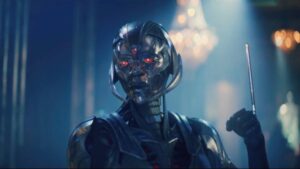
The Rings Of Power Season 3 trailer appears to show early versions of the Nazgûl, or Ringwraiths, before their transformation is complete. The footage includes crowned riders, shadowy figures hunting through forests and strongholds, and men who seem to exist somewhere between their former human lives and the spectral servants they will eventually become.
That distinction gives the show an opportunity to dramatize a process audiences usually encounter through history and exposition. We know the Nine become terrifying extensions of Sauron’s will. Season 3 may let us watch powerful men surrender themselves one choice at a time.
That could become some of the darkest material in the series.
The finished Nazgûl are frightening because almost nothing human remains visible. Their robes, screams, weapons, and unnatural movement turn them into death moving through the landscape. Their origins carry a different kind of horror. Each Ringwraith began as a person who believed the ring would increase his ability to rule, protect, conquer, or endure.
He accepted the gift because it answered a desire.
The transformation gives Sauron’s entire strategy a human face before erasing that face. A king may feel stronger after receiving his ring. His life may stretch beyond its natural span. His enemies may fear him, and his people may celebrate the power that appears to secure their future.
The cost arrives gradually enough for every new symptom to be rationalized as the price of maintaining everything already gained.
By the time the man realizes the ring has taken his freedom, the part of him capable of removing it may already be gone.
That progression could solve a recurring problem with the series’ use of lore. The Rings Of Power sometimes treats a recognizable name, object, or creature as the payoff itself. The audience sees the Balrog, hears the word “Gandalf,” or recognizes an image associated with the films, and the moment expects recognition to create meaning.
The Nazgûl offer a complete dramatic journey. Their familiar appearance becomes the destination. The season can earn that destination through desire, compromise, physical change, and the gradual destruction of identity.
Their story also deepens the argument inside our One Ring Season 3 analysis. The Ring gives Sauron the power to organize the larger war, while the Nine allow the audience to watch his worldview destroy individual human lives. The epic and intimate versions of the story begin reinforcing each other.
The fell beasts serve the same larger purpose. They look spectacular, and the trailer uses their movement and screaming to generate immediate danger. Their presence also tells us Sauron’s power has begun reshaping the natural and political order of Middle-earth.
The iconography works because it carries consequence. That is the version of Tolkien fan service I want.
GENERAL PRIME ROLLOUT
- Knee Jerk Reaction: Knee Jerk Reaction: The Rings Of Power Season 3 Trailer Finally Lets Sauron Cook
What Celeborn’s Return Means For Galadriel In Season 3
Celeborn’s return creates one of the most exciting possibilities in the trailer and one of the hardest problems facing Season 3. Galadriel believed her husband had died, yet the series devoted very little time to showing how that loss shaped her emotional life. His absence exists in her biography without consistently existing in her behavior.
The writers now have to make their reunion matter to the versions of these people we have actually watched.
Galadriel has spent the series defining herself through war, vengeance, grief, and her obsession with defeating Sauron. She formed an intimate connection with the person she was hunting, helped place him in position to deceive Celebrimbor, and carries knowledge of him that few other characters possess.
Celeborn returns to a wife transformed by experiences he did not witness and choices he may struggle to understand.
Galadriel also meets a husband who survived an entire unseen life without her. The trailer appears to show images of their earlier happiness alongside a reunion in a much darker place. That contrast can give the relationship real dramatic weight because the people who find each other may bear little resemblance to the people who were separated.
Love does not place either of them in emotional suspended animation.
Celeborn should carry his own history, damage, desires, and understanding of Sauron. His return becomes valuable when his presence changes Galadriel’s choices and complicates the way she sees herself. He remembers a version of her that may no longer exist, while she has spent years turning pain into a purpose that allowed her to keep moving.
Their reunion should contain joy. It should also contain the disorientation of discovering that the person you mourned continued changing beyond the edge of your knowledge.
Jamie Campbell Bower feels like an inspired choice for that material. He can project warmth, sadness, beauty, danger, and a strange distance within the same performance. Celeborn needs some of that unpredictability because the role cannot survive as Galadriel’s pleasant and supportive husband arriving to complete the family tree.
The character must enter the conflict with something he wants.
The footage gives me hope because Celeborn appears inside the action. He is shown dancing with Galadriel, encountering her amid violence, kissing her, and seemingly participating in the larger war. Those images suggest a relationship with movement and consequence rather than a mythology cameo delivered for applause.
Season 3 can use him to reveal what Galadriel has become. Sauron understands her anger, ambition, and attraction to power. Celeborn may understand the person beneath those impulses, or at least remember who she was before they consumed so much of her life.
His perspective can force Galadriel to confront the distance between her stated duty and the emotional need driving it.
That conflict belongs at the center of her story.
The show still has to earn the emotional history it neglected. A few flashbacks and a passionate kiss cannot manufacture the full weight of a marriage that has barely existed on screen. The scenes need specificity: the way these two people speak when they are alone, the injuries they recognize in each other, the memories they share, and the subjects they instinctively avoid.
I want to feel that they had a life together before this story began.
I also want somebody to explain Galadriel’s wig. The hair looks slightly wrong in a way I cannot fully diagnose, and I already know this will occupy an unreasonable amount of our podcast discussion. The character appears to be receiving the emotionally complicated storyline she deserves, so I am prepared to make peace with whatever battle is happening along her hairline.
Probably.
Why The Missing Harfoots Make The Season 3 Trailer Better
There is not a single Harfoot in this trailer, and that is a massive win.
The Harfoots have always felt like the Jar Jar Binks of The Rings Of Power. Their creators clearly love them, see them as an essential part of the identity of the series, and believe they supply warmth, humor, and the familiar Hobbit energy audiences associate with Middle-earth.
Their storyline repeatedly drains momentum from the larger conflict just as another part of the show begins creating urgency.
The issue extends beyond personal preference. The Harfoots have spent much of the series traveling beside the main story without placing meaningful pressure on it. Their choices rarely alter Sauron’s plan, change Galadriel’s options, complicate the war, or produce consequences for the kingdoms carrying the central conflict.
Every return to them asks the audience to restart its emotional clock.
That separation might have worked in a series with a clearer episodic shape or a stronger thematic relationship between the Harfoot journey and the rise of Sauron. The existing material often feels like an obligation to include proto-Hobbits because Hobbits are part of the audience’s affection for The Lord Of The Rings.
Recognition has been doing more work than dramatic participation.
The Season 3 trailer concentrates its attention on the Elves, Númenor, Khazad-dûm, Sauron, Galadriel, Celeborn, the One Ring, and the developing Nazgûl. Every image appears to belong to the same gathering war. That focus creates momentum because each new shot escalates the danger established by the previous one.
Sauron is forging the Ring. His armies are spreading. His servants are hunting. Galadriel is moving closer to him. Celeborn’s return makes the conflict personal. Númenor and the Dwarves are being drawn into the consequences.
The trailer never has to abandon that pressure for an unrelated walking tour.
The absence of Harfoots from the marketing does not guarantee they have disappeared from the season. They may return later, and the Stranger’s story may still require the series to spend considerable time away from the War of the Elves and Sauron.
Amazon has nevertheless chosen to sell Season 3 through the storylines with the clearest stakes and greatest consequence. That is the correct promise.
A more focused season may eventually find a productive role for the Harfoots. Their smallness could create a meaningful contrast with Sauron’s hunger for control, and their lives could show what ordinary people stand to lose when powerful figures reshape the world.
The characters would need to participate in the season’s dramatic movement rather than existing as a tonal reminder of another trilogy.
Our broader Season 3 first-look analysis digs further into the Harfoot problem and why the series has often felt distracted from its own strongest material.
For now, I am enjoying the silence.
The Rings Of Power Season 3 Trailer Finally Feels Like Middle-Earth
The Rings Of Power has always looked expensive. The landscapes are enormous, the costumes contain extraordinary detail, and the production can place images on screen that most television shows could never attempt.
The beauty has sometimes felt preserved behind glass, allowing me to admire the craftsmanship while remaining emotionally outside the world.
This trailer feels different because the images carry story.
Sauron walking toward the place where he will forge the One Ring has direction and consequence. Molten gold filling the Ring verse turns language into a physical instrument of domination. Crowned men moving toward their future as Ringwraiths make corruption visible. Galadriel and Celeborn dancing in what appears to be the past gives their violent reunion an emotional counterimage.
The visual design is helping us understand the narrative.
That is the simple seat-back test for cinematic storytelling. Imagine watching the trailer without sound from several rows away on an airplane. The images should still communicate who holds power, who is in danger, what is changing, and where the story is moving.
Season 3 passes that test more clearly than the series has before.
Middle-earth also looks older, dirtier, and more dangerous. The fortresses carry history. The landscapes seem to remember previous wars. Armor looks like it belongs to people who have been living in it, while fire and smoke appear to be changing the texture of the world.
I can finally feel a visual path connecting this age to the one Peter Jackson showed us without the series becoming an imitation of those films. The designs maintain their own identity while inhabiting the same emotional and mythological universe.
Beauty and decay exist together in the frame, creating the sense that Middle-earth is losing something it will never recover.
The creatures benefit from that unity. Fell beasts and developing Ringwraiths belong to the darkness spreading through the world rather than appearing as isolated moments of fan recognition. Sauron’s crown, the Ring mold, and the Chambers of Fire all feel like pieces of the same visual argument about power becoming physical.
The trailer understands that spectacle gains meaning when it changes the audience’s relationship to the story. A giant creature can create awe for several seconds. A giant creature representing the expanding reach of Sauron can create dread that follows the audience into the next scene.
The larger War of the Elves and Sauron breakdown explores how that darkness can spread from private manipulation into the physical architecture of Middle-earth.
Season 2 showed Sauron corrupting a room. Season 3 appears ready to show him corrupting the map.
The world is becoming his.
Can The Rings Of Power Season 3 Deliver On This Trailer?
This is the question hanging over every exciting image.
The Rings Of Power has produced compelling trailers, beautiful episodes, strong performances, and individual storylines that prove the series can work. It has also confused mystery with suspense, allowed characters to receive plot instead of driving it, and stretched simple revelations across too many hours.
The show often reaches the right destination after taking a route that drains the arrival of its power.
A trailer cannot repair those habits. Season 3 will work when the episodes maintain the chain of action and consequence visible in this footage.
Sauron makes a move. Galadriel responds. Her response changes Celeborn’s options. The Elves’ decision creates a problem for Númenor. A mortal ruler accepts a ring, and that choice transforms both his private identity and the public fate of his kingdom.
The story gains momentum when each character participates in the turn.
The time jump gives the writers a cleaner starting position. Sauron gives them an active opponent. The One Ring gives them a goal. The war gives the characters immediate pressure, while Celeborn and the future Nazgûl create emotional stories capable of making the mythology human.
Those are strong pieces. The challenge lies in arranging them so every storyline feels necessary.
The trailer earns my excitement because it presents a season organized around desire. Sauron wants dominion and has designed a plan to achieve it. Galadriel wants to stop him while carrying the emotional damage of her connection to him. Celeborn wants to return to a relationship that time and war have already transformed. Mortal leaders want enough power to survive the coming darkness.
Everyone wants something, and Sauron can use every one of those desires.
That is the dramatic version of The Rings Of Power I have been waiting to see. Give me the enormous landscapes, strange creatures, armies, lore, and absurd amount of money visible in every frame. Place all of it under pressure from characters making choices that alter the lives of everyone around them.
The Season 2 finale recap and reaction is the best place to revisit where the show left Galadriel, Sauron, Durin, and the rest of Middle-earth before the time jump. From there, the “Doomed To Die” recap and reaction provides the essential emotional foundation for Sauron’s Season 3 evolution.
The trailer cannot prove that Season 3 has solved the series. It does prove that the show understands how its strongest possible version should feel.
Sauron has stopped waiting for the story to find him. He has taken hold of the Ring, the war, and the dramatic engine of the entire series.
This thing ain’t playing around anymore.
Rings Of Power Season 3 Trailer FAQ
Is There A Rings Of Power Season 3 Trailer?
Yes. The first Rings Of Power Season 3 trailer focuses on Sauron’s rise, the forging of the One Ring, the developing War of the Elves and Sauron, early Ringwraith imagery, and Celeborn’s return to Galadriel’s story.
What Does The Rings Of Power Season 3 Trailer Reveal?
The trailer suggests that Sauron will become the central dramatic engine of Season 3. His plan appears to connect the One Ring, the corruption of mortal rulers, the war against the Elves, and the growing danger facing Galadriel, Númenor, and Khazad-dûm.
Is Sauron Forging The One Ring In Season 3?
The trailer strongly indicates that Sauron will forge the One Ring during Season 3. The footage shows him approaching the Chambers of Fire as molten metal fills a mold surrounded by the words of the Ring verse.
Are The Nazgûl In The Rings Of Power Season 3 Trailer?
The footage appears to show early versions of the Nazgûl or future Ringwraiths. The figures have not completed the spectral transformation audiences recognize from The Lord Of The Rings, but the imagery suggests that Sauron’s corruption of the Nine has begun.
Is Celeborn In The Rings Of Power Season 3 Trailer?
Yes. Celeborn appears alongside Galadriel in both romantic and violent imagery, suggesting that their reunion will become an important part of Galadriel’s Season 3 story.
Keep Going With Mary & Blake’s Rings Of Power Coverage
For the complete Season 3 path, start with our Rings Of Power Season 3 guide. Then read our first-look analysis, our explainer on the War of the Elves and Sauron, our look at the Season 3 time jump, and our argument for why the One Ring may finally fix the structure of the show.
Revisit where the story left Galadriel, Sauron, Durin, and Middle-earth with our Rings Of Power Season 2 finale recap and reaction, or visit the full Rings Of Power With Mary & Blake podcast hub for every recap, review, reaction, and deeper discussion.